
About Ivan Ilyin
Lived 1883 – 1954 (aged 71). Ivan Ilyin was a Russian philosopher, writer, university teacher, opinion journalist and jurist.
Ivan Alexandrovich Ilyin (; – 21 December 1954) was a Russian jurist, religious and political philosopher, publicist, orator, and a far-right thinker.
Ilyin began his career as a political writer during the failed 1905 Russian Revolution; by the February Revolution of 1917, which he later saw as a "temporary disorder", he shifted towards liberalism, and by October he became a radical right opponent of democracy. October Revolution, in his view, marked a "national catastrophe". This conviction led him to oppose the Bolshevik regime.
An anti-communist, Financial support from Sergei Rachmaninoff in 1938 allowed Ilyin to remain in Switzerland albeit barred from work or political engagement. This phase of restriction led him to delve deeper into studies encompassing aesthetics, ethics, and psychology.
Despite battling chronic illness, Ilyin wrote over 40 books and numerous articles in Russian and German. His works predominantly revolved around religion and Russia, although he diverged from Vladimir Solovyov's (with whom the Russian religious and philosophical Renaissance of the early 20th century is usually associated) ideology, which advocates a global theocracy. His writings echoed calls for heroism and moral aristocracy,
Remaining true to Right Hegelianism throughout his life, Ilyin explored themes of statehood, law, and power in world history. He opposed federalism and neutrality, and disdained Western analytic philosophy. As an ultranationalist, Ilyin was a critic of Western-style democracy, advocating instead for a government aligned with Russia's autocratic heritage.
Ilyin's views on Russia's social structure and world history influenced some post-Soviet intellectuals and politicians, including Soviet dissident Aleksandr Solzhenitsyn and Russian president Vladimir Putin.
Early life
Ivan Ilyin was born in an aristocratic family claiming Rurikid descent. Ilyin's grandfather was a military man who moved to Moscow, where he became a civil engineer. His last job was as commandant of the Grand Kremlin Palace and gates. His father, Alexander Ivanovich Ilyin (1851-1921), was born and raised in the palace and a lawyer at the Moscow District Court. Ilyin's mother, Caroline Louise née Schweikert (1858-1942), was of German Russian descent and confessing Lutheran. To be able to marry Alexander Ilyin in 1880 she converted to Russian Orthodoxy and took the name Yekaterina Yulyevna.
Ivan Ilyin was brought up in the center of Moscow in Khamovniki District. He was educated at the 1st Moscow Gymnasium in 1901 and entered the Law faculty of the Moscow State University but would rather have studied history. Ilyin wrote as well in German as in Russian and mastered Church Slavonic. He studied Plato's Ideal State and Kant's Thing-in-itself. Ilyin became a political radical during his student days and supported the freedom of assembly. The events of the First Russian Revolution and the October Manifesto were reflected in his pamphlets "Freedom of Assembly and popular Representation" (a way of public participation in politics), "What is a Political Party", "From Russian Antiquity: The Revolt of Stenka Razin". Ilyin produced them under the pseudonym "Nikolai Ivanov".
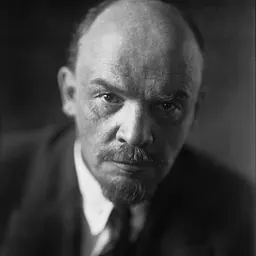
Under influence of Pavel Novgorodtsev Ilyin became interested in the philosophy of law. In 1906, Ilyin graduated and married Natalia Nikolaevna Vokach (1882-1963) in Bykovo. She was a translator, art-historian and niece of Sergei Muromtsev, a Kadet and chairman of the First Duma. Ilyin worked with Natalia on a translation of "Anarchism" by Paul Eltzbacher and a treatise by Jean-Jacques Rousseau ("Idea of the General will") which were never published. From 1909 he began working as a privatdozent. (In the same year Lenin published his Materialism and Empirio-criticism under the pseudonym Vl. Ilyin).
Before the revolution
In January 1911, Knyaz Evgenii Troubetzkoy, along with a large group of professors, left Moscow University as a sign of disagreement with the government's violation of the principles of university autonomy. For six weeks in 1914 Ilyin and his wife paid visits to Sigmund Freud.
During the July Crisis, Ilyin was forced to leave and his writings were confiscated at the outbreak of the First World War. After returning from Vienna, Ilyin was obsessed with psychoanalysis, diagnosing everything and everyone in Freudian terms, reducing every personal problem to neurotic symptoms, and according to one observer, psychoanalyzing every little gesture of those around him. The two became pioneers of the psychoanalytic movement in Russia. He began to develop a career as a writer and public figure.
World War I and the Russian Revolution
Solovyov, Trubetskoy, Nikolai Grot and Lopatin, the board of a magazine, photographed in 1893. In 1921 Ilyin replaced Lopatin as head of the Moscow Psychological Society. thumb Portrait by Mikhail Nesterov (1921); Ilyin is wearing a coat with a black collar, under the Directoire a sign of mourning for the fate of king, queen, and country. (State Russian Museum, St. Petersburg)
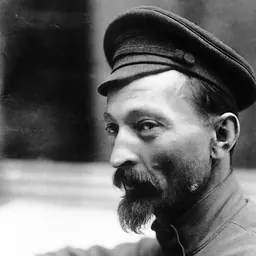
After the breakout of World War I, Evgeny Trubetskoy, once a member of the Party of Peaceful Renovation, arranged a series of public lectures devoted to the "ideology of war". Ilyin contributed to this with several lectures, the first of which was called "The Spiritual Meaning of the War" (1915). He believed that since Russia had already been involved in the war, the duty of every Russian was to support his country to the end. During the April Crisis (1917) he agreed with the Kadet Minister of Foreign Affairs Pavel Milyukov who staunchly opposed Petrograd Soviet demands for peace at any cost. In the summer of 1917, he published the pamphlets "The Party program and maximalism", "On the term of convocation of the Constituent Assembly", "Order or disorder?", "Demagogy and provocation", and "Why not continue the war?" The Moscow State Conference convened by Kerensky's Second Government was attended by actual and former Duma members, representatives of all major political parties, commercial and industrial organizations, the unions, army and academic institutions. Ilyin warned the audience, about 2,600 people, "The revolution turned into self-interested plundering of the state". In the autumn, he wrote under the pseudonym Justus "Where is revolutionary democracy going?", "Mr. Kerensky's refusal", "What to expect?", "Nightmare", and "Who are they?" In March the Treaty of Brest-Litovsk was signed. In April Ilyin was arrested and accused of financially supporting a voluntary army in Moscow and having visited Andrey Avinoff, supporting the Imperial Army. The case was initiated by Felix Dzerzhinsky. The money he had received, Ilyin said, was destined for publishing: "The Philosophy of Hegel as a Doctrine of the Concreteness of God and Humanity". He was in the Butyrka prison dungeons for about a week but developed serious health problems; Ilyin seems to have developed bronchitis that needed treatment. He was released for lack of evidence and allowed to give lectures and defend his thesis. However, the publisher Lehman-Abrikosov made a generous gesture and offered to publish the two-volume book for free – so Ilyin returned the money to the sponsor Bary & Co. This two-volume dissertation (a provocative interpretation of Hegel) published in the revolutionary chaos of 1918, is considered one of the best commentaries on Hegel's philosophy, also by Vladimir Lenin. Even in the preface, Ilyin notes that Hegel is primarily an intuitionist (and not a logician or, even more so, a rationalist), and in the future, all of Ilyin's thought is based on this idea.
He was an opponent of the Russian spelling reform of 1918 and continued to use pre-reform spelling.
Ilyin became a professor of law in Moscow University. As was customary among Russian religious thinkers, he lectured at the Moscow higher women's courses. Ilyin was again imprisoned in 1919, February 1920 and September 1922 for alleged anti-communist activity. He, along with many other "irreconcilable" anti-Bolshevik intellectuals, was condemned to execution, and then forcibly exiled. On 29 September some 160 prominent intellectuals and their families were expelled (at their own expense and not allowed to return without the permission of the Soviet authorities) on a so-called "philosophers' ship" from Petrograd to Stettin, where they arrived on 2 October.
Emigration
In "Welt vor dem Abgrund" (1931) Ivan Ilyin describes the growing bureaucracy, the terror, and worsening labor conditions in Soviet Russia.
The Treaty of Rapallo (1922) between the German Republic and Soviet Russia opened friendly diplomatic relations. In February 1923, the Russian Scientific Institute (RSI) was founded in Berlin; funded by the YMCA. Ilyin delivered a topical speech "Problems of Modern Legal Consciousness". The RSI wasn't an educational institute; there were occasional lectures on Russian history, literature, law and other areas of Russian culture in Schinkel's Bauakademie. In 1923 Wrangel contacted Ilyin in the hope of arranging enrolment in the Institution for "about 300 of young Russian men ...". In July he lost his Russian citizenship for anti-Soviet activities abroad. It was the notorious year of hyperinflation in the Weimar Republic in October and the failed Beer Hall Putsch in November. The institute was going through a severe financial crisis. Due to invitations from the Czech government and offers from American universities, the number of employees soon thinned significantly. Ilyin briefly cooperated with Nikolai Berdyaev on Russian Religious Renaissance but the philosopher of love moved to Paris and Novgorodtsev moved to Prague.
In 1924, the Russian All-Military Union was founded; Ilyin met Pyotr Wrangel at Seeon Abbey, a center of anti-Bolshevik activities. Wrangel was told to abandon his (military) adventures. Ilyin became part of Wrangel's inner circle; not every Russian was charmed by Wrangel's personality.
In July 1924 Ilyin visited Italy for his health; his portrait of Benito Mussolini was sympathetic but not uncritical.
In his book On resisting evil by force (1925) Ilyin advocated the use of violence in the struggle against Bolshevism, which he regarded as despotism or "left totalitarianism". Ilyin argued that war was sometimes necessary, but never 'just'. Far from supporting holy war, Ilyin in fact wrote that "all my research proves that the sword is not 'holy' and not 'just'." He criticized the anarchist ideology of Tolstoy and pacifist tolstoyism. For Zinaida Gippius his book was "military field theology"; according to her "this is not a philosopher who writes books, not a publicist who writes feuilletons: it's a man possessed running amok." The book divided the Russian émigrés with its dedication to veterans of the White movement. In 1926 he bitterly wrote about the loss of the Motherland. Ilyin became the unofficial ideologue of the White émigrés who gathered in Paris.
Between 1927 and 1930 Ilyin was a publisher and editor of the journal Russkiy Kolokol. He actively published in right-wing conservative newspapers.
During the 1920s more than 300,000 Russians lived in Berlin. There were three daily newspapers and five weeklies. Seventeen Russian publishing houses had sprung up within a single year. Ilyin lectured in Germany and other European countries and would give 200 speeches. In 1930 the National Alliance of Russian Solidarists was founded in Belgrade and became popular in France. It rejected both Bolshevism and liberal capitalism and embraced Russian patriotism.
In 1932 only about 60,000 Russian emigrants were living in Germany and in Berlin the number of émigrés was 8,320. The activity of the RSI gradually slowed down due to a decrease in the number of Russian-speaking students. There were difficulties in maintaining this large institution, and it was liquidated. It became impossible to be employed as either a writer or a lecturer.
Nazi Germany
On 27 February 1933, the Reichstag building was set on fire. Göring blamed a communist plot and the Reichstag Fire Decree suspended civil liberties, leading to the arrest of about 1,500 people, mostly Communists.
Beginning on 7 April the Law for the Restoration of the Professional Civil Service required an Aryan certificate for public emplyees. Like many Russian émigrés, Ilyin initially interpreted the Nazi seizure of power primarily through the lens of anti-communism. On 11 April, Ilyin handed the Ministry of Internal Affairs a memorandum entitled "Directives of the Comintern for the Bolshevisation of Germany," consisting of hundreds of excerpts from Comintern documents that had been published in the press. According to A.F. Kiselyov, the memorandum appears to have been an attempt to demonstrate Ilyin's anti-communist credentials to the new authorities. Ilyin confessed that he literally forced himself to read Lenin's works, the materials of party congresses and plenums, the Comintern, and the Soviet press.
On 13 July, all German public employees were required to use the Hitler salute. As head of the Russian Scientific Institute, Ilyin was thus expected to conform to the new rituals of the Nazi state. On 14 July, the Nazi Party was declared the only legal political party in Germany. Russian immigrants feared that Hitler, who on various occasions had spoken out strongly against foreigners, would begin persecuting them.
On 5 August 1933, Ilyin's house was searched, his correspondence examined, and he was taken away for interrogation. After questioning, he was released, but only after signing a declaration. In September, the newly created Reich Chamber of Culture was established. The Russian Scientific Institute was transferred to Reich Ministry of Propaganda headed by Joseph Goebbels. Adolf Ehrt, a leading figure in the Anti-Komintern, sought to involve several prominent Russian émigrés—including Ilyin, Vonsiatsky and Kazembek, the leader of the Mladorossi, in his anti-Soviet activities.
In March 1934 Ilyin was accused being a Freemason in an anonymous pamphlet. On 9 July, Ehrt demanded that the professors of the institute actively participate in Nazi propaganda; Ilyin refused and was dismissed. Ilyin denounced the racial policy of Nazi Germany and replied in a letter he had long wanted to retire and devote himself to science. From August 1934 onward, Ilyin was left without a salary and increasingly isolated from official academic life in Germany.
In 1935, Ilyin spent much of the summer at a dacha in rural Latvia rented by the artist Evgeny Klimov. Under the pseudonym Alfred Norman, he published "The Bolshevik Policy of World Domination", his last active political statement. In 1936, Hitler appointed Vasily Biskupsky head of the Russische Vertrauensstelle, the government body dealing with the Russian émigré community. Ilyin publicly criticized in the press Alexander Lvovich Kazembek.
In February 1937, during a speech in Riga marking the centenary of Pushkin's death, Ilyin praised Pushkin's work as "the main entrance to Russian culture". He also applied for membership of the Reich Chamber of literature. Because het could not identify all of his great-grandparents, he initially encountered difficulties obtaining the required Aryan certificate, but Ehrt interfered and his application was accepted.
In December 1937, Ilyin published his pamphlet "An attack on the Orthodox church" in which he accused Nietzsche of paving the way for Bolshevism and Stalinism. The Gestapo confiscated the work, banned him from the Reich Chamber of Culture and prohibited him from engaging in independent political activity. In May 1938, Ilyin decided to leave Germany, but the Berlin police initially refused him permission to depart. With financial assistance from Sergei Rachmaninoff, he was able to post bail, and settle in Switzerland, although he was forbidden to work or participate in Swiss politics.
Switzerland
From 1940 Ilyin resided stateless in the village of Zollikon near Lake Zürich and corresponded with the composer and pianist Nikolai Medtner. He published in local newspapers and lectured on Russian literature at folk high schools, which was not considered paid work. There was no danger from Ilyin's lectures, according to an expert opinion issued by the Swiss Army Command in 1942. They were "national in the sense that it is directed against the whole of the West". In November 1943 he refused to cooperate with the Russian Liberation Army. In 1946 Ilyin stated he was never a Hegelian, as he himself expressed in the introduction to the German translation of his theses, a revised version of "Die Philosophie Hegels als kontemplative Gotteslehre". It is about the future of Russia and its State, once freed of Communism. He did not describe this future very clearly, it is something bright, good, but blurry, according to the literary critic Alexander N. Arkhangelsky.
Personal life Ivan Ilyin's parents. His mother died on the estate "Ilyinka".thumb
Family The Ilyin family owned a dairy farm 260 km from Moscow in Bolshye Polyany (Ryazan Governorate), where they spent the summers. Igor, a lawyer, was arrested on charges of "counter-revolutionary agitation" by Stalin's NKVD in the Moscow region. He was executed and buried at Butovo firing range. Ilyin's cousin Mikhail Ilyin was an art historian, involved in the design of Dobryninskaya, a Moscow metro station.
Marriage In summer 1906 (just after graduating), Ilyin married Nataliia Nikolaevna Vokach (1882–1963). Her father was a Moscow attorney, and her uncle was a scholar of Roman law and an activist in the cause of constitutional government in Russia. In 1938/1955 N.N. Ilyina published "The Expulsion of the Normans from Russian history". The marriage was a long and happy one. Ilyin dedicated most of his principal works to Nataliia Nikolaevna. The couple had no children. ) Starting from his 1918 thesis on Hegel's philosophy, he authored many books on political, social and spiritual topics on the historical mission of Russia. One of the problems he worked on was the question: what eventually led Russia to the tragedy of the revolution? He answered that the reason was "the weak, damaged spiritual self-esteem" of Russians. As a result, mutual distrust and suspicion between the state and the people emerged. The authorities and nobility constantly misused their power, subverting the unity of the people. Ilyin thought that any state must be established as a corporation in which a citizen is a member with certain rights and certain duties. Therefore, Ilyin recognized the inequality of people as a necessary state of affairs in any country. But that meant that educated upper classes had a special duty of spiritual guidance towards uneducated lower classes. This did not happen in Russia.
The other point was the wrong attitude towards private property among common people in Russia. Ilyin wrote that many Russians believed that private property and large estates are gained not through hard labor but through power and maladministration of officials. Therefore, the property becomes associated with dishonest behavior.
History, Ilyin believes, shows that the Russian people have always been prone to property redistribution and waited only for an opportunity to realize their aspirations. This happened in 1917, when "the war with terrible setbacks shook confidence in the military command, and then in the throne". After the abdication of the Emperor the people were at the mercy of left-wing parties, which "carried the unleashed soldier, sailor and peasant the right to disorder, the right to autocracy, the right to desert, the right to seize other people's property, all those disenfranchised, destructive, imaginary rights that the Russian commoner always dreamed of in his anarchist-bourgeois instinct and which were now given to him from above." Ilyin derived the concept of law from the Hegelian idea of the spirit and asserted that: "Law in its original, "natural" sense is nothing other than a necessary form of the spiritual being of a human. It indicates that order of equal, free self-sufficiency of each in which alone spiritual life is possible on earth." According to Ilyin, mature legal consciousness is always rooted in Christian ethics and monarchism, the monarchy being the natural realization of the Divine providence. Monarchic legal consciousness tends to perceive the state as a family and unite the citizens with family bonds, while the monarch becomes not only the legal but also the spiritual ruler. His ideal was a monarch who would rule for the good of the country, would not belong to any party, and would embody the union of all people, whatever their beliefs. To serve this monarch is not an act of submission but rather of conscious and free choice of a responsible citizen. To the contrary, the republican legal consciousness praises individual freedom, social climbing and disregard for authority and is eager for radical changes. People view the state not as a family, but rather as a danger that needs to be contained with checks and balances. Democratic elections, according to Ilyin, tend to elevate sneaky and evasive politicians. Ilyin repeatedly condemned the totalitarian state and emphasized the need to develop a form of 'legal consciousness' among the population. In his 1949 article, Ilyin argued against both totalitarianism and "formal" democracy in favor of a "third way" of building a state in Russia: "Facing this creative task, appeals of foreign parties to formal democracy remain naive, light-minded and irresponsible."
In September the Reich Chamber of Culture was established. When the Berlin Institute was placed under Reich Ministry of Public Enlightenment and Propaganda in October not only the Jews but also Ilyin lost his job as head of the institute because he refused to incorporate Nazi propaganda into his courses. Ilyin noted the Nazi government's assault on the civil rights of German Jews but did not regard those measures as a sufficient reason for calling the entire German fascist project into question.
Ilyin initially saw Adolf Hitler as a defender of civilization from Bolshevism and approved of the way Hitler had, in his view, derived his anti-communism and antisemitism from the ideology of the Russian Whites.
In 1948, Ilyin in his work "On Fascism" gives a series of justifications for fascism and sums it up at the end of his work:
He wrote in "On Fascism":
A number of Ilyin's works Ilyin would describe Nazis as those who had "walked the path of Anti-Christ." Some of his work has a rambling and commonsensical character, and it is easy to find tensions and contradictions. Attempts to identify him as 'Putin's philosopher' by citing selective quotations from Ilyin are usually misleading.
Paul Valliere, professor of Religion, at Butler University, wrote "Like Hegel, Ilyin was a statist and a monarchist, but to deny that liberal values occupied a central place in his political thought is a mistake. For the same reason, it is a mistake to call Ilyin a "fascist philosopher". Ilyin's thought never manifested such signal features of fascism as populism, totalitarianism, racism, anti-Semitism, thuggery, or the politics of hysteria. One may criticize Ilyin severely for not recognizing the catastrophic vices of fascism from the start." Ilyin considered that fascism had some positive characteristics, as well as some negative ones, but to be a Western European ideology and as such inappropriate for Russia.
David G. Lewis argues against such view:
Influence The Ilyins had no children and in 1954 Ilyin expressed the hope that his books would be saved from destruction. The Archive would not be sold to nor bestowed upon Michigan State University, but would be provided to the University for temporary use; After the fall of the Communist regime in Russia, the Archive should be transferred to Moscow University.
In Russia's political culture today, Ilyin enjoys popularity among nationalists and authoritarians who admire his emphatic patriotism and his calls for strong state power in Russia. The Russian Cultural Foundation, founded by Raisa Gorbacheva and affiliated with the Russian Ministry of Culture, formally requested that the papers be returned to Russia. In 2007 the CIA published a treatise on him. In April 2008, Ilyin's memorial plaque was installed on the oldest building of the Moscow State University at Mokhovaya Street. In June 2012, his monument - cast from meteorite iron - was unveiled in Yekaterinburg.
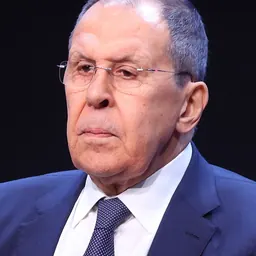
Ilyin has been quoted by Russian president Vladimir Putin in his speeches on various occasions, and is considered by some observers to be a major ideological inspiration for Putin. He was quoted or mentioned by Dmitry Medvedev, Sergey Lavrov, Patriarch Kirill of Moscow, Vladislav Surkov, and Vladimir Ustinov.
Major works
Hegel's philosophy as a doctrine of the concreteness of God and man (Философия Гегеля как учение о конкретности Бога и человека, 2 vols., 1918; German: Die Philosophie Hegels als kontemplative Gotteslehre, 1946) Resistance to Evil By Force (О сопротивлениии злу силою, 1925) The Way of Spiritual Revival (1935) Foundations of Struggle for the National Russia (1938) The Basis of Christian Culture (Основы христианской культуры, 1938) About the Future Russia (1948) Axioms of Religious Experience (Аксиомы религиозного опыта, 2 volumes, 1953) On the Essence of Conscience of Law (О сущности правосознания, 1956) The Way to Insight (Путь к очевидности, 1957) The Singing Heart. The Book of Silent Contemplation 1958 On Monarchy and Republic (О монархии и республики, 1978) Our Tasks (1948-1954). First published in Paris in 1956. In 1991, another edition of "Our Tasks" was published in Jordanville (USA), carried out by N.P. Poltoratsky.
Portrayal Ilyin, played by Kirill Pirogov, appears in a key episode of the TV series Trotsky.
Don’t just read it —
keep it.
Full-length biographies made to live with: read them, listen on the way to work, watch them tonight.
- E-book
- Audio
- Video
Instant download · yours to keep · every purchase keeps this site free
Important facts
People in Ivan Ilyin's life
Named in this biography and alive at the same time





Related people
Same field, nearest in time


Contemporaries
People whose lives overlapped Ivan Ilyin's



Frequently asked questions
Who was Ivan Ilyin?
Russian political philosopher (1883–1954)
When was Ivan Ilyin born?
Ivan Ilyin was born on 28 March 1883 in Moscow.
When did Ivan Ilyin die?
Ivan Ilyin died on 21 December 1954 in Zollikon.
What was Ivan Ilyin's occupation?
Ivan Ilyin was a philosopher, writer, university teacher, opinion journalist and jurist.
What nationality was Ivan Ilyin?
Ivan Ilyin was Russian.
Sources & further reading
Cite this page
APA: Biography.guide. (2026). Ivan Ilyin. https://biography.guide/ivan-ilyin/
MLA: "Ivan Ilyin." Biography.guide, https://biography.guide/ivan-ilyin/.
Chicago: "Ivan Ilyin." Biography.guide. https://biography.guide/ivan-ilyin/.
Data last updated: 2026-09-26 · Spot an error? Report a correction.
Page generated 2026-09-27 05:14 UTC