
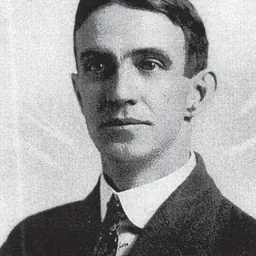
Itchiku Kubota
Japanese artist
About Itchiku Kubota
Lived 1917 – 2003 (aged 85). Itchiku Kubota was a Japanese dye maker.
(1917–2003) was a Japanese textile artist. He was most famous for reviving and in part reinventing an otherwise lost late 15th- to early 16th-century textile dye technique known as (lit. "flowers at the crossroads"), which became the main focus for much of his life's work. On his return to Japan, he set up a workshop in Tokyo and went back to dyeing. Seven years later, he finally decided to devote himself to the creation of his own technique; Kubota had found recreation of the exact technique formerly used impossible, as the fabric originally used for the technique was no longer produced. It is the former residence and workshop of the artist, and is now a permanent home to the Kubota Collection. For many years, Kubota dreamed of establishing a museum so that many people could visit to view his work. At the age of 74, he finally found, in his view, a perfect location – near Lake Kawaguchi, with a panoramic view of his beloved Mount Fuji.
Kubota purchased the site in 1991, and began construction with limited. After three years of construction, in 1994, the Itchiku Kubota Art Museum was opened to the public.
The main building, opened in October 1994, was constructed using a combination of traditional Japanese and Western techniques, representing the artist's unique worldview. The design is based on traditional Japanese architecture, but the structure evolves into a complex and spectacular pyramid-like puzzle of sixteen huge, 1000 year-old -tall wooden beams that are arranged in layers.
A tea-room, "Itchiku-an", located at the back of the exhibition room, offers visitors green tea, sweets, and a beautiful view of the surroundings. A waterfall and outdoor stage are located besides the museum's reception building where events are occasionally held. There is the "Tombodama Art Gallery", a shop selling original goods and -themed accessories, and an open-style cafe.
The garden around the museum was designed by Kubota, The technique gained worldwide recognition, with Kubota receiving significant awards for his work:
An award from the Society for the Dissemination of Folk Costumes and Customs (1978) Dr. Atkins has written and lectured extensively on Japanese early modern textiles and garments, as well as Japanese and American quilt history.
Documentary about Itchiku Kubota In 2013, a Russian filmmaker Radik Kudoyarov presented 'Kubota Kimonos: a History on Silk', a documentary about the life and art of Kubota.
In 2021, the film was shortlisted by the jury of international Master of Art Film Festival in Bulgaria ('Arts Horizons' nomination), and was screened at The Art of Brooklyn Film Festival.
Don’t just read it —
keep it.
Full-length biographies made to live with: read them, listen on the way to work, watch them tonight.
- E-book
- Audio
- Video
Instant download · yours to keep · every purchase keeps this site free
Important facts
Related people
Same field, nearest in time

Contemporaries
People whose lives overlapped Itchiku Kubota's

Frequently asked questions
Who was Itchiku Kubota?
Japanese artist (1917-2003)
When was Itchiku Kubota born?
Itchiku Kubota was born on 7 October 1917 in Kanda-ku.
When did Itchiku Kubota die?
Itchiku Kubota died on 26 April 2003 in Yamanashi Prefecture.
What was Itchiku Kubota's occupation?
Itchiku Kubota was a dye maker.
What nationality was Itchiku Kubota?
Itchiku Kubota was Japanese.
Sources & further reading
Cite this page
APA: Biography.guide. (2026). Itchiku Kubota. https://biography.guide/itchiku-kubota/
MLA: "Itchiku Kubota." Biography.guide, https://biography.guide/itchiku-kubota/.
Chicago: "Itchiku Kubota." Biography.guide. https://biography.guide/itchiku-kubota/.
Data last updated: 2026-09-20 · Spot an error? Report a correction.
Page generated 2026-09-27 05:30 UTC