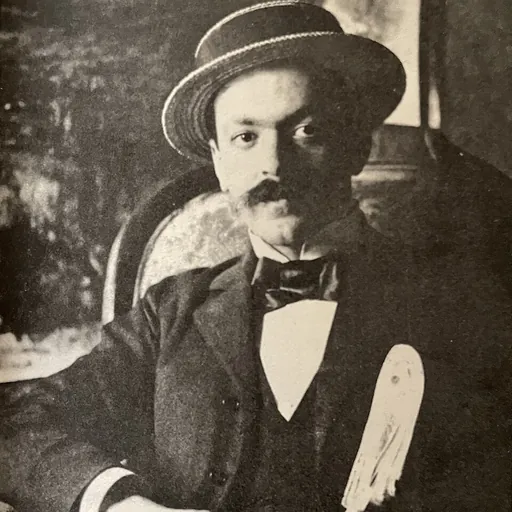
About Italo Svevo
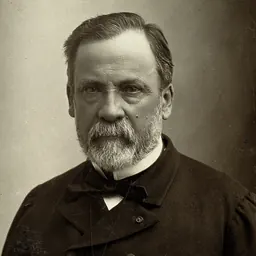
Lived 1861 – 1928 (aged 66). Italo Svevo was an Italian and Austrian writer, playwright, translator, businessperson and novelist.
Aron Hector Schmitz (19 December 186113 September 1928), better known by the pseudonym Italo Svevo , was an Italian and Austro-Hungarian writer, businessman, novelist, playwright, and short story writer. Svevo was considered a pioneer of the psychological novel in Italy and is best known for his modernist novel La coscienza di Zeno, which became a widely appreciated classic of Italian literature.
Early life Born in Trieste (at the time in the Austrian Empire, then in Austria-Hungary since 1867) as Aron Ettore Schmitz to a Jewish German father and an Italian mother, Svevo was one of seven children, and grew up enjoying a passion for literature from a young age, reading works of Goethe, Schiller, Shakespeare, and the classics of French and Russian literature.
Svevo was a citizen of the Austro-Hungarian Empire until the end of the First World War. He spoke Italian as a second language, as he usually spoke the Triestine dialect. Due to his Germanophone ancestry by his father, he and his brothers were sent to a boarding school near Würzburg, in the German Empire, where he learnt and became fluent in German.
After returning to Trieste in 1880, Svevo continued his studies for a further two years at Istituto Revoltella, before being forced to take financial responsibility when his father filed for bankruptcy, after his once successful glassware business failed. This 20-year period as a bank clerk at the Unionbank of Vienna served as inspiration for his first novel, Una Vita (1892).
Following the death of his parents, Svevo married his cousin Livia Veneziani in a civil ceremony in 1896. Soon after, Livia convinced him to convert to Catholicism and take part in a religious wedding (probably after a troublesome pregnancy). Personally, however, Svevo was an atheist. He became a partner in his wealthy father-in-law's paint business - that specialized in manufacturing industrial paint, that was used on naval warships. He became successful in growing the business, and after trips to France and Germany set up a branch of the company in England.
Svevo lived for part of his life in Charlton, south-east London, while working for a family firm. He documented this period in his letters to his wife, which highlighted the cultural differences he encountered in Edwardian England. His old home at 67 Charlton Church Lane now carries a blue plaque.
Writing career Svevo first started writing short stories in 1880. He took on the pseudonym "Italo Svevo" (literally "Italus the Swabian") for the publication of his first novel, Una Vita, in 1892. The novel was not a success.
His second novel, Senilità (1898), was also received poorly. In 1919 he began work on La Coscienza di Zeno (known in English as Zeno's Conscience or Confessions of Zeno).
Zeno's Conscience In 1923 Italo Svevo published the psychological novel La Coscienza di Zeno. The work, showing the author's interest in the theories of Sigmund Freud, is written in the form of the memoirs of Zeno Cosini, who writes them at the insistence of his psychoanalyst.
Zeno's Conscience never looks outside the narrow confines of Trieste, much like Joyce's work, which rarely left Dublin in the last years of Ireland's time as part of the United Kingdom. Svevo often employs sardonic wit in his observations of Trieste and, in particular, of his hero, an indifferent man, who cheats on his wife, lies to his psychoanalyst, and is trying to explain himself to his psychoanalyst, by revisiting his memories.
Legacy
Svevo, along with Luigi Pirandello, is considered a prominent figure of early 20th-century Italian literature, and has had an important influence on later generations of the country's writers.
Though only recognised for his literary achievements towards the end of his life, Svevo is celebrated as one of Italy's finest writers, particularly in his home city of Trieste, and has a statue in front of the Museum of Natural History erected in his honour.
The following are named after him: Istituto Comprensivo Italo Svevo in Trieste, Italy Liceo Italo Svevo in Cologne, Germany
Selected works Novels Una Vita (1892). A Life, trans. Archibald Colquhoun (1963). Senilità (1898). As a Man Grows Older, trans. Beryl de Zoete (1932); later as Emilio's Carnival, trans. Beth Archer Brombert (2001). La Coscienza di Zeno (1923). Confessions of Zeno, trans. Beryl de Zoete (1930); later as Zeno's Conscience, trans. William Weaver (2003). Novellas La novella del buon vecchio e della bella fanciulla (1926). The Nice Old Man and the Pretty Girl. Una burla riuscita (1926). A Perfect Hoax, trans. J. G. Nichols (2003). Short story collections La novella del buon vecchio e della bella fanciulla, e altre prose inedite e postume (1929, posthumous). The Nice Old Man and the Pretty Girl and Other Stories, trans. L. Collison-Morley (1930). Corto viaggio sentimentale e altri racconti inediti (1949, posthumous). Short Sentimental Journey and Other Stories, trans. Beryl de Zoete, L. Collison-Morley and Ben Johnson (1967). Other
Saggi e pagine sparse (1954, posthumous). Essays and Scattered Pages. Commedie (1960, posthumous). Dramatic works. Lettere (1966, posthumous). Correspondence with Eugenio Montale. Further Confessions of Zeno (1969, posthumous). Trans. Ben Johnson and P. N. Furbank. Fragments of a sequel to La coscienza di Zeno. Includes: "The Old Old Man", "An Old Man's Confessions", "Umbertino", "A Contract", "This Indolence of Mine", and Regeneration: A Comedy in Three Acts. A Very Old Man: Stories (2022, posthumous). Trans. Frederika Randall. Includes: "The Contract", "The Confessions of a Very Old Man", "Umbertino", "My Leisure", and "Foreword".
Don’t just read it —
keep it.
Full-length biographies made to live with: read them, listen on the way to work, watch them tonight.
- E-book
- Audio
- Video
Instant download · yours to keep · every purchase keeps this site free
Important facts
People in Italo Svevo's life
Named in this biography and alive at the same time



Related people
Same field, nearest in time
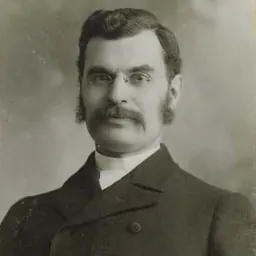
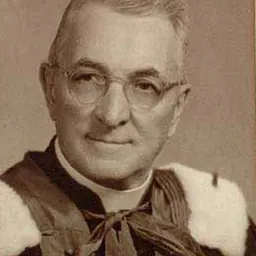

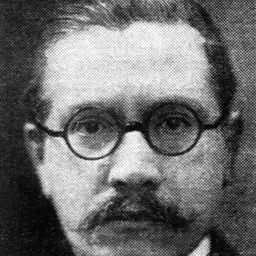
Contemporaries
People whose lives overlapped Italo Svevo's
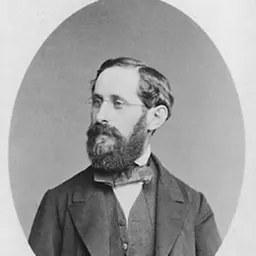




Frequently asked questions
Who was Italo Svevo?
Italian writer (1861-1928)
When was Italo Svevo born?
Italo Svevo was born on 19 December 1861 in Trieste.
When did Italo Svevo die?
Italo Svevo died on 13 September 1928 in Motta di Livenza.
What was Italo Svevo's occupation?
Italo Svevo was a writer, playwright, translator, businessperson and novelist.
What nationality was Italo Svevo?
Italo Svevo was Italian and Austrian.
Sources & further reading
Cite this page
APA: Biography.guide. (2026). Italo Svevo. https://biography.guide/italo-svevo/
MLA: "Italo Svevo." Biography.guide, https://biography.guide/italo-svevo/.
Chicago: "Italo Svevo." Biography.guide. https://biography.guide/italo-svevo/.
Data last updated: 2026-09-22 · Spot an error? Report a correction.
Portrait: Wikimedia Commons · author & licence
Page generated 2026-09-27 05:03 UTC