
István Mészáros
(1930–2017) Hungarian philosopher
About István Mészáros
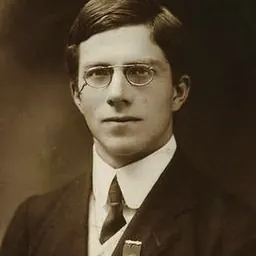
Lived 1930 – 2017 (aged 86). István Mészáros was a Hungarian philosopher, university teacher, sociologist and economist.
István Mészáros (, , ; 19 December 1930 – 1 October 2017) was a Hungarian Marxist philosopher. Described as "one of the foremost political philosophers of the late twentieth and early twenty-first centuries" by Monthly Review, Mészáros wrote mainly about the possibility of a transition from capitalism to socialism. His magnum opus, Beyond Capital: Toward a Theory of Transition, was concerned not only with this theme but provided a conceptual distinction between capitalism and capital, and an analysis of the current capitalist society and its "structural crisis". He was interested in the critique of the "bourgeois ideology", including the idea of "there is no alternative", and he also elaborated analysis on the failures of "real socialism".
Biography Early life in Hungary Mészáros was born in Budapest, Hungary. He was raised by his single mother and his maternal grandmother, and at age twelve falsified his birth date to work along with his mother in an airplane factory building engines. During this period, Lukács was very criticised by the Hungarian Communist Party and Mátyás Rákosi's government banned some of his works between 1949 and the mid-1950s. This interest for cultural issues reverberated in his 1955 doctoral dissertation in philosophy entitled Szatíra és valóság ("Satire and Reality"). In the following year, he was made editor of the cultural magazine Eszmélet, created by Lukács, composer Zoltán Kodály, and other personalities. Mészáros was also chosen to be an associate professor of philosophy and Lukács's successor at the Institute of Aesthetics.
Academic career in the West Mészáros moved to Italy and was a professor at the University of Turin. He worked in Italy until moving to the United Kingdom, where he worked at Bedford College, London (1959–1961) and the University of St. Andrews (1961–1966). He joined the University of Sussex in 1966, where he held the Chair of Philosophy. His 1970 book Marx's Theory of Alienation established his reputation in the English-speaking world, and won him that year Isaac Deutscher Memorial Prize. Receiving the award, he got the opportunity to do the first Isaac Deutscher Memorial Lecture at the London School of Economics in the following year. the lecture was renamed "The Necessity of Social Control". In 1971, it appeared under the title "Alienation and the Necessity of Social Control" in the Socialist Register, and was also published by Merlin Press in book-format as The Necessity of Social Control.
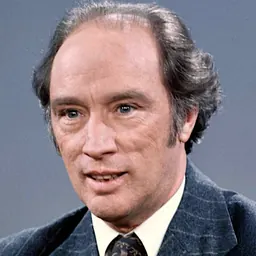
In late 1972, Mészáros was appointed professor of philosophy to teach political theory courses at York University, Toronto, and then resigned his position at Sussex. After accusations of being a "Russian spy" for KGB, a letter to Prime Minister Pierre Trudeau by political scientist C. B. Macpherson, After that, he worked as a senior professor of York's Social and Political Thought Program for three years before returning to Sussex.
Mészáros collected and edited thirteen 1958–1976 essays by Philippine historian Renato Constantino in a book titled Neo-Colonial Identity and Counter-Consciousness: Essays in Cultural Decolonisation. First published by Merlin Press in 1978 and then by M. E. Sharpe in 1979,
Mészaros was appointed emeritus professor by Sussex in 1991, After this work, he also published the two-volume critique of "bourgeois ideology" Social Structure and Forms of Consciousnes: The Social Determination of Method in 2010 and The Dialectic of Structure and History in 2011.
Mészáros believed it was important to make a distinction between capitalism and capital to theorise about a transition to socialism. He posited that capital appeared "thousand of years" prior to capitalism and that it can continue without capitalism, which is the case of Soviet Union (USSR) in his understanding. In this sense, a revolutionary upheaval can overthrow capitalism in a limited area by the expropriation of the capitalist class, but the power of capital can still control the system through the division of labour and the "hierarchical command structure of capital". Mészáros defined capital as "command system whose mode of functioning is accumulation-oriented". In his conception, the extraction of surplus value can be done in a "political way"—like in the case of USSR—or through "an economically regulated extraction of surplus labour and surplus value"—like in the West. Mészáros argued that the accumulation process in the Stalinist states "was done in a very improper fashion from the point of view of productivity" and in a 1982 essay said that it would eventually collapse because of this fact—and not because of US-backed anticommunist military policies.
Personal life Mészáros met his Italian wife, Donatella Morisi, in 1955 in Paris; they were married on 14 February 1956; she died in 2007. They had three children: Laura, born 1956; Susie, born 1960; and Giorgio, born 1962.
Works Book Date Publisher Notes Ref. La rivolta degli intellettuali in Ungheria ("The Revolt of the Intellectuals in Hungary") 1958 Giulio Einaudi, Turin In Italian Attila József e l'arte moderna ("Attila József and Modern Art") 1964 , Milan In Italian Marx's Theory of Alienation 1970 Merlin Press, London Won the Isaac Deutscher Award Aspects of History and Class Consciousness 1971 Merlin Press, London Editor of a series of seminars by Marxist scholars The Necessity of Social Control 1971 Merlin Press, London Isaac Deutscher Memorial Lecture Lukacs' Concept of Dialectic 1972 Merlin Press, London Neo-Colonial Identity and Counter-Consciousness: Essays in Cultural Decolonisation 1978 Merlin Press, London Editor of essays by Renato Constantino The Work of Sartre: Search for Freedom 1979 Harvester Press, Brighton Re-edited and expanded in 2012 as Search for Freedom and the Challenge of History by Monthly Review Press, New York Philosophy, Ideology and Social Science: Essays in Negation and Affirmation 1986 Harvester Wheatsheaf, Brighton
Don’t just read it —
keep it.
Full-length biographies made to live with: read them, listen on the way to work, watch them tonight.
- E-book
- Audio
- Video
Instant download · yours to keep · every purchase keeps this site free
Important facts
People in István Mészáros's life
Named in this biography and alive at the same time






Related people
Same field, nearest in time

Contemporaries
People whose lives overlapped István Mészáros's

Frequently asked questions
Who was István Mészáros?
(1930–2017) Hungarian philosopher
When was István Mészáros born?
István Mészáros was born on 19 December 1930 in Budapest.
When did István Mészáros die?
István Mészáros died on 1 October 2017 in London.
What was István Mészáros's occupation?
István Mészáros was a philosopher, university teacher, sociologist and economist.
What nationality was István Mészáros?
István Mészáros was Hungarian.
Sources & further reading
· DBpedia: István Mészáros (philosopher)
Cite this page
APA: Biography.guide. (2026). István Mészáros. https://biography.guide/istvan-meszaros-philosopher/
MLA: "István Mészáros." Biography.guide, https://biography.guide/istvan-meszaros-philosopher/.
Chicago: "István Mészáros." Biography.guide. https://biography.guide/istvan-meszaros-philosopher/.
Data last updated: 2026-09-20 · Spot an error? Report a correction.
Page generated 2026-09-27 04:58 UTC