
About Attila József
Lived 1905 – 1937 (aged 32). Attila József was a Hungarian poet.
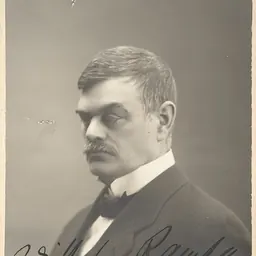
Attila József (11 April 1905 – 3 December 1937) was one of the most famous Hungarian poets of the 20th century. Generally not recognized during his lifetime, József was hailed during the communist era of the 1950s as Hungary's great "proletarian poet" and he has become the best known of the modern Hungarian poets internationally.
Biography
Attila József was born in Ferencváros, a poor district of Budapest, in 1905 to Áron József, a soap factory worker of Székely and Romanian origin from Banat, and Borbála Pőcze, a Hungarian peasant girl with Cuman ancestry; he had two elder sisters, Eta and Jolán. When Attila was three years old, he was sent to live with foster parents after his father abandoned the family and his mother became ill. At the time of his birth, Attila was not a well known name; because of this, his foster parents called him Pista, a nickname for the Hungarian version of Stephen. He never married and only had a small number of affairs, but frequently fell in love with the women who were treating him.
Attila József died on 3 December 1937, aged 32, in Balatonszárszó. At the time, he was staying at the house of his sister and brother-in-law. He was killed while crawling through railway tracks where he was crushed by a starting train. There is a memorial to him not far from the location where he died. The most widely accepted view is that he committed suicide, which he had previously attempted; he wrote five farewell letters that day.
Poetry
József published his first volume of poetry A szépség koldusa (Beauty's beggar) in 1922; at the time of publishing, he was seventeen and still in school.
In 1925, József published his second collection of poems, Nem én kiáltok (It's not me who shouts). József's works were praised by such internationally known Hungarian researchers and critics as Béla Balázs and György Lukács. In 1927, several French magazines published József's poems.
József's third collection of poems, Nincsen apám se anyám (1929) (I have neither father nor mother), showed the influence of French surrealism and Hungarian poets Endre Ady, Gyula Juhász and Lajos Kassák.
In the 1930s, József turned his focus from a search for beauty to the plight of the working class and reflected his interest in Communism. József's political essays were later included in Volume 3. of his Collected Works (1958).
Publications
Original works A szépség koldusa ("Beggar of Beauty"), 1922 Nem én kiáltok ("That's Not Me Shouting"), 1925 Nincsen apám se anyám ("Fatherless and Motherless"), 1929 Döntsd a tőkét, ne siránkozz ("Chop at the Roots" or "Knock Down the Capital"), 1931 Külvárosi éj ("Night in the outskirts"), 1932 Medvetánc ("Bear Dance"), 1934 Nagyon fáj ("It Hurts a Lot"), 1936
Published posthumously Collected verse and selected writings, 1938 Collected verse and translations, 1940 Collected works, 1958 Collected works, 1967 József Attila: Selected Poems and Texts, 1973 (introduction by G. Gömöri)
English translations Perched on Nothing’s Branch, 1987 (translated by Peter Hargitai) Winter Night: selected poems of Attila József, 1997 (translated by John Batki) A Transparent Lion: selected poems of Attila József; translated by Michael Castro and Gabor G. Gyukics, Los Angeles, CA: Green Integer 149, 2006 Poems in English-language anthologies: The Lost Rider. Dávidházi, P. et al. (Budapest: Corvina Books, 1997) The Colonnade of Teeth: Modern Hungarian Poetry. Gömöri, G. and Szirtes, G. (Newcastle-upon-Tyne: Bloodaxe Books, 1996) In Quest of the Miracle Stag: The Poetry of Hungary. Edited by (Budapest: Atlantis-Centaur, 1996 and 2000)
Tributes
Exhibition of paintings "Je ne crie pas"/"Nem kiáltok…!" ("I do not shriek") by Thibault Boutherin, a tribute to József's poem "Nem én kiáltok" ("No Shriek of Mine") and dedicated to SGG, in the Károlyi Foundation in Féhervárcsurgó (Hungary) August/November 2007. American band The Party recorded a country-folk version of Peter Hargitai's English translation of "Tiszta szívvel" ("With All My Heart") in 2004. Hungary issued postage stamps in his honor on 15 March 1947, 28 July 1955, 11 April 1980 and 11 April 2005.
Don’t just read it —
keep it.
Full-length biographies made to live with: read them, listen on the way to work, watch them tonight.
- E-book
- Audio
- Video
Instant download · yours to keep · every purchase keeps this site free
Important facts
People in Attila József's life
Named in this biography and alive at the same time
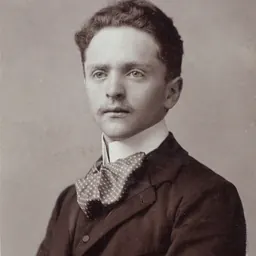
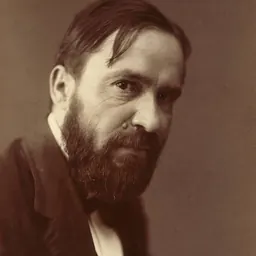




Related people
Same field, nearest in time

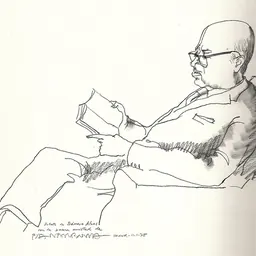
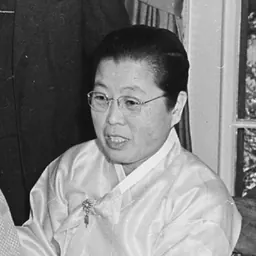

Contemporaries
People whose lives overlapped Attila József's


Frequently asked questions
Who was Attila József?
Hungarian poet (1905–1937)
When was Attila József born?
Attila József was born on 11 April 1905 in Budapest.
When did Attila József die?
Attila József died on 3 December 1937 in Balatonszárszó.
What was Attila József's occupation?
Attila József was a poet.
What nationality was Attila József?
Attila József was Hungarian.
Sources & further reading
Cite this page
APA: Biography.guide. (2026). Attila József. https://biography.guide/attila-jozsef/
MLA: "Attila József." Biography.guide, https://biography.guide/attila-jozsef/.
Chicago: "Attila József." Biography.guide. https://biography.guide/attila-jozsef/.
Data last updated: 2026-09-20 · Spot an error? Report a correction.
Page generated 2026-09-27 05:22 UTC