
Isparhecher
American Indian activist
About Isparhecher
Lived 1829 – 1902 (aged 72–73). Isparhecher was an American.
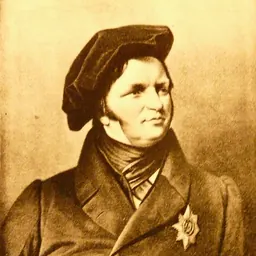
Isparhecher ( – 22 December 1902, Muscogee), sometimes spelled "Isparhecker," and also known as Is-pa-he-che and Spa-he-cha, was known as a political leader of the opposition in the Creek Nation (now known by their autonym Muscogee) in the post-Civil War era. He led a group that supported traditional ways and was opposed to the assimilation encouraged by Chief Samuel Checote and others.
Born in Alabama in 1829 to full-blood Creek parents, Isparhecher and his family belonged to the Lower Creek (a.k.a., McIntosh faction), who wanted to keep traditional ways. They were among the majority of Creek who removed to Indian Territory in the early 1830s. They settled on a farm at Cussetah town, about southeast of the present city of Okmulgee, Oklahoma
After most of the Creek Nation allied with the Confederacy at the outbreak of the American Civil War, Isparhecher joined the Confederate army in 1861. During the war, he switched his allegiance in 1863 to the Union and fought with their army.
In the postwar years, Isparhecher became active in Creek politics. After the Nation was forced to make a new peace treaty with the United States, he initially supported the recognized Creek government. The council had drafted a new constitution, under which Samuel Checote was elected as principal chief. But Isparhecher became increasingly aligned with the opposition, which consisted mostly of full-blood Creek who wanted to preserve traditional ways rather than assimilate to European–American culture. They formed a rival Creek government based in the town of Nuyaka. It was led first by Locha Harjo, then by Isparhecher. In 1883 Checote mustered the Creek Lighthorse, led by Pleasant Porter, to confront and defeat the Nuyaka group. Isparhecher remained politically active until his death.
Early life Isparhecher was born in Alabama in 1829 to full-blood Creek parents, Yar-de-ka Tus-tan-nug-ga and his wife Ke-char-te. The family belonged to the Lower Creek (a.k.a., McIntosh faction), which wanted to keep to traditional ways. They had had less contact with European Americans than the Upper Creek. Both groups were forced to cede their land and remove to Indian Territory in the early 1830s. Isparhecher's family settled on a farm at Cussetah town, about southeast of what developed as Okmulgee, Oklahoma.
Marriage and family Sometime prior to the Civil War, Isparhecher married a woman named Polikissut. They had a son named Washington. His first wife may have died, as he was recorded as marrying Lucy Barnett. They had four children together.
His third wife was Alma Harrover, whom he met and married in Washington, D.C., on June 4, 1884. He was serving as the Creek delegate to Congress, under the Chief Joseph Perryman administration. They divorced November 28, 1891.
His last wife was Cindoche Sixkiller, a woman 36 years younger than he. They married on March 26, 1896, at the Creek Nation. She survived him, and died June 14, 1931.
Civil War service The Creek Nation leadership allied with the Confederacy, which had promised an Indian-controlled state if they were victorious.
Isparhecher enlisted for a one-year term in the Confederate Army on August 17, 1861, becoming 4th Sergeant in Company K of the 1st Regiment of Creek Mounted Volunteers. D. N. McIntosh was the company commander and the unit was attached to a brigade led by Col. D. H. Cooper. Muster rolls indicate he was absent from August 19, 1861, until August 17, 1862. After that date, he appeared on every muster roll until December 1, 1862. He did not report again after that.
Isparhecher went to Fort Gibson, then controlled by the Union Army, where he volunteered to join Company K in the 1st Regiment of Indian Home Guards, Kansas Infantry, in the Union Army. He missed only one muster roll until he was honorably discharged at Fort Gibson on May 31, 1865. He was in combat at the battle on Barren Fork and was promoted to Sergeant on March 12, 1864. Porter's men pursued the Nuyaka forces as they fled west through the Sac and Fox territory. Then, Porter's troops returned to Okmulgee.
Don’t just read it —
keep it.
Full-length biographies made to live with: read them, listen on the way to work, watch them tonight.
- E-book
- Audio
- Video
Instant download · yours to keep · every purchase keeps this site free
Important facts
People in Isparhecher's life
Named in this biography and alive at the same time



Contemporaries
People whose lives overlapped Isparhecher's




Frequently asked questions
Who was Isparhecher?
American Indian activist
When was Isparhecher born?
Isparhecher was born in 1829 in Alabama.
When did Isparhecher die?
Isparhecher died on 22 December 1902 in Indian Territory.
What nationality was Isparhecher?
Isparhecher was American.
Sources & further reading
Cite this page
APA: Biography.guide. (2026). Isparhecher. https://biography.guide/isparhecher/
MLA: "Isparhecher." Biography.guide, https://biography.guide/isparhecher/.
Chicago: "Isparhecher." Biography.guide. https://biography.guide/isparhecher/.
Data last updated: 2026-09-22 · Spot an error? Report a correction.
Page generated 2026-09-27 05:30 UTC