
Isolde Ahlgrimm
Viennese harpsichordist and fortepianist
About Isolde Ahlgrimm
Lived 1914 – 1995 (aged 81). Isolde Ahlgrimm was an Austrian harpsichordist, musicologist, pianist, musician and organist.
Isolde Ahlgrimm (31 July 1914 in Vienna – 11 October 1995 in Vienna) was an Austrian harpsichordist and fortepianist. In 1975 she was awarded the Austrian Gold Medal. She performed The Bach Cycle in 12 programs in Vienna, 1949–50 and 1952–53. Before some 600 subscribers at the preconcert lectures for four of the programs in the first Bach Cycle, Ahlgrimm was the first harpsichordist to argue the case for performing Bach's last work, The Art of Fugue, in its original form as a keyboard work, an idea also adopted at that time by her younger colleague, Gustav Leonhardt (born 1928).
She performed the work for the first time in 1952 and recorded it a year later as Volume 9 of her JS Bach series. From 1937, Ahlgrimm was the first fortepianist in Europe to use original Viennese instruments in the performance of the music of W. A. Mozart. In 1951, she presented the entire solo output of Mozart in a series of nine concerts (The Mozart Cycle), on original fortepianos by Michael Rosenberger (1790) and Anton Walter (1787).
She gave the first performance of Bach's The Musical Offering in its original form, (recorded with Nikolaus Harnoncourt in 1955). With Erich Fiala, she prepared the first recordings of the Bach harpsichord concertos using original string instruments of the baroque era (drawn from Fiala's extensive collection), tuned to low pitch (c. A = 417) and strung in gut. The ensemble—led by Rudolf Baumgartner and including Nikolaus and Alice Harnoncourt alongside other leading Viennese musicians—was named the Amati Orchestra, since all of the string instruments they used had been made by either members of the Amati dynasty or their students.
Ahlgrimm was a close friend of the German composer Richard Strauss and performed a 79th birthday concert for him in Vienna's Konzerthaus (Mozart-Saal) in 1943. Strauss composed a concert-ending to a suite of dances from his last opera, Capriccio (1942), arranged by Ahlgrimm for solo harpsichord at Strauss's suggestion. The Capriccio Suite was first performed by Ahlgrimm in 1946 and was later published by Edition Schott.
Ahlgrimm joined the teaching staff of the Vienna Academy (later known as University of Music and Performing Arts, Vienna) in 1945; remaining there until 1958 when she joined the faculty of the Mozarteum University of Salzburg. A Dictionary of ornamentation, left unpublished at her death, has been completed by her colleague and Viennese musicologist, Helga Scholz-Michelitsch.
A biography of Ahlgrimm, Isolde Ahlgrimm, Vienna and the early music revival, by her student, Peter Watchorn, was published by Ashgate Publishing in 2007.
Selected discography JS Bach: Complete Works for Harpsichord (Philips) (1951–56; released 1952–59): Volume 1 – Das Wohltemperierte Clavier, Book 1, BWV 846–869 Volume 2 – Six French Suites, BWV 812–817 Volume 3 – Twenty Little Preludes, BWV 924–943 Volume 4 – Six English Suites, BWV 806–811 Volume 5 – Six Partitas, BWV 825–830 Volume 6 – Das Wohltemperierte Clavier, Book 2, BWV 870–893 Volume 7 – Goldberg Variations, BWV 988; Italian Variations, BWV 989 Volume 8 – Sonatas for flute and obbligato harpsichord, BWV 1030–1032 Volume 9 – Die Kunst der Fuge, BWV 1080 Volume 10 – Das Musikalische Opfer, BWV 1079 (w/ Harnoncourt) Volume 11 – Three sonatas for viola da gamba, BWV 1027–1029 (w/N. Harnoncourt) Volume 12 – Fifteen Inventions and Fifteen Sinfonias, BWV 772–801 Volume 13 – Fantasias, Preludes and Fugues, BWV 903, 899, 904, 906, 944, 917, 918, 919 Volume 14 – Toccatas, BWV 910–916; Passacaglia, BWV 582; Fugues BWV 575–577 Concertos for One and Two Harpsichords, BWV 1052–1062 (w/ Friederike Bretschneider/Amati Orchestra/Erich Fiala, cond.) Italian Concerto, BWV 971; French Overture, BWV 831; Four Duets, BWV 802–805; Capriccio in B-flat, BWV 992 (recorded Philips, 1975) (also: Austrian Harpsichord Music, G. F. Handel: Eight "Great" Suites, 1720: Eterna).
Don’t just read it —
keep it.
Full-length biographies made to live with: read them, listen on the way to work, watch them tonight.
- E-book
- Audio
- Video
Instant download · yours to keep · every purchase keeps this site free
Important facts
People in Isolde Ahlgrimm's life
Named in this biography and alive at the same time
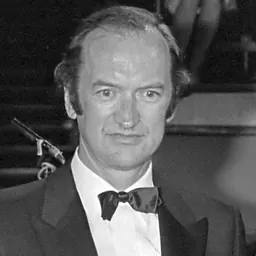
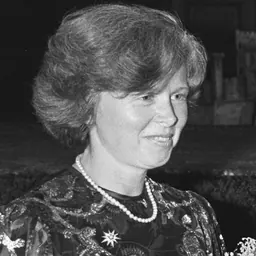
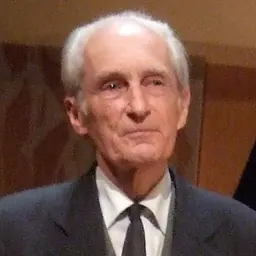



Related people
Same field, nearest in time
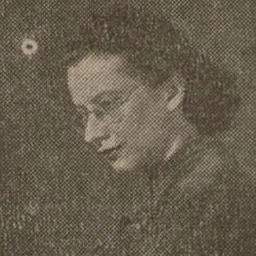


Contemporaries
People whose lives overlapped Isolde Ahlgrimm's




Frequently asked questions
Who was Isolde Ahlgrimm?
Viennese harpsichordist and fortepianist (1914–1995)
When was Isolde Ahlgrimm born?
Isolde Ahlgrimm was born on 31 July 1914 in Vienna.
When did Isolde Ahlgrimm die?
Isolde Ahlgrimm died on 11 October 1995 in Vienna.
What was Isolde Ahlgrimm's occupation?
Isolde Ahlgrimm was a harpsichordist, musicologist, pianist, musician and organist.
What nationality was Isolde Ahlgrimm?
Isolde Ahlgrimm was Austrian.
Sources & further reading
Cite this page
APA: Biography.guide. (2026). Isolde Ahlgrimm. https://biography.guide/isolde-ahlgrimm/
MLA: "Isolde Ahlgrimm." Biography.guide, https://biography.guide/isolde-ahlgrimm/.
Chicago: "Isolde Ahlgrimm." Biography.guide. https://biography.guide/isolde-ahlgrimm/.
Data last updated: 2026-09-20 · Spot an error? Report a correction.
Page generated 2026-09-27 05:20 UTC