
About Isobel Baillie
Lived 1895 – 1983 (aged 88). Isobel Baillie was a British opera singer, music educator and musician.
Dame Isobel Baillie ( Isabella Douglas Baillie; 9 March 189524 September 1983) was a Scottish soprano. She made a local success in Manchester, where she was brought up, and in 1923 made a successful London debut. Her career, encouraged by the conductor Sir Hamilton Harty, quickly developed, with breaks in the first years for vocal study in Milan. Baillie's career was almost wholly as a concert singer: she only once acted in an opera production on stage. She was associated above all with oratorio, becoming well known for her many performances in Handel's Messiah, Haydn's The Creation, Mendelssohn's Elijah and the choral works of Elgar.
During a long career, Baillie sang in complete recordings of Messiah, Elijah, Beethoven's Missa solemnis and Ninth Symphony. In the 1940s she formed a friendship with the contralto Kathleen Ferrier, with whom she appeared frequently in concert and made several recordings of duets. She took part in 19 annual Three Choirs Festivals from 1929. She made her American debut in 1933 and between then and her retirement from the concert platform in the mid-1950s she sang in the US, New Zealand, the Far East and Africa as well as in Europe.
In her later years, Baillie was a teacher in the Royal College of Music, Royal Manchester School of Music and Cornell University.
Life and career Early years Isabella Douglas Baillie was born in Hawick, Roxburghshire, on 9 March 1895, the youngest child and third daughter of Martin Pott Baillie (1860–1904), a baker, and his wife, Isabella Hetherington née Douglas (1865–1936). She was christened Isabella Douglas but was known to family and friends as Bella.
At fifteen, Baillie left school, working first in a music shop and then in Manchester Town Hall. She took singing lessons from Jean Sadler-Fogg, a former pupil of Blanche Marchesi. In her spare time she sang at local concerts, at one of which in about 1913 she met Henry (Harry) Leonard Wrigley (1891–1957), a cotton trader. They married on 31 December 1917 while he was on sick leave from the armed forces in France. Their only child, a daughter, Nancy, was born in December 1918. Sir Henry Wood engaged her for six concerts at the Queen's Hall. Her career quickly developed, but on Harty's advice she took a break from concert-giving in mid-1925 and another the following year to study in Milan with the vocal coach at La Scala, Gugliemo Somma. Harty further helped her in her career by suggesting a change of professional name from "Bella Baillie" ("he felt that it led one to expect a music hall or musical comedy artist") On 6 May 1929 she placed a notice in The Times stating that from that date Miss Bella Baillie would sing under the name of Isobel Baillie. As The Times obituarist put it, for thirty years after her London debut "she was in constant demand on the concert platform, making a speciality of Messiah, The Creation, Elijah, and the choral work of Elgar".
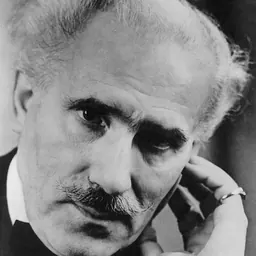
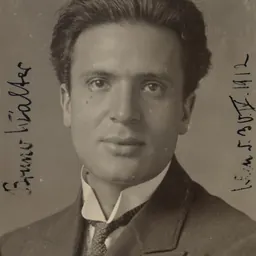
In Britain, Baillie sang for the leading conductors of the 1930s, including Sir Thomas Beecham, Sir Adrian Boult and Malcolm Sargent, and visitors from overseas, including Arturo Toscanini, Bruno Walter and Victor de Sabata. Ten days after the concert Wood and his 16 singers recorded the work for Columbia, "thereby", in the words of Michael Kennedy, "preserving her marvellous ascent to top A on the words 'sweet harmony'".
Baillie had been a pioneer broadcaster, singing on a local Manchester radio station in 1920, before the foundation of the BBC, She frequently sang excerpts from Wagner and other operas in concert and studio performance, but rarely appeared in the opera house. She did so at Covent Garden in 1937 for Orphée et Eurydice, but even then she was not seen, but provided the offstage voice of "L'ombre heureuse". Her only onstage appearances in opera were in 1940 on a tour of New Zealand as Marguerite in Faust with Heddle Nash in the title role.
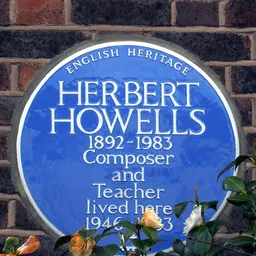
Baillie's career was essentially that of a concert artist. She sang at nineteen Three Choirs Festivals, beginning in 1929 at Worcester Cathedral, in Messiah, conducted by Sir Ivor Atkins. She sang in Elgar's The Apostles and The Kingdom under the baton of the composer. Other British composers with whose music she was associated included Herbert Howells, George Dyson and Gerald Finzi. Although she was known for her performances of British music, Kennedy comments that her repertory was "wider than was often supposed", including many works by Bach, Berlioz, Brahms, Dvořák, Kodály, Mendelssohn, Rachmaninoff "(The Bells as well as songs)", Schubert, Schumann, Richard Strauss, Szymanowski, Tchaikovsky and Hugo Wolf. "In addition she sang a vast number of popular ballads." She sang in Honolulu in 1948, and Washington National Cathedral the following year; in 1953 she made a tour of southern Africa, giving recitals in cities including Nairobi, Salisbury, Johannesburg, Cape Town and Durban. In addition she taught for many years at the Royal Manchester School of Music.
Recordings Baillie's recording career stretched across fifty years. Her first recording was a test disc made in February 1924; her first commercial release came the following year; her last major recording was in 1953 in A Sea Symphony, in Decca's Vaughan Williams symphony cycle under Boult; and in 1974 she recorded a song by Harty, released to mark her eightieth birthday. and Messiah and Elijah (under Sargent, 1946 and 1947) In 2004, there was released for the first time a live recording, made in the Queen's Hall in 1937, of Beethoven's Ninth Symphony conducted by Toscanini with Baillie as soprano soloist. With Ferrier she recorded duets by Purcell and Mendelssohn, Her solo recordings featured numerous pieces by Bach, Handel and Mendelssohn, but also arias or songs by composers including Arne, Brahms, Delius, Grieg, Harty, Haydn, Mozart, Offenbach, Rachmaninoff, Schubert and Schumann.
Honours Baillie was appointed Commander of the Order of the British Empire (CBE) in 1951 and promoted to Dame Commander (DBE) in 1978. She was the recipient of honorary degrees from the Royal College of Music, the Royal Academy of Music and the University of Manchester.
Don’t just read it —
keep it.
Full-length biographies made to live with: read them, listen on the way to work, watch them tonight.
- E-book
- Audio
- Video
Instant download · yours to keep · every purchase keeps this site free
Important facts
People in Isobel Baillie's life
Named in this biography and alive at the same time

Related people
Same field, nearest in time


Contemporaries
People whose lives overlapped Isobel Baillie's


Frequently asked questions
Who was Isobel Baillie?
Scottish opera singer
When was Isobel Baillie born?
Isobel Baillie was born on 9 March 1895 in Hawick.
When did Isobel Baillie die?
Isobel Baillie died on 24 December 1983 in Manchester.
What was Isobel Baillie's occupation?
Isobel Baillie was an opera singer, music educator and musician.
What nationality was Isobel Baillie?
Isobel Baillie was British.
Sources & further reading
Cite this page
APA: Biography.guide. (2026). Isobel Baillie. https://biography.guide/isobel-baillie/
MLA: "Isobel Baillie." Biography.guide, https://biography.guide/isobel-baillie/.
Chicago: "Isobel Baillie." Biography.guide. https://biography.guide/isobel-baillie/.
Data last updated: 2026-09-22 · Spot an error? Report a correction.
Page generated 2026-09-27 05:08 UTC