
About Ismail Merathi
Lived 1844 – 1917 (aged 72). Ismail Merathi was an Indian poet and children's writer, known for Nazm.
Ismail Merathi (1844–1917) was an Indian Urdu poet, schoolteacher, and educationist from the Mughal–British era. His poems for children like Nasihat, Barsaat, Humaari Gaye, Subah Ki Aamad, Sach Kaho, Baarish Ka Pehla Qatra, Pan Chakki, Shafaq, and several others are part of the primary school curriculum in Pakistan. He wrote many Urdu and Persian text books for school-going children.
Early life and education Merathi was born as Muhammad Ismail on 12 November 1844, in Meerath, Mughal India. He was home-schooled by his father Sheikh Piir Bakhsh as well as well-known scholar of Farsi Mirza Rahim Beg Merathi. Later, he attended a formal school. He received higher education in Persian from Mirza Rahim Baig, a contemporary of Mirza Ghalib.
In 1868, he was appointed as a Persian teacher in a public school in Saharanpur district. Later, he was transferred to Agra in 1888. In 1899, he retired from the teaching job and returned to his home town Meerath.
Literary career Merathi started poetry when the Persian language was dominating both literature and culture in the Indian subcontinent. He initially wrote some Persian ghazals but later shifted to Urdu poetry. Influenced by Sir Syed Ahmed Khan's reforming movement and after reading an Urdu translation of some moral poems in English, he was motivated to write inspiring Urdu poems for kids. His first collection of poems Reza-e-Jawahar was published in 1885, which also included some translations from English poems. He also wrote several school textbooks for 1st to 5th-grade students.
Style and themes Merathi uses simple and easy-to-understand words in his poems for children. He expresses moral ideas in plain language and in a realistic tone. He refers to nature (mountains, rivers, dawn, rain, plants, etc.) and pet animals (cat, dog, horse, cow, and others) while conveying a moral message in his poems, thus making them appealing to a child's mind. Truth, hardworking, obedience, positive habits, and strong character are the central values emphasized in his poems.
Death Merathi had chronic bronchitis due to heavy tobacco consumption. On 1 November 1917, he died at the age of 73 in Meerath.
Don’t just read it —
keep it.
Full-length biographies made to live with: read them, listen on the way to work, watch them tonight.
- E-book
- Audio
- Video
Instant download · yours to keep · every purchase keeps this site free
Important facts
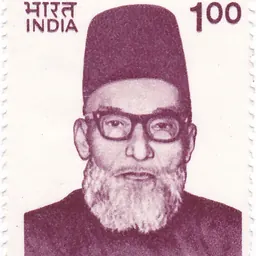
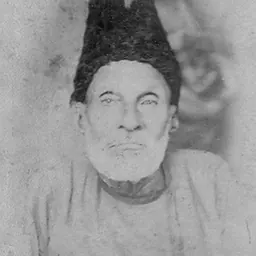
People in Ismail Merathi's life
Named in this biography and alive at the same time


Related people
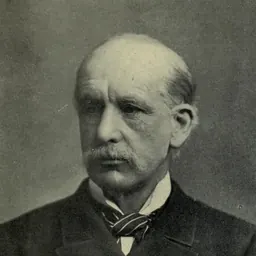
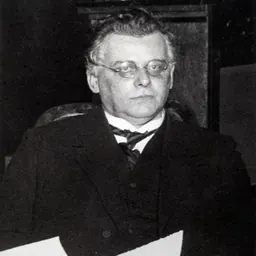
Same field, nearest in time
Contemporaries
People whose lives overlapped Ismail Merathi's

Frequently asked questions
Who was Ismail Merathi?
Indian poest and educationist
When was Ismail Merathi born?
Ismail Merathi was born on 12 November 1844 in Meerut.
When did Ismail Merathi die?
Ismail Merathi died on 1 November 1917 in Meerut.
What was Ismail Merathi's occupation?
Ismail Merathi was a poet and children's writer.
What was Ismail Merathi known for?
Ismail Merathi was known for Nazm.
What nationality was Ismail Merathi?
Ismail Merathi was Indian.
Sources & further reading
Cite this page
APA: Biography.guide. (2026). Ismail Merathi. https://biography.guide/ismail-merathi/
MLA: "Ismail Merathi." Biography.guide, https://biography.guide/ismail-merathi/.
Chicago: "Ismail Merathi." Biography.guide. https://biography.guide/ismail-merathi/.
Data last updated: 2026-09-22 · Spot an error? Report a correction.
Page generated 2026-09-27 05:23 UTC