
Ismail al-Faruqi
Palestinian-American Muslim philosopher and scholar
About Ismail al-Faruqi
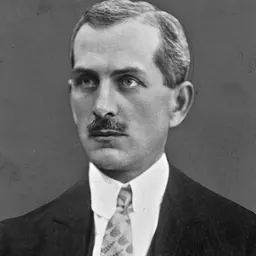
Lived 1921 – 1986 (aged 64–65). Ismail al-Faruqi was an American philosopher and university teacher.
Ismaʿil Raji al-Faruqi (, ; January 1, 1921 – May 27, 1986) was a Palestinian-American Muslim philosopher and scholar of religion. He contributed significantly to Islamic studies, ethics, and interfaith dialogue, and is best known for pioneering the Islamization of knowledge and articulating tawhid (monotheism) as a comprehensive worldview. He proposed a model of meta-religion based on shared ethical values and the universal concept of divine unity.
Following his early education in Jaffa, al-Faruqi studied philosophy and theology at the American University of Beirut, Indiana University, and Al-Azhar University in Cairo. He taught at McGill University in Canada, then in Pakistan, and later at Syracuse University, where he produced the Historical Atlas of the Religions of the World (1974), a widely referenced work. He subsequently joined Temple University, where he founded and chaired the Islamic Studies program. A prolific author, he published over 100 scholarly articles and 25 books, including Christian Ethics: A Historical and Systematic Analysis of Its Dominant Ideas (1967) and Al-Tawhid: Its Implications for Thought and Life (1982). He also co-founded the International Institute of Islamic Thought (IIIT) and played an active role in interfaith and Muslim educational initiatives.
In May 1986, al-Faruqi and his wife, Lois Lamya al-Faruqi, were murdered in their home in Wyncote, Pennsylvania. Their deaths drew international attention and were widely mourned across academic and interfaith communities. His legacy endures through his writings, institutions, and influence on Islamic intellectual reform.
Biography Early life and education Al-Faruqi was born in Jaffa, in British-mandate Palestine. His father, 'Abd al-Huda al-Faruqi, was an Islamic judge (qadi). Al-Faruqi received his early religious education at home and in the local mosque. His father's influence significantly shaped al-Faruqi's early religious and moral education. In 1936, he began attending the French Dominican Collège des Frères de Jaffa. Later al-Faruqi moved to Beirut, Lebanon, where he continued his studies at the American University of Beirut (AUB). At AUB, al-Faruqi was influenced by Arab nationalist movements and prominent Christian Arab nationalists such as Constantin Zureiq, Nabih Amin Faris and Nicola Ziadeh. These influences contributed to his adoption of Arabism. In 1945, he became the district governor of Galilee. He followed this with a second M.A. in philosophy from Harvard University in 1951 and earned his Ph.D. with a thesis titled On Justifying the Good from Indiana University in 1952. During this period, he met and married Lois Lamya al-Faruqi.
In his master's thesis, al-Faruqi examined the ethics of Immanuel Kant and Friedrich Nietzsche. His early philosophical work laid the groundwork for his later critiques of Western ethical systems and his development of Islamic ethical thought. In his doctoral thesis, al-Faruqi argued that values are absolute, self-existent essences known a priori through emotional intuition. He based his theories on Max Scheler's use of phenomenology and Nicolai Hartmann's studies in ethics. His studies led him to conclude that the absence of a transcendent foundation leads to moral relativism, prompting him to reassess his Islamic heritage.
Within six years of arriving in the United States, he recognized the need for a more thorough study of Islam, which led him to study at Egypt's Al-Azhar University from 1954 to 1958. By the time he left the United States, he had developed new questions about moral obligations and sought to integrate his intellectual pursuits with his Islamic identity.
Academic career In 1958, al-Faruqi was offered a visiting fellowship at McGill University's Faculty of Divinity. He joined the Institute of Islamic Studies at the invitation of its founder, Wilfred Cantwell Smith, teaching alongside Smith from 1958 to 1961. During this time, he studied Christian theology and Judaism, becoming acquainted with Pakistani philosopher Fazlur Rahman. Fazlur Rahman observed that al-Faruqi's immersion in these traditions under Smith's mentorship was pivotal, refining his comparative outlook on religious studies and interfaith dialogue.
In 1961, Fazlur Rahman arranged a two-year appointment for al-Faruqi at the Central Institute of Islamic Research in Karachi, Pakistan, where he served as a visiting professor until 1963. During his time in Karachi, he also contributed to the early volumes of the journal Islamic Studies, including the article “Towards a Historiography of Pre-Hijrah Islam,” published in its second issue in 1962.
In 1964, al-Faruqi returned to the United States, where he held concurrent roles as a visiting professor at the University of Chicago's Divinity School and as an associate professor at Syracuse University.
In 1968, he joined Temple University as a professor of religion, where he founded the Islamic Studies Program and held the position until he died in 1986. During his tenure at Temple University, al-Faruqi mentored many students, including his first doctoral student, John Esposito.
Death and burial
In May 1986, Ismail al-Faruqi and his wife, Lois Lamya al-Faruqi, were murdered at their home in Wyncote, Pennsylvania, by Joseph Louis Young, also known as Yusuf Ali. Their daughter, Anmar el-Zein, who was pregnant at the time, survived multiple stab wounds and required extensive medical treatment.
During a conference at the International Islamic University Malaysia in 2008, Anis Ahmad shared that al-Faruqi had once confided in him about his father's two supplications: that he might become a great scholar and die as a shahid (martyr). Al-Faruqi is reported to have wondered, "Now I am a scholar, but how can I die a shahid in the US?" Malik Badri reflected that "Allah Ta'ala accepted both supplications." His conception of Arabism extended beyond nationalism, presenting it as a bridge across ethnic divides within Islam.
Central to al-Faruqi's thought was tawhid (monotheism), which he described as integral to Arab religious consciousness. He contended that the monotheistic foundations of Islam, Christianity, and Judaism underscored Arabism's global religious significance, contrasting this with ideologies that promoted division and nationalism. However, critics argued that his emphasis on Arabic as uniquely suited for Islamic thought risked marginalizing non-Arab Muslims and overlooked their historical intellectual contributions.
Over time, al-Faruqi's experiences abroad, particularly in Pakistan, led him to reconsider his Arab-centric perspective. Exposure to diverse Muslim societies broadened his understanding of Islamic unity beyond linguistic and ethnic boundaries, emphasizing a transnational Islamic civilization based on shared spiritual and ethical values. His later writings reflected this shift, advocating for a universal Islamic identity that transcended linguistic and cultural divisions.
Ethics and value theory Al-Faruqi's philosophical inquiries included a critical analysis of Kantian ethics, particularly the concept of moral universality, which he sought to develop further within an Islamic ethical framework. In his PhD thesis, On Justifying the Good (1952),
Al-Faruqi criticized utilitarian perspectives, particularly those of John Stuart Mill, for equating goodness with what is desired or produces happiness. He argued that this conflation reduces ethical value to subjective preferences, leading to ethical relativism. Drawing on the works of phenomenological thinkers such as Max Scheler and Nicolai Hartmann, he maintained that values are ideally self-existent, a priori, and knowable through emotional intuition rather than empirical observation. He insisted that knowledge of the good must precede moral obligation and that a coherent ethical system must begin with a sound axiology, where values are recognized as independent, absolute, and self-evident.
Al-Faruqi's dissertation provided a foundational framework for his later efforts to integrate Islamic principles into contemporary academic disciplines. His critique of Western ethical theories and his emphasis on value objectivity significantly influenced his broader concept of the Islamization of knowledge. He further remarked, "I asked myself: Who am I? A Palestinian, a philosopher, a liberal humanist? My answer was: I am a Muslim".
In his exploration of Islam's role in North America, al-Faruqi also highlighted the historical contributions and challenges of African Muslims, from early settlement to the influences of Elijah Muhammad and Malcolm X on the Islamic movement among African Americans. His insights on the ethical foundations of Islam, the concept of the Ummah, and the responsibilities of Muslim immigrants have played a role in shaping the Muslim experience in North America.
This shift also influenced his approach to interfaith dialogue. Al-Faruqi believed that a unified Islamic identity was essential for fostering meaningful interactions with non-Muslim communities. His involvement in the MSA and his exposure to diverse Muslim backgrounds in the U.S. reinforced his commitment to a broader, inclusive Islamic identity over his earlier Arab-centric views.
fontsize = 80% quoted = 0
Al-Faruqi's views on tawhid included a critical perspective on Sufism, which he considered to emphasize mysticism and esoteric practices. He critiqued Sufism for its mysticism, arguing that it often detracted from the rational and practical aspects of Islam. Al-Faruqi was inspired by Mu'tazilī theologians such as al-Nazzam and Al-Qadi Abd al-Jabbar, who advocated for the use of reason and logic in understanding Islamic principles. Additionally, he found value in the works of the Brethren of Purity (Ikhwān al-Ṣafāʾ), whose writings combined Islamic teachings with elements of Greek philosophy.
Al-Faruqi's emphasis on tawhid went beyond theology, encompassing an integrated approach that unified rational thought, ethics, and social responsibility across all aspects of life. Al-Faruqi explains:
He also asserted that this principle "purges religion clean of all doubt regarding the transcendence and unicity of the Godhead." He emphasized that tawhid entails both the unicity and transcendence of the divine, affirming that if God alone is truly divine and all other beings—angels, spirits, and humans—are His creatures, then there is no threat to His ultimate authority. Only a God who is utterly beyond creation can fulfill the idea of ultimacy; without such transcendence, that claim collapses.
This approach extended to his vision of secularism and materialism, which he viewed as challenges to Islamic unity and ethical integrity. Al-Faruqi argued that Islam's vision for society requires an integrated worldview where tawhid "marks a complete secularization of the natural world to allow for the development of the sciences," thus separating the sacred from nature while upholding a unified ethical framework. His response to Western secular ideologies was rooted in a belief that tawhid calls for a holistic framework where reason and faith work together, as opposed to the spiritual-material divide seen in secular ideologies.
Within this framework, din al-fitrah is an innate human disposition toward the divine, suggesting that meta-religion provides an internalized recognition of truth that transcends specific religious labels. This perspective supports a form of interfaith understanding that acknowledges shared spiritual foundations without equating the doctrinal specifics of each faith. Rather than affirming religious pluralism in its conventional sense, meta-religion upholds that religions mirror varying degrees of the original monotheistic truth inherent in human nature. Al-Faruqi's concept of meta-religion involves a belief in God or Ultimate Reality as the "totally other." He emphasized that Islam, as a universal meta-religion preached by all prophets, centers on the concept of tawhid, which encompasses both the oneness and transcendence of God and humanity's duty to reflect divine harmony within the world.
For al-Faruqi, meta-religious dialogue served as a vehicle for fostering mutual understanding and respect among faith communities, bridging the gaps created by doctrinal differences. His emphasis on ethics over theology was intended to support more constructive and less contentious interfaith engagements. His approach examined differing hermeneutical methods and theological frameworks, identifying shared values that could support interfaith dialogue while respecting doctrinal distinctions. He believed in the value of dialogue initiated based on mutual respect and ethical considerations, stating that "conversion to the truth is the aim of dialogue," reflecting his commitment to honest interfaith engagement.
Al-Faruqi argued that, unlike Islam, Christianity lacks explicit foundations for structuring social frameworks such as law and economics, which he viewed as essential to societal cohesion:
He further observed what he viewed as a fundamental internal conflict in Western ethics stemming from this dualistic legacy, stating:
Al-Faruqi viewed Islamic civilization as a comprehensive and integrated system of values, rooted in the principle of tawhid. He argued that unlike cultural relativism—which treats each culture as an autonomous entity without universal criteria for evaluation—Islamic civilization is grounded in absolute, divinely revealed values that are universally valid for all humanity. This universality distinguishes Islamic civilization from relativist perspectives, which deny any culture the ability to claim universal truth.
According to al-Faruqi, Islamic art is a primary expression of this unified worldview. Despite geographical and historical variations, Islamic art is characterized by its preference for stylization, abstraction, and the avoidance of naturalism. These aesthetic choices are rooted in the Islamic understanding of divine transcendence, which prohibits the depiction of God or living beings in a naturalistic form. Instead, Islamic art employs geometric patterns, arabesques, and Arabic calligraphy to symbolize the infinite and the divine. Al-Faruqi emphasized that this artistic unity is not merely a matter of style but is directly connected to the Islamic worldview. The calligraphic art of the Qur'an, where the divine word is transformed into a visual form, exemplifies this connection, maintaining the sacred nature of the text while expressing it artistically.
Al-Faruqi rejected cultural relativism, asserting that Islamic civilization is not just one among many but a universal civilization providing a coherent, value-based framework for all aspects of life. He argued that Islamic civilization is distinguished by its capacity to integrate diverse cultures under the unifying principles of tawhid. This synthesis is evident in how Islamic civilization historically absorbed and transformed local customs, languages, and arts, creating a diverse but unified cultural heritage. This cultural synthesis, al-Faruqi maintained, was feasible because Islamic civilization is governed by a clear hierarchy of values rooted in divine revelation. At the core of this hierarchy is the concept of tawhid, ensuring the unity of all aspects of life—spiritual, ethical, social, and intellectual.
For al-Faruqi, Arabic is not merely the liturgical language of Islam but an essential component of Islamic civilization. He argued that the Qur’an's linguistic form is inseparable from its divine content, rendering Arabic a vehicle of both religious and cultural unity. This is most clearly observed in the widespread use of Arabic calligraphy in Islamic art, where aesthetic and spiritual dimensions are intertwined. Arabic calligraphy, with its varied styles—Kufic, Naskh, Thuluth, and others—became a unifying element of Islamic art across diverse regions, symbolizing the shared spiritual and cultural heritage of the Islamic world. He argued that Zionism was fundamentally unjust, as it sought to displace Palestine's indigenous population and seize their land, resources, and homes. He characterized it as "naked robbery by force of arms," accompanied by indiscriminate violence against civilians:
Consequently, he maintained that Zionism's dismantling was necessary to restore justice.
Reflecting on Zionism's impact, al-Faruqi argued that rather than providing security for Jews, it had created a precarious existence in Israel, where life became defined by conflict and reliance on foreign powers:
Zionism has not only contributed to this sad state of affairs. It is directly responsible for it. How, then, can it be said that it had succeeded in providing security for the Jew? Even in the very heartland of Zionism, in Israel, the Jew sits in the midst of an armory, surrounding himself with barbed wire, minefields, and all kinds of weaponry to prevent an onslaught which he knows for certain is coming, sooner or later. His very existence is a regimented spartanism, due in greatest measure to the bounty of international imperialism and colonialism. Thus, Israel, the so-called greatest achievement of Zionism, is really its greatest failure. For the very being of the Zionist state rests, in final analysis, on the passing whim of international politics. He distinguished iman (conviction) from the Christian concept of "faith," arguing that iman is rooted in knowledge and certainty rather than subjective belief.
Contemporary relevance Al-Faruqi's ideas on the Islamization of knowledge remain influential in contemporary Islamic thought. His work has guided the development of academic curricula at institutions like the International Islamic University Malaysia (IIUM) and the International Islamic University, Islamabad, where religious studies are integrated with modern disciplines to harmonize faith and reason. His contributions continue to shape scholarly discourse in Islamic thought and education, with his works being frequently referenced in academic conferences and publications.
His approach to interfaith dialogue focused on identifying ethical and moral commonalities among major faiths, particularly Islam, Christianity, and Judaism. Scholars have recognized his emphasis on shared values as a significant contribution to fostering mutual understanding and respect across religious communities. His framework has informed broader efforts to promote peace and cooperation globally. and Trialogue of Abrahamic Faiths, remain key resources in interfaith dialogue and comparative religion studies. These works continue to influence academic discussions in both Islamic and Western contexts.
His contributions have been recognized posthumously, particularly in communities like Montreal, where his scholarship and community-building efforts left a lasting impact.
Don’t just read it —
keep it.
Full-length biographies made to live with: read them, listen on the way to work, watch them tonight.
- E-book
- Audio
- Video
Instant download · yours to keep · every purchase keeps this site free
Important facts
more
Ismael Faruki, Faruqi, Ismaʻil Ragi A., Ismaʼil R. Al-People in Ismail al-Faruqi's life
Named in this biography and alive at the same time








Related people
Same field, nearest in time





Contemporaries
People whose lives overlapped Ismail al-Faruqi's



Frequently asked questions
Who was Ismail al-Faruqi?
Palestinian-American Muslim philosopher and scholar (1921–1986)
When was Ismail al-Faruqi born?
Ismail al-Faruqi was born in 1921 in Jaffa, Mandatory Palestine.
When did Ismail al-Faruqi die?
Ismail al-Faruqi died on 27 May 1986 in Wyncote.
What was Ismail al-Faruqi's occupation?
Ismail al-Faruqi was a philosopher and university teacher.
What nationality was Ismail al-Faruqi?
Ismail al-Faruqi was American.
Sources & further reading
Cite this page
APA: Biography.guide. (2026). Ismail al-Faruqi. https://biography.guide/ismail-al-faruqi/
MLA: "Ismail al-Faruqi." Biography.guide, https://biography.guide/ismail-al-faruqi/.
Chicago: "Ismail al-Faruqi." Biography.guide. https://biography.guide/ismail-al-faruqi/.
Data last updated: 2026-09-20 · Spot an error? Report a correction.
Page generated 2026-09-27 05:29 UTC