
About Isma'il Pasha
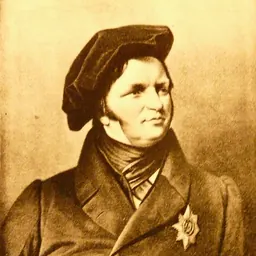
Lived 1831 – 1895 (aged 63). Isma'il Pasha was a Turkish politician, statesperson and writer.
Youth and education After receiving a European education in Paris where he attended the École d'état-major, he returned home, and on the death of his elder brother became heir to his uncle, Sa'id, the Wāli and Khedive of Egypt and Sudan. Sa'id, who apparently conceived his safety to lie in ridding himself as much as possible of the presence of his nephew, employed him in the next few years on missions abroad, notably to the Pope, the Emperor Napoleon III, and the Sultan of the Ottoman Empire. In 1861 he was dispatched at the head of an army of 18,000 to quell an insurrection in Sudan, a mission which he accomplished.
Khedive of Egypt After the death of Sa'id, Isma'il was proclaimed Khedive on 19 January 1863, though the Ottoman Empire and the other Great Powers recognized him only as Wāli. Like all Egyptian and Sudanese rulers since his grandfather Muhammad Ali Pasha, he claimed the higher title of Khedive, which the Sublime Porte had consistently refused to sanction. Finally, in 1867, Isma'il succeeded in persuading the Ottoman Sultan Abdülaziz to grant a firman finally recognizing him as Khedive in exchange for an increase in the tribute, because of the Khedive's help in the Cretan Revolt between 1866 and 1869. Another firman changed the law of succession to direct descent from father to son rather than brother to brother, and a further decree in 1873 confirmed the virtual independence of the Khedivate of Egypt from the Porte.
Reforms Isma'il spent heavily—some went to bribes to Constantinople to facilitate his reform projects. Much of the money went for the construction of the Suez Canal. About £46 million went to construct of irrigation canals to help modernize agriculture. He built over of railroads, of telegraph lines, 400 bridges, harbor works in Alexandria, and 4,500 schools. The national debt rose from £3 million to about £90 million, in a country with 5 million population and an annual treasury revenue of about £8 million.
Isma'il launched vast schemes of internal reform on the scale of his grandfather, remodeling the customs system and the post office, stimulating commercial progress, creating a sugar industry, building the cotton industry, building palaces, entertaining lavishly, and maintaining an opera and a theatre.
One of his most significant achievements was to establish an assembly of delegates in November 1866. Though this was supposed to be a purely advisory body, its members eventually came to have an important influence on governmental affairs. Village headmen dominated the assembly and came to exert increasing political and economic influence over the countryside and the central government. This was shown in 1876 when the assembly persuaded Isma'il to reinstate the law (enacted by him in 1871 to raise money and later repealed) that allowed landownership and tax privileges to persons paying six years' land tax in advance.
Isma'il tried to reduce slave trading and with the advice and financial backing of Yacoub Cattaui extended Egypt's rule in Africa. In 1874 he annexed Darfur, but was prevented from expanding into Ethiopia after his army was repeatedly defeated by Emperor Yohannes IV, first at Gundet on 16 November 1875, and again at Gura in March of the following year.
War with Ethiopia
Isma'il dreamt of expanding his realm across the entire Nile including its diverse sources, and over the whole African coast of the Red Sea. This, together with rumours about rich raw material and fertile soil, led Isma'il to expansive policies directed against Ethiopia under the Emperor Yohannes IV. In 1865 the Ottoman Sublime Porte ceded the African portion of the Habesh Eyalet (with Massawa and Suakin at the Red Sea as the main cities of that province) to Isma'il. This province, which neighboured Ethiopia, first consisted of a coastal strip only but expanded subsequently inland into territory controlled by the Ethiopian ruler. Here Isma'il occupied regions originally claimed by the Ottomans when they had established the province (eyalet) of Habesh in the 16th century. New economically promising projects, like huge cotton plantations in the Barka delta, were started. In 1872 Bogos (with the city of Keren) was annexed by the governor of the new "Province of Eastern Sudan and the Red Sea Coast", Werner Munzinger Pasha. In October 1875 Isma'il's army tried to occupy the adjacent highlands of Hamasien, which were then tributary to the Ethiopian Emperor, and suffered defeat at the Battle of Gundet. In March 1876 Isma'il's army tried again and suffered a second dramatic defeat by Yohannes's army at Gura. Isma'il's son Hassan was captured by the Ethiopians and only released after a large ransom. This was followed by a long cold war, only finishing in 1884 with the Anglo-Egyptian-Ethiopian Hewett Treaty, when Bogos was given back to Ethiopia. The Red Sea Province created by Ismail and his governor Munzinger Pasha was taken over by the Italians shortly thereafter and became the territorial basis for the Colony of Eritrea (proclaimed in 1890).
Khedive's Somali Coast
The jurisdiction of Isma'il Pasha from the 1870s until 1884 included the entire northern coast of Somalia, up to the eastern coast at Ras Hafun in contemporary Puntland. The Khedive's northern Somali Coast territory was reached as far inland as Harar, although it was subsequently ceded to Britain in 1884 due to internal difficulties of Egypt.
Suez Canal
Isma'il's khedivate is closely connected to the building of the Suez Canal. He agreed to, and oversaw, the Egyptian portion of its construction. On his accession, at the behest of Yacoub Cattaui his minister of Finance and close advisor, he refused to ratify the concessions to the Canal company made by Sa'id, and the question was referred in 1864 to the arbitration of Napoleon III, who awarded £3,800,000 to the company as compensation for the losses they would incur by the changes which Isma'il insisted upon in the original grant. Isma'il then used every available means, by his own undoubted powers of fascination and by judicious expenditure, to bring his personality before the foreign sovereigns and public, and he had much success. These developments – especially the costly war with Ethiopia – left Egypt in deep debt to the European powers, and they used this position to wring concessions out of Isma'il. One of the most unpopular among Egyptians and Sudanese was the new system of mixed courts, by which Europeans were tried by judges from their own states, rather than by Egyptian and Sudanese courts. But at length the inevitable financial crisis came. A national debt of over £100 million sterling (as opposed to three millions when he acceded to the throne) had been incurred by the Khedive, whose fundamental idea of liquidating his borrowings was to borrow at increased interest. The bond-holders became restive, chief among them the House of Cattaui. Judgments were given against the Khedive in the international tribunals. When he could raise no more loans, he sold the Egyptian and Sudanese shares in the Suez Canal Company in 1875 with the assistance of Yacoub Cattaui to the British government for £3,976,582; this was immediately followed by the beginning of direct intervention by the Great Powers in Egypt and Sudan. and in April 1876 their report was published, advising that in view of the waste and extravagance it was necessary for foreign Powers to interfere in order to restore credit. The result was the establishment of the Caisse de la Dette. A subsequent investigation in October by George Goschen and Joubert resulted in the establishment of joint Anglo-French control over most of the Egyptian government's finances. A further commission of inquiry by Major Evelyn Baring (afterwards 1st Earl of Cromer) and others in 1878 culminated in Isma'il handing over much of his personal estates' to the nation and accepting the position of a constitutional sovereign, with Nubar as premier, Charles Rivers Wilson as finance minister, and de Blignières as minister of public works.
Deposition by Abdulhamid and exile
This control of the country by Europeans was unacceptable to many Egyptians, who united behind a disaffected Colonel Ahmed Urabi. The Urabi Revolt consumed Egypt. Hoping the revolt could relieve him of European control, Isma'il did little to oppose Urabi and gave into his demands to dissolve the government. Britain and France took the matter seriously, and insisted in May 1879 on the reinstatement of the British and French ministers. With the country largely in the hands of Urabi, Isma'il could not agree, and had little interest in doing so. As a result, the British, and French governments pressured the Ottoman Sultan Abdülhamid II to depose Isma'il Pasha, and this was done on 26 June 1879. The more pliable Tewfik Pasha, Ismail's eldest son, was made his successor. Isma'il Pasha left Egypt and initially went into exile to Resina, today Ercolano near Naples, until 1885 when he was eventually permitted by Sultan Abdülhamid II to retire to his palace in Emirgan on the Bosporus in Constantinople. There he remained, more or less a state prisoner, until his death. On the 25th of November 1866, during the inauguration of Egypt's first parliament, Ismail gave the commencement speech to the assembly in Arabic.
Honours Order of Glory, Nichan Iftikhar Grand Cordon (civil) of the Order of Leopold, 10 February 1863 Order of Nobility, Special Class, 1863 Order of Osmanieh, Special class, 1863 Grand Cross of the Imperial Order of Leopold, 1864 Grand Cross of the Imperial Order of the Mexican Eagle, 1865 Commander Grand Cross of the Order of the Sword, 27 July 1866 Honorary Grand Cross (civil) of the Order of the Bath, 18 December 1866 Grand Cross of the Order of the Netherlands Lion, 1866 Knight of the Supreme Order of the Most Holy Annunciation, 29 January 1867 Grand Cross of the Legion d'Honneur, 1867 Honorary Grand Commander of the Order of the Star of India, 27 August 1868 Knight of the Order of the Black Eagle, 30 December 1868 Grand Cross of the Order of the Red Eagle, 3 April 1865 Grand Cross of the Order of Saints Maurice and Lazarus, 1869 Grand Cross of the Order of the Crown of Italy, 1869 Grand Cross of the Order of the Redeemer, 1869 Grand Cross of the Order of St. Stephen, 1869 Grand Cross of the Saxe-Ernestine House Order, 1872 Honorary member: Bavarian Academy of Sciences and Humanities, 1874 Grand Cross of the House and Merit Order of Peter Frederick Louis, with Golden Crown, 5 February 1875 Order of the Brilliant Star of Zanzibar, 1st Class, 1875 Order of the Brilliant Star of Egypt, 1st Class, 1875
Don’t just read it —
keep it.
Full-length biographies made to live with: read them, listen on the way to work, watch them tonight.
- E-book
- Audio
- Video
Instant download · yours to keep · every purchase keeps this site free
Important facts
People in Isma'il Pasha's life
Named in this biography and alive at the same time
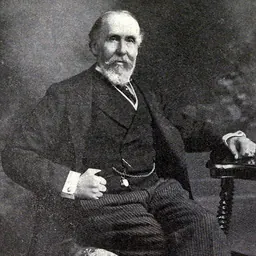



Related people
Same field, nearest in time
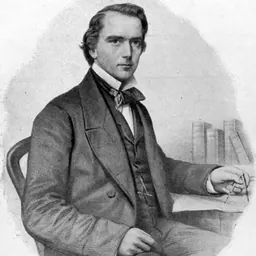




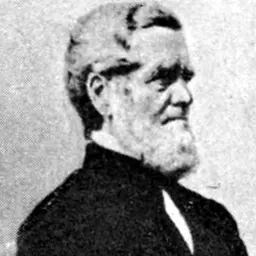
Contemporaries
People whose lives overlapped Isma'il Pasha's



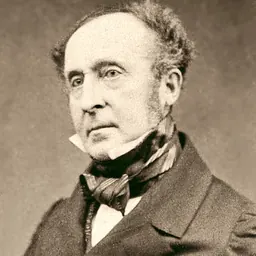

Frequently asked questions
Who was Isma'il Pasha?
Khedive of Egypt from 1863 to 1879
When was Isma'il Pasha born?
Isma'il Pasha was born on 31 December 1831 in Cairo.
When did Isma'il Pasha die?
Isma'il Pasha died on 2 March 1895 in Istanbul.
What was Isma'il Pasha's occupation?
Isma'il Pasha was a politician, statesperson and writer.
What nationality was Isma'il Pasha?
Isma'il Pasha was Turkish.
Sources & further reading
· DBpedia: Isma'il Pasha of Egypt
Cite this page
APA: Biography.guide. (2026). Isma'il Pasha. https://biography.guide/isma-il-pasha/
MLA: "Isma'il Pasha." Biography.guide, https://biography.guide/isma-il-pasha/.
Chicago: "Isma'il Pasha." Biography.guide. https://biography.guide/isma-il-pasha/.
Data last updated: 2026-09-20 · Spot an error? Report a correction.
Page generated 2026-09-27 05:20 UTC