
About Isaac Rülf
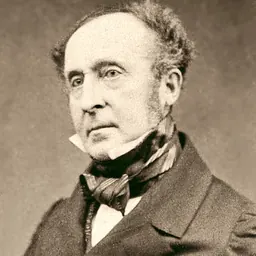
Lived 1831 – 1902 (aged 71). Isaac Rülf was a German journalist, rabbi, writer, teacher, politician and zionist.
Isaac (Yitzhak) Rülf (February 10, 1831 – September 18, 1902) was a Jewish teacher, journalist and philosopher. He became widely known for his aid work and as a prominent early Zionist.
Rülf was born in Rauischholzhausen, Hesse, Germany. He received a teaching certificate in 1849, became an assistant to the county rabbi and then taught in other small communities. He received his rabbinical certificate in 1854 from the University of Marburg and his Ph.D in 1865 at the University of Rostock. That year he became the rabbi of Memel, East Prussia.
Rülf first found fame for his part in the 'Jankel Widutzky case' in which an English minister attempted to convert Widutzky, a Jewish youth, in Memel. Rülf attacked the missionary in the article Jankel Widutzky, der den Händen der Judenbekehrungs Mission entzogene Knabe (1867), sparking indignation in Germany. Widutzky was thus not converted and entered Rabbinical college.
Rabbi of Memel
Memel, in addition to being an important port on the Baltic, was a frontier town and a crossroads between East and West – it lay at the tip of East Prussia, on the border of Russia's Lithuanian province (the Kovner Gubernie).
The Jewish community in Memel was divided between Western Jews (Prussian/German) and the Eastern Jews (Polish/Russian/Lithuanian), with the different groups having their own institutions and leaders. Rülf arrived as rabbi of the German Jews but tried to unite the communities. Beginning in the late 1860s with his relief works, Rülf gained an international reputation for his assistance to Russian Jews. Thereafter, he strove to establish himself as expert on Eastern European Jewry and as a spokesman and intercessor on their behalf. He would use the press and public opinion as leverage for this activity, making the most important change in the tactics of intercession during the 19th century. In 1879 Rülf created an Armenschule, or school for poor children In this way he won over the Eastern Jews who had first dismissed this “Doktor-Rabbiner” of the wealthier German minority. In 1871 he and two collaborators caused a Jewish hospital to be built in Memel.
International aid work
Rülf travelled east to study the cruel conditions of Jewish life in Russia and Lithuania. In response he wrote My Journey to Kovno (1869) and Three Days in Jewish Russia (1882). During this time he received reports, smuggled over the Lithuanian border, on the Russian pogroms. In Memel these were translated into German and sent to England, where they later appeared in two long articles in the London Times on January 11 and 13, 1882. Russian Jews were even able to escape to Germany through an underground directed by Rülf.
Rülf established and headed the “Permanent Committee for Helping Russian Jews” in the 1880s. He organized a massive relief campaign in Germany for Russian Jews, and tens of thousands came to know him as 'Rabbi Hülf' or 'Dr. Hülf', meaning 'Help'. transferring it to 230 Lithuanian settlements over a year and a half. Within months, Russian Jew Leon Pinsker published Auto-Emancipation, calling for a Jewish state in response to anti-Semitism. Rülf agreed with the basic idea but little else, compelling him to write Aruchas Bas-Ammi (1883). There he went further than Pinsker, specifying that the Jewish homeland must be in Palestine and its language must be Hebrew, and calling for immediate purchase of land and immigration to Palestine.
Three years later, Rülf's was one of the first portraits to appear in Kneset Israel, a great distinction. Correspondents over these years included Pinsker and Nathan Birnbaum, coiner of the term Zionism. Rülf's letters and other writings are preserved in the Rülf Collection at the Central Zionist Archives in Jerusalem, Israel.
Rülf was hurt when, in 1896, Theodor Herzl was embraced as Zionism's international leader. That was the year in which Herzl published Der Judenstaat ("The Jewish State"). However, Rülf came to Herzl's defense against the anti-Zionist “Protest Rabbis” who impeded the First Zionist Congress, leveraging his considerable reputation and writing Declaration versus Declaration in the June 25, 1897 Die Welt. In 1898, Rülf introduced Herzl at the Second Zionist Congress at Basle, Switzerland.
In Memel, Rülf had been the mentor of David Wolffsohn, who went on to succeed Herzl as the second President of the World Zionist Organization. Wolffsohn came to Memel at age 17 from his Lithuanian hometown, and Rülf taught and greatly influenced him. Less than fifty years later, his own children were unable to escape the Holocaust.
Family and legacy
Isaac Rülf died in Bonn, four years after relocating there to continue his work in philosophy. Benno and his wife traveled to the Netherlands but, according to a statement of his daughter Elizabeth, he was deported and killed in Auschwitz. Isaac's son Jacob committed suicide in Bonn before being deported.
A street in Tel Aviv, Israel, is named for Isaac Rülf.
Books
Rülf published a five-volume work of philosophy, System of a New Metaphysics, in which he described his theories of theistic monism.
Meine Reise nach Kowno (1869) My Journey to Kovno
Der Einheitsgedanke als Fundamentalbegriff (1880) Drei Tage in Jüdisch-Russland (1882) Three Days in Jewish Russia
Aruchas Bas-Ammi (1883) Wissenschaft des Weltgedankens and Wissenschaft der Gedankenwelt, System einer Neuen Metaphysik (2 vols., 1888) (the first volumes of System of a New Metaphysics)
Wissenschaft der Krafteinheit (1893) Das Erbrecht als Erbübel (1893) Legacy Law as a Basic Evil
Wissenschaft der Geisteseinheit (1898) Wissenschaft der Gotteseinheit (1903) (final volume of philosophy, published posthumously)
Don’t just read it —
keep it.
Full-length biographies made to live with: read them, listen on the way to work, watch them tonight.
- E-book
- Audio
- Video
Instant download · yours to keep · every purchase keeps this site free
Important facts
more
Isaak, Rilf, Yitsḥaḳ, I. (Isaak)People in Isaac Rülf's life
Named in this biography and alive at the same time


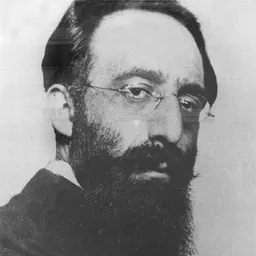

Related people
Same field, nearest in time
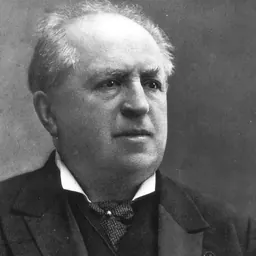

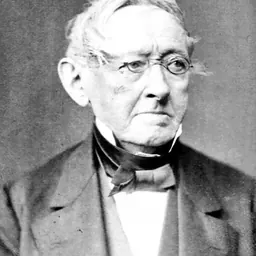

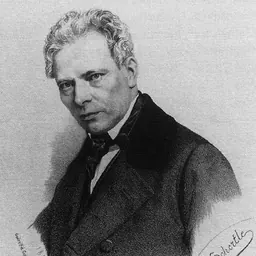
Contemporaries
People whose lives overlapped Isaac Rülf's




Frequently asked questions
Who was Isaac Rülf?
Jewish teacher, journalist and philosopher (1831-1902)
When was Isaac Rülf born?
Isaac Rülf was born on 10 February 1831 in Rauischholzhausen.
When did Isaac Rülf die?
Isaac Rülf died on 18 September 1902 in Bonn.
What was Isaac Rülf's occupation?
Isaac Rülf was a journalist, rabbi, writer, teacher, politician and zionist.
What nationality was Isaac Rülf?
Isaac Rülf was German.
Sources & further reading
Cite this page
APA: Biography.guide. (2026). Isaac Rülf. https://biography.guide/isaac-rulf/
MLA: "Isaac Rülf." Biography.guide, https://biography.guide/isaac-rulf/.
Chicago: "Isaac Rülf." Biography.guide. https://biography.guide/isaac-rulf/.
Data last updated: 2026-09-23 · Spot an error? Report a correction.
Page generated 2026-09-27 05:07 UTC