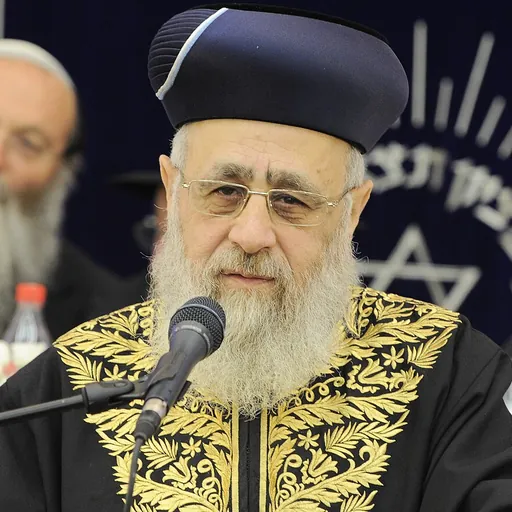
About Isaac Joseph
Born 1952. Isaac Joseph is an Israeli rabbi, chief Rabbi, rabbis of Jerusalem and list of Sephardi chief rabbis of the Land of Israel.
Yitzhak Yosef (; born ) is an Israeli Haredi rabbi. The former Sephardi Chief Rabbi of Israel, he also serves as the rosh yeshiva of in Jerusalem's Romema neighborhood. Since the end of his term as Chief Rabbi, he joined Moetzet Chachmei HaTorah, the rabbinic leadership council of the Shas party. In August 2026, he was recognized as the spiritual leader (Nasi) of the Moetzet Chachmei HaTorah and Shas party.
Yosef, the son of former chief rabbi Ovadia Yosef, bases his halakhic (Jewish law) rulings on his father's methodology, which he compiled into a set of books called Yalkut Yosef. He received the Israel Prize in Rabbinical literature for the year 2024.
Early life Yitzhak Yosef was born and raised in Jerusalem. He is the sixth son of the former Israeli Chief Rabbi and Shas spiritual leader Ovadia Yosef. He attended school at Talmud Torah Yavneh in the Independent Education System. At age 12 he began his studies at the mesivta (high school) of Porat Yosef in the Katamon neighbourhood. He did not finish high school, and called secular studies "nonsense". After that, he studied at in Netivot, and from there he moved on to Hebron Yeshiva in Jerusalem.
In 1971, when he was 18 and studying at Yeshivat HaNegev, Yosef collected halakhic (Jewish law) rulings from the five volumes of then-in-print , his father's responsa, and published them in a work called Yalkut Yosef. The book was published with his father's support and supervision. It is often considered one of his father's works, since not only is it a summary of his father's rulings, but the latter also went over it section by section and added his own comments. Yosef won the from the Tel Aviv Religious Council for his book Issur VeHeter, as well as the .
Rabbinic career
In 1973, upon his father's election as Chief Rabbi of Israel, they together established and its kollel (advanced studies department). In 1980, he and the rest of the first graduating class were ordained as rabbis and dayanim (rabbinic judges) by Shalom Messas and the chief rabbis of Israel. With the beginning of the second class, he was appointed head of the school.
In 1975, Yosef was appointed rabbi of Nes Harim and Mata, moshavim (villages) in the vicinity of Jerusalem. As part of his responsibilities, he taught classes on halakha several times a week and took care of other religious matters. He gave lectures and taught classes in the secular public schools and strengthened religious education there.
In 1992 Yosef expanded Hazon Ovadia to include a boys high school. This was necessary because of discord between the Sephardi Haredi and Ashkenazi Litvak yeshiva communities.
On July 24, 2013, Yosef was elected as Sephardi Chief Rabbi of Israel and the Rishon LeZion, a position he would hold for a decade. The ceremony took place on August 14, 2013, at the official residence of the President of Israel.
Through the death of Yosef's father, the Shas political party lost its spiritual leader. Having been elected Sephardi Chief Rabbi, Yosef appeared to be in a good position to inherit his father's mantle as Shas spiritual leader. However, his public position precluded such political activity by law. Until the election, he never held any formal public office.
On August 21, 2013, Yosef released a psak halakha (ruling) stating it is an obligation and mitzvah (good deed) for parents to have their children vaccinated for polio virus. In 2021, he endorsed the Alliance of Rabbis in Islamic States and serves as its halakhic guide.
Yosef's term as Chief Rabbi was extended twice from its original expected end in August 2023. After leaving the Chief Rabbinate, Yosef joined the Moetzet Chachmei HaTorah, the council of Rabbis which is the ultimate decision-making body in the Shas political party. Yosef was recognized as the Nasi (spiritual leader) of Shas and the Moetzet Chachmei Hatorah in August 2026.
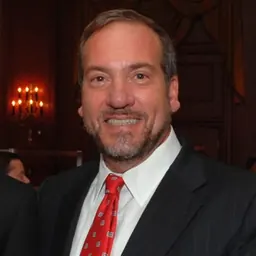
Controversies 2016 In March 2016 Yosef called for religious Jews to keep their children away from secular or traditional members of their family because they could be a negative influence. Leaders of the Anti-Defamation League (ADL) condemned Yosef's statements and called for their retraction. Jonathan Greenblatt and Carole Nuriel of ADL Israel called the remarks ignorant and intolerant. He was eventually pressured into retracting his comments.
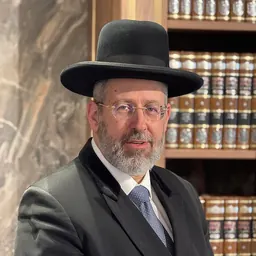
Lookstein officiated Ivanka Trump's conversion, causing tensions between Israel and the US. David Lau opposed Yosef's policy on recognizing US converts, but the rules were eventually changed.
In December, he said that it was "not the way of the Torah" for women to join the Israel Defense Forces or even sign up for Sherut Leumi (civilian national service): "All the great sages through the generations, including all Israel's chief rabbis, believe that it is forbidden for girls to go into the army. not just to the army – but to national service too."
2017 In May 2017, Yosef compared secular women to animals because they dressed immodestly. (He was speaking on the topic of the Meshaneh HaBriyot bracha, translatable as "Blessed are you, Lord our God.who makes creatures different", in the Talmud concerning the sight of an unusual creature, typically an animal, but also humans with congenital abnormalities.) In the Talmud for Masekhet Berakhot (58b), there is debate over when to give this blessing for humans, and examples mentioned include "an (unusually) black, red, or white person, a giant, a dwarf, or one with spots".
In referring to black people, Yosef also used the ancient term kushi, the term present in the Talmud. The term is considered derogatory in modern Hebrew. He said: "Seeing a black person (kushi), you say the blessing. What black person? One who had a white mother and father, and came out black. Not on every black person do you make a blessing. When you walk in the streets of America, every five minutes, you see a black person. Will you say on him the blessing? Rather, it only needs to be on a black person whose mother and father are white. If, you know, two people birth a monkey (kof) or something like that, then you say the Different Creatures blessing." The Anti-Defamation League (ADL) tweeted that his comments were "utterly unacceptable".
2020 In January 2020, he was criticized for calling immigrants from the former Soviet Union "Communist, religion-hating" gentiles. Prime Minister Benjamin Netanyahu called Yosef's remarks "outrageous" and said the immigrants from the former Soviet Union are a "huge blessing to the State of Israel and the Jewish people." Yosef's remarks also were slammed by others in the Knesset, including Knesset speaker Yuli Edelstein, who immigrated from Ukraine in 1987, and by Yisrael Beiteinu party leader Avigdor Liberman, who immigrated from Moldova. Yosef stood by his comments, saying they were distorted by politicians who had been inciting against Jews and Judaism and that he was only referring to a minority of immigrants.
2021 In January 2021, Yosef was criticized for flouting the coronavirus health restrictions.
In June 2021, he said science and mathematics are "nonsense", and students should only study Torah instead, adding proudly that he never finished school or received a high school diploma.
2025 Following controversy relating to the conscription of yeshiva students, Yosef warned Haredi lawmakers not to rely on Benjamin Netanyahu, calling him an "atheist [who] doesn’t believe in anything." He also criticized the arrests of deserters from the military, asking "What is this, Russia? Is there a communist regime here?", and told followers not to cooperate with the authorities in this regard. Additionally, he threatened that the Haredi community would emigrate to other countries en masse, rather than being required to enlist in the army.
Personal life He was briefly married to Edna, They divorced, and he married Ruth. They have five children. His eldest son, named after his father Ovadia, is married to the daughter of Shlomo Amar, his predecessor as Sephardic Chief Rabbi of Israel. His daughter Margalit is married to the son of Yehuda Deri, the former Chief Rabbi of Be'er Sheva. Yosef lives in the Sanhedria Murhevet neighborhood of Jerusalem.
Don’t just read it —
keep it.
Full-length biographies made to live with: read them, listen on the way to work, watch them tonight.
- E-book
- Audio
- Video
Instant download · yours to keep · every purchase keeps this site free
Important facts
more
Rabbi Yizhaq Yosef, Itzjak Yosef, Yits'haq YossefPeople in Isaac Joseph's life
Named in this biography and alive at the same time





Related people
Same field, nearest in time
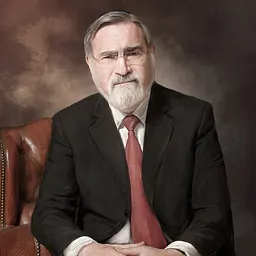
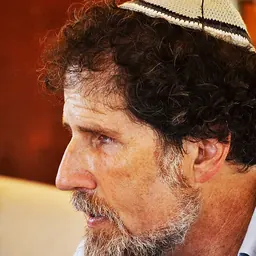
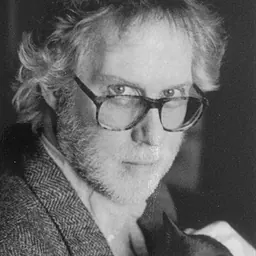


Contemporaries
People whose lives overlapped Isaac Joseph's
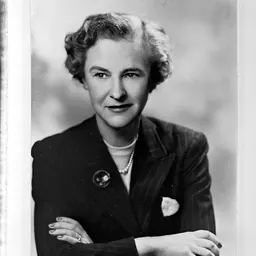

Frequently asked questions
Who is Isaac Joseph?
Israeli chief (Sephardi Jewish) rabbi
When was Isaac Joseph born?
Isaac Joseph was born on 16 January 1952 in Jerusalem.
What is Isaac Joseph's occupation?
Isaac Joseph is a rabbi, chief Rabbi, rabbis of Jerusalem and list of Sephardi chief rabbis of the Land of Israel.
What nationality is Isaac Joseph?
Isaac Joseph is Israeli.
Sources & further reading
Cite this page
APA: Biography.guide. (2026). Isaac Joseph. https://biography.guide/isaac-joseph-rabbi/
MLA: "Isaac Joseph." Biography.guide, https://biography.guide/isaac-joseph-rabbi/.
Chicago: "Isaac Joseph." Biography.guide. https://biography.guide/isaac-joseph-rabbi/.
Data last updated: 2026-09-23 · Spot an error? Report a correction.
Portrait: Wikimedia Commons · author & licence
Page generated 2026-09-27 05:06 UTC