
About Isaac ibn Ghiyyat
Lived 1038 – 1089 (aged 50–51). Isaac ibn Ghiyyat was a rabbi, poet and theologian.
Isaac ben Judah ibn Ghayyat (1030/1038–1089), commonly mispronounced ibn Ghiyyat, was a rabbi, Biblical commentator, codifier of Jewish law, philosopher, and liturgical poet from al-Andalus. He was born and lived in the town of Lucena in the Taifa of Granada, where he headed a rabbinic academy. He died in Cordoba.
Etymology of name As many Sephardic surnames, ibn Ghayyat is a nasab (patronymic), "the son of Ghayyāth." Ghayyāth means "savior" in Arabic. The name is commonly confused with ghiyath meaning "salvation", found in Saadia Gaon's Judeo-Arabic translation of in Psalm 20:7, "Now I know that YHWH will give victory to His anointed, will answer him from His heavenly sanctuary with the might of salvation in His right arm ."
Background According to some authorities, he was the teacher of Isaac Alfasi; according to others, his fellow pupil. His best-known students were his son Judah ibn Ghayyat, Joseph ibn Sahl, and Moses ibn Ezra. He was held in great esteem by Samuel ibn Naghrillah and his son Joseph, and after the latter died in the 1066 Granada massacre, ibn Ghayyat was elected to succeed him as rabbi of Lucena, where he officiated until his death.
He was the author of a compendium of ritual laws concerning the festivals, published by Seligman Baer Bamberger under the title of Sha'arei Simḥah (Fürth, 1862; the laws concerning Passover were republished by Bernhard Zomber under the title Hilkhot Pesaḥim, Berlin, 1864), and a philosophical commentary on Ecclesiastes, known only through quotations in the works of later authors.
Ibn Ghayyat's greatest activity was in liturgical poetry; he was an author of hundreds of piyyutim, and his hymns are found in the Maḥzor of Tripoli under the title of Siftei Renanot. Most are written in the new Andalusi style. He achieved special distinction in his melodious muwashshaḥat "girdle poems", a secular Arabic form first used as a vehicle for liturgical poetry by Solomon ibn Gabirol.
One of his major contributions was his collection and arrangement of the geonic responsa, which had hitherto been scattered among the world's Jewry. Menahem Schmelzer, Albert B. and Bernice Cohen Professor Emeritus of Medieval Hebrew Literature and Jewish Bibliography at the Jewish Theological Seminary of America wrote his PhD thesis on the poetry of Ibn Ghiyyat and published several articles on his poetry.
Don’t just read it —
keep it.
Full-length biographies made to live with: read them, listen on the way to work, watch them tonight.
- E-book
- Audio
- Video
Instant download · yours to keep · every purchase keeps this site free
Important facts
People in Isaac ibn Ghiyyat's life
Named in this biography and alive at the same time
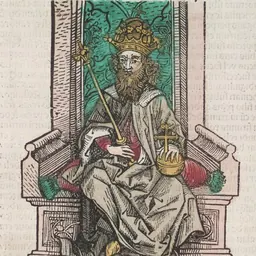
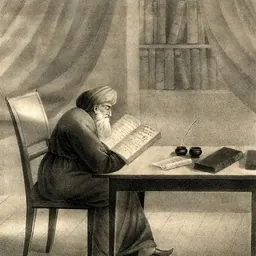


Related people
Same field, nearest in time
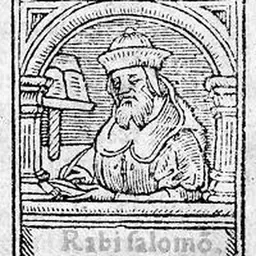



Contemporaries
People whose lives overlapped Isaac ibn Ghiyyat's




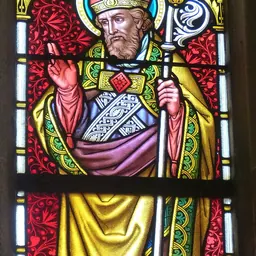
Frequently asked questions
Who was Isaac ibn Ghiyyat?
11th-century Spanish Jewish Talmudic scholar
When was Isaac ibn Ghiyyat born?
Isaac ibn Ghiyyat was born in 1038.
When did Isaac ibn Ghiyyat die?
Isaac ibn Ghiyyat died in 1089 in Córdoba.
What was Isaac ibn Ghiyyat's occupation?
Isaac ibn Ghiyyat was a rabbi, poet and theologian.
Sources & further reading
· Wikipedia: Isaac ibn Ghiyyat
Cite this page
APA: Biography.guide. (2026). Isaac ibn Ghiyyat. https://biography.guide/isaac-ibn-ghiyyat/
MLA: "Isaac ibn Ghiyyat." Biography.guide, https://biography.guide/isaac-ibn-ghiyyat/.
Chicago: "Isaac ibn Ghiyyat." Biography.guide. https://biography.guide/isaac-ibn-ghiyyat/.
Data last updated: 2026-09-20 · Spot an error? Report a correction.
Page generated 2026-09-27 05:27 UTC