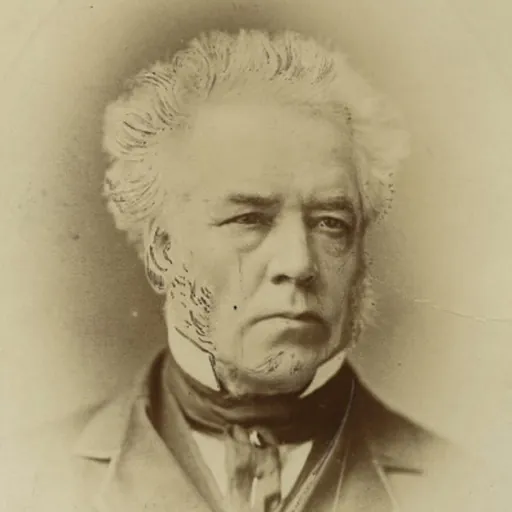
About Isaac Buchanan
Lived 1810 – 1883 (aged 73). Isaac Buchanan was a Canadian businessperson.
Isaac Buchanan (July 21, 1810 – October 1, 1883) was a businessman, political figure and writer in Upper Canada, then Canada West, Province of Canada (now Ontario). Born in Glasgow, Scotland, he emigrated to British North America in 1830, settling first in Montreal, then York (now Toronto), and then Hamilton. At the height of his business career, he had an extensive house and estate in Hamilton, which he named "Auchmar", in recognition of his Clan Buchanan roots in Scotland.
Buchanan's business was primarily centred in Hamilton and Canada West, but he was an international merchant, with business interests in Scotland and New York as well as Toronto and Montreal. He was the first president of the Hamilton Club, and founder of Hamilton and Toronto boards of trade – forerunners to modern chambers of commerce. He was the founder of the regiment that later became the Royal Hamilton Light Infantry. He was also actively involved in the presbyterian movement in Canada West, helping to establish the Free Church of Scotland in Canada.
Buchanan was elected four times to the Legislative Assembly of the Province of Canada, originally as a moderate Reformer from Toronto, but gradually moving to more conservative opinions, when elected from Hamilton. He was a generous donor to public causes, particularly in the Hamilton area.
Although at one point he was one of the richest men in Canada West, his businesses gradually became unprofitable and failed. He lived in reduced circumstances in his later years, with his income supplemented by a government appointment. He died in Hamilton in 1883.
Early life
Isaac Buchanan was born in Glasgow, Scotland in 1810 to Peter and Margaret Miller Buchanan. Isaac's father and mother were both scions of the Buchanans of Auchmar, a cadet branch of the Clan Buchanan, which was prominent in the Loch Lomond region. Peter Buchanan (1760-1826) established himself as a manufacturer of cloth in Glasgow, with a factory in Hutcheson Street. He became prominent in the city's mercantile community, becoming a member of the Merchants House (an organization of businessmen) and an elder at St. David's Church. Peter Buchanan married Margaret Miller Buchanan in 1800. Margaret was the daughter of Isaac Buchanan of Gartfairn. Her sister was the wife of Peter Buchanan's brother, Andrew. Isaac Buchanan was one of nine children. He attended the Glasgow Grammar School but his ambitions for a professional career were thwarted by family financial reverses and the death of his father in 1825.
Business career
At the urging of his elder brother, Peter Buchanan (1805-1860), Isaac located employment as a clerk with the Glasgow firm of William Guild & Company, traders to the West Indies and Honduras. Isaac became a junior partner in a new firm with his employer's son. The new firm was established for the purpose of opening a wholesale dry-goods store in Montreal, Lower Canada (now Quebec. Buchanan travelled to Montreal in 1830 to take charge of the venture. Soon afterward, Buchanan moved to York, Upper Canada (now Toronto) to be closer to clients in Upper Canada. In 1834, with his brother Peter, he bought the business in York and set up an office in Glasgow. In 1840, he set up a new company in Hamilton; he and his brother also established a Montreal branch. Their business included wholesale grocery trade, iron, hardware, and grain. Part of their successful business model was extension of credit lines to their retail customers. He served as lieutenant-colonel of the Battalion for two years. On his appointment as lieutenant-colonel, his wife, Agnes Buchanan, presented a stand of colours to the Battalion.
Presbyterian politics
Buchanan was a Presbyterian in the Scottish tradition. In the early 1840s, the Church of Scotland went through a period of strong disagreement between those who were content to allow a patron to direct the appointment of a minister to a church, compared to the more evangelical wing, which believed that only the congregation should control the appointment of the minister. This conflict resulted in a schism in the Church of Scotland, called the Disruption of 1843, which resulted in the formation of the Free Church of Scotland.
Buchanan was in Glasgow during this period, and favoured the evangelical approach. When he returned to Canada, he was instrumental in the establishment of Free Church principles in Presbyterian churches in Canada West. He donated at least £650 to the foundation of churches named for Knox in Toronto, Hamilton, and several other Canadian communities. Within the framework of the Free Church, he was generally considered a moderate. The organizational issues raised by the Free Church were closely tied to a major political issue in Canada West, the disposition of the Clergy Reserves, lands set aside by the British government for the benefit of the Anglican church in Canada. Buchanan was one of many Presbyterians who argued that the Presbyterian churches should share in the disposition of the income from the Clergy Reserves, which fit well with the ideology of the Free Church.
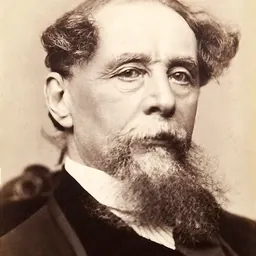
Charles Dickens, touring North America the next year, recounted the episode:
In spite of Toronto's reputation as a stronghold of the Tories, Buchanan and Dunn were elected to the Legislative Assembly for the city of Toronto, defeating Henry Sherwood and George Monroe.
In the first session of the Legislative Assembly in 1841, Buchanan voted in favour of the union of the Canadas, and was a general supporter of Lord Sydenham's policies. There was one issue upon which he disagreed with Sydenham, and that was Sydenham's proposal for a government bank with a monopoly over issuing bank-notes; essentially an early proposal for a central bank. Buchanan worried that the proposal would shrink the money supply and increase the economic power of Montreal. In the second session, Buchanan voted with the other moderate Reformers, sometimes in opposition to the "ultra" Reformers led by Baldwin.
On the key issue of responsible government, Buchanan disagreed with the position taken by Baldwin, who considered that the Governor had to appoint an Executive Council which had the support of a majority of the Legislative Assembly. Buchanan believed that the Governor necessarily was the head of the government and had to be able to act independently of the Legislative Assembly, if needed. He thought that responsible government would lead to the end of the British connexion. The Buchanans became known for their generous entertaining, and hosted several of the Governors-General and their wives over the years, including Lord and Lady Elgin, Lord and Lady Monck, Lord and Lady Lisgar, Lord and Lady Dufferin, and others. The Friends of Auchmar is a non-profit group dedicated to preserving Auchmar.
The Buchanan neighbourhood on the Hamilton mountain was named after him. It is bounded by Fennell Avenue West (north), Mohawk Road West (south), Garth Street (west), and West 5th Street (east). Landmarks in this neighbourhood include Mohawk College, Hillfield-Strathallan College and Buchanan Park, which was also named after him.
In Markham, York Region, Buchanan Drive is named after him.
Publications
Buchanan was a prolific political pamphleteer over his career. Some of his writings include:
The real state of things in Canada; explained in a few rough sketches on financial and other vital matters in both the Canadas ... (Toronto, 1837) First series of five letters, against the Baldwin faction, by an advocate of responsible government, and of the new college bill (Toronto, 1844) Can the British monarchy be preserved? (n.p., 1848) The patriotic party versus the cosmopolite party; or, in other words, reciprocal free trade, versus irreciprocal free trade (Toronto, 1848) Moral consequences of Sir R. Peel's unprincipled and fatal course, disquiet, overturn and revolution (Greenock, Scot., 1850) A thoroughly British legislature wanted, or, in other words, legislation combining patriotism and popularity ... (Greenock, 1850) Letters illustrative of the present position of politics in Canada, written on the occasion of the political convention, which met at Toronto, on 9th Nov., 1859 (Hamilton, 1859) Britain the country, versus Britain the empire: our monetary distresses – their legislative cause and cure (Hamilton, [Ont.], 1860) The relations of the industry of Canada, with the mother country and the United States ..., ed. H. J. Morgan (Montreal, 1864) A government specie-paying bank of issue and other subversive legislation, proposed by the finance minister of Canada (Hamilton, 1866)
Archives
The Isaac Buchanan and Family fonds is an extensive collection held by Library and Archives Canada. The archival reference number is R4064, former archival reference number MG24-D16.
Don’t just read it —
keep it.
Full-length biographies made to live with: read them, listen on the way to work, watch them tonight.
- E-book
- Audio
- Video
Instant download · yours to keep · every purchase keeps this site free
Important facts
People in Isaac Buchanan's life
Named in this biography and alive at the same time
Related people
Same field, nearest in time


Contemporaries
People whose lives overlapped Isaac Buchanan's





Frequently asked questions
Who was Isaac Buchanan?
Canadian politician
When was Isaac Buchanan born?
Isaac Buchanan was born on 21 July 1810 in Glasgow.
When did Isaac Buchanan die?
Isaac Buchanan died on 1 October 1883 in Hamilton, Ontario.
What was Isaac Buchanan's occupation?
Isaac Buchanan was a businessperson.
What nationality was Isaac Buchanan?
Isaac Buchanan was Canadian.
Sources & further reading
Cite this page
APA: Biography.guide. (2026). Isaac Buchanan. https://biography.guide/isaac-buchanan/
MLA: "Isaac Buchanan." Biography.guide, https://biography.guide/isaac-buchanan/.
Chicago: "Isaac Buchanan." Biography.guide. https://biography.guide/isaac-buchanan/.
Data last updated: 2026-09-23 · Spot an error? Report a correction.
Portrait: Wikimedia Commons · author & licence
Page generated 2026-09-27 05:05 UTC