
Irving Gottesman
American psychiatric geneticist
About Irving Gottesman
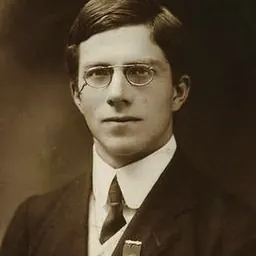
Lived 1930 – 2016 (aged 85). Irving Gottesman was an American psychologist, university teacher and behavior geneticist, known for Schizophrenia.
Irving Isadore Gottesman (December 29, 1930 – June 29, 2016) was an American professor of psychology who devoted most of his career to the study of the genetics of schizophrenia. He wrote 17 books and more than 290 other publications, mostly on schizophrenia and behavioral genetics, and created the first academic program on behavioral genetics in the United States. He won awards such as the Hofheimer Prize for Research, the highest award from the American Psychiatric Association for psychiatric research. Lastly, Gottesman was a professor in the psychology department at the University of Minnesota, where he received his Ph.D.
A native of Ohio, Gottesman studied psychology for his undergraduate and graduate degrees, became a faculty member at various universities, and spent most of his career at the University of Virginia and the University of Minnesota. He is known for researching schizophrenia in identical twins to document the contributions of genetics and the family, social, cultural, and economic environment to the onset, progress, and inter-generational transmission of the disorder. Gottesman has worked with researchers to analyze hospital records and conduct follow-up interviews of twins where one or both were schizophrenic. He has also researched the effects of genetics and the environment on human violence and variations in human intelligence. Gottesman and co-researcher James Shields introduced the word epigenetics—the control of genes by biochemical signals modified by the environment from other parts of the genome—to the field of psychiatric genetics.
Gottesman has written and co-written a series of books which summarize his work. These publications include raw data from various studies, their statistical interpretation, and possible conclusions presented with necessary background material. The books also include first-hand accounts of schizophrenic patients and relatives tending to them, giving an insight into jumbled thoughts, the disorder's primary symptom. Gottesman and Shields have built models to explain the cause, transmission, and progression of the disorder, which is controlled by many genes acting in concert with the environment, with no cause sufficient by itself.
Background + Past positions Gottesman has held the following positions: who were Hungarian–Romanian Jewish immigrants. He was educated at Miles Standish Elementary and a public school in Cleveland's Shaker Heights. After leaving school, Gottesman joined the United States Navy, where he was given a scholarship and the rank of midshipman, and was assigned to the Naval Reserve Officers Training Corps at the Illinois Institute of Technology in Chicago. He first specialized in physics but changed to psychology, receiving his B.S. degree in 1953. He began investigating personality traits in identical and fraternal twins who had filled out the Minnesota Multiphasic Personality Inventory (MMPI). His Ph.D. thesis, submitted to Psychological Monographs, was rejected before a review on the grounds that the nature–nurture issue it addressed had already been settled in favor of nurture. On appeal, the thesis was reviewed and accepted for publication.
Gottesman began his career at Harvard University as a social relations and psychology lecturer. This non-tenure-track position ended after three years. Then he worked with researcher James Shields at the Maudsley–Bethlem hospital complex in London, using its twin registry to analyze traits of identical and fraternal twins at the lab of Eliot Slater, whom Gottesman met in Rome at the Second International Congress on Human Genetics in 1961. After his return to the University of Minnesota in 1966, Gottesman created a program on behavioral genetics, the first in the U.S. a fellow of the American Association for the Advancement of Science, the Academy of Clinical Psychology, and the Center for Advanced Study in the Behavioral Sciences at Stanford University; a Guggenheim Fellow for 1972–1973 at the University of Copenhagen; an emeritus in psychology with a chair endowment at the University of Virginia; Gottesman died June 29, 2016.
Scientific contributions
Studies on schizophrenia and psychopathology
Gottesman first studied the genetics of schizophrenia on a large scale using the Maudsley–Bethlem register of twin admissions for 16 years. Later he worked on psychiatric genetics and genomics. In his Twin Cities MMPI study, part of his Ph.D. thesis, Gottesman found high levels of inheritance in the scales related to schizophrenia, depression, anti-social personality disorder, and social introversion.
The Maudsley–Bethlem study also hypothesized that schizophrenia was caused by a mixture of many small traits working together. These endophenotypes could be used for diagnosis. Endophenotypes have been interpreted as a link between genes and the final behavior, acted on by the environment and chance elements, with biochemical and epigenetic influences changing the genome but not being passed on to children. Molecular-biological studies in genetics have referred to endophenotypes to explain genetic causes of psychopathology. The researchers also examined how schizoids, those with mild, schizophrenia-like personality disorders, were linked to schizophrenics. Gottesman and Shields extended the term to classes of mild psychological disorders in twins and relatives of schizophrenics. The researchers had hypothesized that schizoida in a twin was how a schizophrenia carrier gene, one in a non-schizophrenic still passing on a genetic risk, expressed itself. The twin study did not confirm this.
In the Denmark study, the researchers evaluated the extent to which genes underpin psychopathology. In 1991 the same authors published a critique of the then-prevalent idea of antisocial behavior being transmitted through generations by child abuse alone in antisocial families. They stated that a review by Cathy Spatz Widom and the studies she cited had missed an element: children maltreated in families might have been targets because their genes might have influenced them into committing antisocial acts and attracting such treatment from parents.
Gottesman was one of the presenters at the 1995 conference at the Aspen Institute in Maryland on how strongly genes controlled a person's leaning toward violence and crime. Gottesman presented results from studies on the influence of genes in criminality, stating that identical twins separated at birth were likely to show similar levels of criminal behavior. This concordance indicated that genes influenced such behavior. He did point out that behavioral patterns were strongly influenced by the environment and not set by genes alone. The conference, funded by the National Institutes of Health, was contentious, with detractors arguing that such studies would lead to minority groups, more likely to be criminals because they had lower social status or were poor, being targeted with gene therapy for violence. Protesters disrupted the conference and swarmed into the auditorium. Gottesman reasserted his belief that scientists should proceed with the research, not waiting for humanity to become ethical enough not to misuse it.
Work on IQ
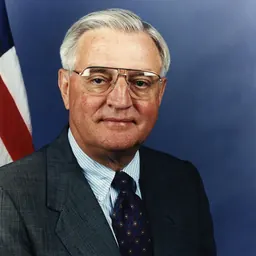
In 1972, Gottesman was called before the United States Senate by senator Walter Mondale to discuss the then 15-point IQ gap separating African Americans and white Americans. Gottesman testified that genes influenced IQ, but only in conjunction with elements such as schooling, money, and nutritious food from childhood onwards. According to Eric Turkheimer, Gottesman "was certainly the most prominent behavior geneticist to refuse to sign" the editorial Mainstream Science on Intelligence. In 2003, he and colleagues published a study showing that heritability was higher for IQ differences within high socioeconomic status (SES) people than among low SES people, i.e., genes influenced differences between children's test scores more among high SES than among low SES children.
Humanistic views
Gottesman researched and published on the abuse of genetic research in Nazi Germany, and provided expert testimony in a Chinese human rights case involving schizophrenia in the family. His scholarly books on schizophrenia also highlighted the human costs of the disorder. In Schizophrenia Genesis: The Origins of Madness, he provided chapters in which patients describe their experiences of the disease, and those of their families. He opposed the Nazi-associated Pioneer Fund, which funded some of his colleagues.
Books
Gottesman authored nine books, all related to schizophrenia and psychiatric genetics.
Schizophrenia and Genetics: A Twin Study Vantage Point
Gottesman and Shields published Schizophrenia and Genetics to document their twin-study research at the Maudsley Hospital in London, the work that in part earned them the Hofheimer Prize for Research, the highest award for psychiatric research from the American Psychiatric Association. The study expanded on an earlier one by Eliot Slater at the same hospital, covering 24 identical and 33 fraternal twins, with at least one from every pair a schizophrenic being treated at the hospital between 1948 and 1964. This study was one of eleven such in the contemporary literature, and the book detailed the methodology and analytic detail differentiating it from the others. Two psychological teststhe MMPI and the Object Sorting Test (Goldstein Scheerer Test of Concept Formation)were used to measure mental traits and functioning. Case summaries were prepared by the Scandinavian psychiatrist Erick Essen-Moller, and these were sent, with data on identical-or-fraternal-twin status and diagnosis-of-schizophrenia removed, to six judges from the U.S., U.K. and Japan. The judges independently evaluated whether the patients were schizophrenic.
Results of studies comprise another third of the core of Schizophrenia and Genetics. The data showed that genes made a person likely to develop schizophrenia under environmental pressures. The study was not designed to find the genes responsible, but the authors hypothesized there would be several acting in tandem.Contextual elements responsible could not be identified, though some, such as an overly protective mother, birth order, natal weight, and social and economic elements were ruled out.
The book provided a tutorial on genetics to make the material self-contained. Family, adoption and twin studies were investigated to determine the ways vulnerability to the disorder changed with genetic similarity to the patient. Together they supported the presence of a genetic contribution to the cause and the progress of schizophrenia. Contextual elements such as birth problems and stressful incidents were also analyzed to help the authors build a combined model to explain the disorder. The role of genes was less emphasized in the results, with a heritability of 70%, than in earlier studies by Kallman. The researchers investigated neuroanatomy, and specifically the neurotransmitter dopamine, as a possible route by which genes influence the functioning of the brain to produce the symptoms of the disorder. It extensively reviewed how science has looked at schizophrenia. The book presented a vulnerability/diathesis–stress model to explain the causes of the disorder and a many-cause, many-gene model to explain how it is passed from parents to children. and provides data, methods of interpreting the data, and an introduction to genetic analysis as used to analyze role of inheritance in behavior. The book also contains accounts of schizophrenics, with an artist depicting own suffering, saying, "I know ... it is craziness when every laugh is about me ... newspapers suddenly contain cures ... sparkles of light are demon eyes."
Schizophrenia Genesis starts with the history of schizophrenia. Gottesman takes the view that schizophrenia is a disease of the industrial world. because it is not mentioned in the Bible, by the ancient Greeks, the ancient physicians, or authors including Shakespeare. He saw it first mentioned by physicians in 1809 and by Balzac in a short story in 1832, showing minimally the disorder had by then been recognized as such. In 1896, Kraepelin defined its symptoms, and his student Ernst Rüdin began a genetic study of its transmission in 1916. which laid the groundwork for the Behavior Genetics Association (BGA); president-elect and program chair of the BGA in 1976; American Psychological Association (APA) member from 1958, and a fellow since 1975; a fellow of the American Psychiatric Association; Dobzhansky Lifetime Achievement Award in 1990 from the Behavior Genetics Association; William James Book Award in 1991 from the APA Division of General Psychology; (previous honorees include Jean Piaget and B.F. Skinner; Gold Medal Award for Life Achievement in the Science of Psychology in 2007 from the American Psychological Foundation; and University of Louisville Grawemeyer Award in Psychology 2013 James McKeen Cattell Fellow Award from the Association for Psychological Science.
Books
Don’t just read it —
keep it.
Full-length biographies made to live with: read them, listen on the way to work, watch them tonight.
- E-book
- Audio
- Video
Instant download · yours to keep · every purchase keeps this site free
Important facts
People in Irving Gottesman's life
Named in this biography and alive at the same time



Related people
Same field, nearest in time



Contemporaries
People whose lives overlapped Irving Gottesman's


Frequently asked questions
Who was Irving Gottesman?
American psychiatric geneticist (1930–2016)
When was Irving Gottesman born?
Irving Gottesman was born on 29 December 1930 in Cleveland.
When did Irving Gottesman die?
Irving Gottesman died on 29 June 2016 in Edina.
What was Irving Gottesman's occupation?
Irving Gottesman was a psychologist, university teacher and behavior geneticist.
What was Irving Gottesman known for?
Irving Gottesman was known for Schizophrenia.
What nationality was Irving Gottesman?
Irving Gottesman was American.
Sources & further reading
Cite this page
APA: Biography.guide. (2026). Irving Gottesman. https://biography.guide/irving-gottesman/
MLA: "Irving Gottesman." Biography.guide, https://biography.guide/irving-gottesman/.
Chicago: "Irving Gottesman." Biography.guide. https://biography.guide/irving-gottesman/.
Data last updated: 2026-09-20 · Spot an error? Report a correction.
Page generated 2026-09-27 05:00 UTC