
About Eliot Slater
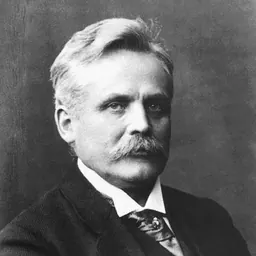
Lived 1904 – 1983 (aged 78). Eliot Slater was a British psychiatrist.
Eliot Trevor Oakeshott Slater (28 August 1904 – 15 May 1983) was a British psychiatrist who was a pioneer in the field of the genetics of mental disorders. He held senior posts at the National Hospital for Nervous Diseases, Queen Square, London, and the Institute of Psychiatry at the Maudsley Hospital. He was the author of some 150 scientific papers and the co-author of several books on psychiatric topics, notably on disputed 'physical methods'. From the mid-50s to his death, he co-edited Clinical Psychiatry, the leading textbook for psychiatric trainees.
Early life and medical education
Eliot Slater was born in Plumstead, London, on 28 August 1904. His father was Gilbert Slater, an economic historian who became Professor of Indian Economics at the University of Madras and later principal of Ruskin College, Oxford. His mother, Violet Oakeshott, a Quaker and pacifist, was instrumental in sending him to Leighton Park School, Reading, from where he won an exhibition to St John's College, Cambridge, to study natural sciences, in which he gained a third class degree. He went on to St George's Hospital, London, and qualified as a doctor in 1928. In 1931 he was appointed medical officer at the Maudsley Hospital, London, where he was encouraged by his chiefs Aubrey Lewis and Edward Mapother to apply statistical methods to the empirical study of mental illness.
Meanwhile, at the Munich institute, Slater met his future wife Lydia Pasternak, a chemist and daughter of the Russian artist Leonid Pasternak and sister of the poet Boris Pasternak. He returned to his post at the Maudsley Hospital, accompanied by Lydia Pasternak. As he wrote, "It was a source of peculiar satisfaction to me to be showing what I thought of Nazi Rassenhygiene by marrying a Jewess, a member of an inferior race by their standards, a lady of the highest genetical aristocracy by mine." Her elderly parents followed from Berlin, and soon her cousin brought his family (being her sister and their two children) to England.
Slater would later refer to the Nazis as 'unspeakable men' and 'devils' with a 'detestable ideology', and noted the Nazification of the Munich institute when he left in 1935, claiming to have never seen much of Rudin and to only recall once interacting socially with him at a ceremonial dinner at his home.
With the outbreak of war in 1939 the Maudsley was evacuated, and Slater became clinical director of the Sutton Emergency Hospital, where he had responsibility for the treatment of some 20,000 psychiatric casualties. This experience led to the influential book An Introduction to Physical Methods of Treatment in Psychiatry (with William Sargant, 1944).
Also in 1946, he was appointed Physician in psychological medicine at the National Hospital for Nervous Diseases, Queen Square, London, where he worked for eighteen years. He resigned in 1964 in protest at the hospital's rejection of the offer of a benefaction from the Mental Health Research Fund to establish a chair in psychiatry,
Among his numerous other publications, one to be singled out is Clinical Psychiatry (with Willi Mayer-Gross and Martin Roth, 1954), which became a standard textbook for doctors and students, and remained so for many years (third edition 1969 by Slater and Roth; revised 1977). He gave the Litchfield (1959), Galton (1960) and Mapother (1960) lectures. In his Maudsley (1961) lecture and later writings he questioned the concept of 'hysteria' as a valid diagnosis, showing that serious physical illness subsequently emerged in many patients initially labelled 'hysterical' and arguing that the physical illness could often account for their allegedly psychological symptoms; They long advocated for a range of other 'physical' treatments, including insulin coma therapy, even well after clinical trials cast doubt on its efficacy.
It has been noted that originally (1944) they wrote that their judgements of efficacy – in the absence of any known theoretical basis for it – were on purely empirical (research) grounds, but later (e.g. 1963) they justified them as the insights of the careful and attentive observer. They repeatedly emphasised benefits over psychotherapy in terms of speed and 'convenience' in dealing with large numbers of mental patients, and in 'certainty' of improvements; however the claims of curative or transformative powers proved hollow, and they were sometimes used to make patients easier to manage.
Slater died at his home in Barnes, London, on 15 May 1983, being survived by his first and second wives and by the four children of his first marriage – a mathematician, a haematologist, a psychiatrist and an English don.
Outside interests He had wide interests outside his work. They included chess (he published a statistical investigation of chess openings), music (studying and publishing on the pathography of Schumann and other composers), poetry (he published a book of his own, often rather dark, poems, The Ebbless Sea), euthanasia (he joined the Euthanasia Society after his retirement), painting (an exhibition of his paintings was held in 1977), and the statistical study of literature (he was awarded a PhD from London University at the age of 77 for a statistical word study of the play Edward III, which provided evidence that the play was by Shakespeare). In an essay of 1969 (now in ETOS; see below), he also applied his professional expertise to the authorship question with particular reference to the Sonnets. He found the psychological difficulties raised by the orthodox view of William Shakespeare of Stratford-upon-Avon's authorship "most insuperable" but resolutely stuck to a principle of open-mindedness without pitching for any other candidate.
Don’t just read it —
keep it.
Full-length biographies made to live with: read them, listen on the way to work, watch them tonight.
- E-book
- Audio
- Video
Instant download · yours to keep · every purchase keeps this site free
Important facts
People in Eliot Slater's life
Named in this biography and alive at the same time







Related people
Same field, nearest in time


Contemporaries
People whose lives overlapped Eliot Slater's




Frequently asked questions
Who was Eliot Slater?
British psychiatrist
When was Eliot Slater born?
Eliot Slater was born on 28 August 1904.
When did Eliot Slater die?
Eliot Slater died on 15 May 1983.
What was Eliot Slater's occupation?
Eliot Slater was a psychiatrist.
What nationality was Eliot Slater?
Eliot Slater was British.
Sources & further reading
Cite this page
APA: Biography.guide. (2026). Eliot Slater. https://biography.guide/eliot-slater/
MLA: "Eliot Slater." Biography.guide, https://biography.guide/eliot-slater/.
Chicago: "Eliot Slater." Biography.guide. https://biography.guide/eliot-slater/.
Data last updated: 2026-09-20 · Spot an error? Report a correction.
Page generated 2026-09-27 05:26 UTC