
About Irvin Flores
Lived 1925 – 1994 (aged 68–69). Irvin Flores was an American and Puerto Rican politician.
Irvin Flores (October 1, 1924 – March 20, 1994) was a political activist, member of the Puerto Rican Nationalist Party and an advocate of Puerto Rican independence. Flores was a leader of the Nationalist faction of Mayagüez, Puerto Rico during the Puerto Rican Nationalist Party revolts of the 1950s. On March 1, 1954, Flores together with fellow Nationalists Lolita Lebrón, Andrés Figueroa Cordero, and Rafael Cancel Miranda entered the United States Capitol building armed with automatic pistols and fired 30 shots. Five Congressmen were wounded, however all the representatives survived and Flores, along with the other three members of his group were immediately arrested.
Early years Flores (birth name: Irvin Flores Rodríguez ) was born in the town of Cabo Rojo in Puerto Rico. He was raised together with his five brothers and sisters by an aunt after his mother died and he became an orphan. It was in Cabo Rojo where Flores received his primary and secondary education. After he graduated from high school, he studied electronics in a local vocational school.
Puerto Rican Nationalist Party The Puerto Rican Nationalist Party was founded by José Coll y Cuchí as a direct response to the American colonial government in 1919, By the 1920s, there were two other pro-independence organizations in the Island, they were the "Nationalist Youth" and the "Independence Association of Puerto Rico". On September 17, 1922, the two political organizations merged into the Puerto Rican Nationalist Party. In 1924, Dr. Pedro Albizu Campos joined the party and on May 11, 1930, Dr. Pedro Albizu Campos was elected president of the Puerto Rican Nationalist Party. There were sub-groups within the Puerto Rican Nationalist Party. The Puerto Rican Youth for Independence was one of them. School students would often meet to discuss the political issues of the day.
Independence leader Rafael Cancel Miranda was present in one of the meetings that Flores attended where the political discussion was about Puerto Rican independence. Cancel Miranda invited Irving Flores and a relative named Dionisio Flores to join the Puerto Rican Youth for Independence and they did. During this time in his life he personally met Dr. Albizu Campos who encouraged him to take up public speaking. Albizu Campos wanted Lebrón to pick a group of nationalists for this task without her personal participation. Lebrón presented the plan to the Nationalist Party in New York and choose Cancel Miranda, Flores and Andrés Figueroa Cordero for the task. Disregarding Albizu Campo's wishes, she decided to lead the group. The date for the attack on the House of Representatives was to be March 1, 1954. This date was chosen because it coincided with the inauguration of the Conferencia Interamericana (Interamerican Conference) in Caracas. The group opened fire with semi-automatic pistols. Some 30 shots were fired (mostly by Cancel, according to his account), wounding five lawmakers; one representative, Alvin Morell Bentley from Michigan, was seriously wounded in the chest. Upon being arrested, Lebrón yelled:
Arrest and trial
Lebrón, Cancel Miranda and Figueroa Cordero were immediately arrested. Flores, however, walked away from the building in the confusion that followed. He took a taxi to a bus stop where he, and various Mexicans who happened to be there, were stopped and questioned by the local police who had just heard about the shooting. The police searched Flores and found a loose bullet in his pocket which led to his arrest. On July 13, 1954, the four nationalists were taken to New York, where they declared themselves not guilty on the charges of "trying to overthrow the government of the United States". On October 26, 1954, judge Lawrence E. Walsh found all of the accused guilty of conspiracy, sentencing them to six additional years in prison.
Imprisonment and release The four Nationalists were sent to different prisons. Flores was sent to Leavenworth Federal Prison in Leavenworth, Kansas, where nationalist Oscar Collazo, who in 1950 attacked the Blair House in a failed attempt to assassinate US President Harry S. Truman, was incarcerated. By 1970, Cancel Miranda was transferred from Alcatraz Prison to Leavenworth Prison.
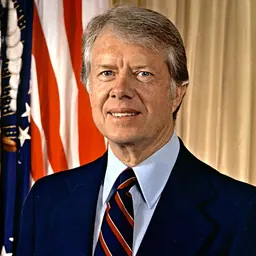
In 1970, Flores, together with Collazo and Cancel Miranda, participated in a prison strike and stopped working because of the abuses by some of the guards against them. While in prison, he studied English and read books on history and philosophy. He also learned how to play the guitar. He wrote a book titled Los Indomitos where he described his prison experience. That same year, President Jimmy Carter, under international pressure, commuted the sentence of Cancel Miranda, Lebrón and Flores. They had served 25 years in prison. Andrés Figueroa Cordero had been released from prison earlier because of health issues related to his terminal cancer.
Later years After his release, Flores was reunited with the other nationalists in the house of José Torres in Chicago. There he gave a public speech where he stated: He then traveled to New York City where he was scheduled to appear before a crowd at the Church of the Apostle San Pablo. He then proceeded to return to his motherland Puerto Rico where he and his group received a hero's welcome by their supporters. The Order of Playa Girón is a national order conferred by the Council of State of Cuba on Cubans or foreigners.
In Puerto Rico he met and married Blanca Rodríguez Rivera in 1980. He managed a boarding house and continued his political activities involving the advocacy of Puerto Rico's independence. Flores divorced his wife before undergoing surgery for a brain tumor. He was in a coma for three months and on March 20, 1994, he died in his home which was located in Hato Rey, a suburb of Puerto Rico.
Don’t just read it —
keep it.
Full-length biographies made to live with: read them, listen on the way to work, watch them tonight.
- E-book
- Audio
- Video
Instant download · yours to keep · every purchase keeps this site free
Important facts
People in Irvin Flores's life
Named in this biography and alive at the same time



Related people
Same field, nearest in time




Contemporaries
People whose lives overlapped Irvin Flores's



Frequently asked questions
Who was Irvin Flores?
Puerto Rican pro-independence militant
When was Irvin Flores born?
Irvin Flores was born in 1925 in Cabo Rojo.
When did Irvin Flores die?
Irvin Flores died on 20 March 1994 in San Juan.
What was Irvin Flores's occupation?
Irvin Flores was a politician.
What nationality was Irvin Flores?
Irvin Flores was American and Puerto Rican.
Sources & further reading
Cite this page
APA: Biography.guide. (2026). Irvin Flores. https://biography.guide/irvin-flores/
MLA: "Irvin Flores." Biography.guide, https://biography.guide/irvin-flores/.
Chicago: "Irvin Flores." Biography.guide. https://biography.guide/irvin-flores/.
Data last updated: 2026-09-20 · Spot an error? Report a correction.
Page generated 2026-09-27 05:21 UTC