
About Rafael Cancel Miranda
Lived 1930 – 2020 (aged 89). Rafael Cancel Miranda was an American politician.
Rafael Cancel Miranda (July 18, 1930 – March 2, 2020) was a poet, political activist, member of the Puerto Rican Nationalist Party and an advocate of Puerto Rican independence. On March 1, 1954, Cancel Miranda and three other Nationalists (Lolita Lebrón, Andrés Figueroa Cordero, and Irvin Flores Rodríguez) attacked the House of Representatives while it was in session at the United States Capitol building, firing 30 shots and injuring five Congressmen. The four were arrested, convicted, and sentenced to long prison terms. In 1979, Cancel Miranda's sentence was commuted by United States President Jimmy Carter.
Early years Cancel Miranda was born in the town of Mayagüez, located on the western coast of Puerto Rico. His father, Rafael Cancel Rodríguez, was president of the Mayagüez chapter of the Puerto Rican Nationalist Party and his mother was a member of the Daughters of Freedom, an organization which was the women's branch of the Nationalist Party. His father, a businessman and owner of a furniture store, had been imprisoned because of his political beliefs.
Ponce massacre
In March 1937, when Cancel Miranda was seven years old, his mother and father traveled to the city of Ponce to participate in a march organized by the Nationalist Party. He and his sisters couldn't go because they were sick with measles. The march, which was scheduled for March 30 (Palm Sunday), was organized to commemorate the ending of slavery in Puerto Rico by the governing Spanish National Assembly in 1873, and to protest the incarceration by the U.S. Government of Nationalist leader Pedro Albizu Campos on sedition charges.
Upon learning of the planned protest, however, the colonial Governor of Puerto Rico at the time, General Blanton Winship, who had been appointed by US President Franklin Delano Roosevelt, demanded the immediate withdrawal of the permits. They were withdrawn a short time before the march was scheduled to begin. As "La Borinqueña", Puerto Rico's national anthem, was being played, the demonstrators began to march. Among the dead were 17 unarmed civilians and two police officers at the hands of the Insular Police.
Ultimately, responsibility for the massacre fell on Governor Winship, and he is considered to have, in effect, ordered the massacre. Many were chased by the police and shot or clubbed at the entrance of their houses as they tried to escape. Others were taken from their hiding places and killed. Leopold Tormes, a member of the Puerto Rico legislature, told reporters how a policeman murdered a nationalist with his bare hands. Dr. José N. Gándara, one of the physicians who assisted the wounded, testified that wounded people running away were shot, and that many were again wounded by the clubs and bare fists of the police. No arms were found in the hands of the civilians wounded, nor on the dead ones. About 150 of the demonstrators were arrested immediately afterward; they were later released on bail. The incident is known as the Ponce massacre.
The white nurse's uniform of Cancel Miranda's mother was soaked with blood as she crawled over bodies in search of her husband. Miraculously, they both managed to return home unharmed. After the family returned home, Cancel Miranda committed his first political act in his first grade class in school when he refused to salute the American flag which at the time was mandatory.
Puerto Ricans became U.S. citizens as a result of the 1917 Jones-Shafroth Act and those who were eligible, with the exception of women, were expected to serve in the military, either voluntarily or as a result of the military draft (conscription). In 1948, Cancel Miranda, then eighteen and in high school, refused to be drafted into the military. One day, he was walking to school in San Juan with other students, and there was a car with four FBI agents at the corner of his house. He handed his books to the other students to take them to the place where he was living. The men arrested him and charged him with refusing the U.S. draft. The U.S. Federal Court in Puerto Rico sentenced him to two years and one day and he was sent to a prison in Tallahassee, Florida, where he remained from 1949 to 1951. During his stay in prison he confronted a prison guard because of the racist segregation inside prison walls. Under Jim Crow legislation at the time, the prison dormitories and lunch areas were segregated with areas for black prisoners and areas for white prisoners. Puerto Ricans were sent to either black or white areas, depending on their skin tone. Cancel was placed in the white area but said he "dined with the black prisoners" when he wanted to.
On October 30, 1950, a Nationalist Party uprising occurred in Puerto Rico. The uprising was a call for independence against the United States Government's rule of Puerto Rico. It was also a protest against the approval of the creation of the political status the "Free Associated State of Puerto Rico" or how it is legally known, the "Commonwealth of Puerto Rico" ("Estado Libre Asociado") for Puerto Rico which was considered a colonial farce. Numerous Nationalists were arrested, among them Cancel Miranda's father. In 1951, he published an article in a Havana paper to commemorate the first anniversary of that uprising. The United States embassy learned about it and demanded that the Prío Socarrás government turn him over along with another Puerto Rican, Reynaldo Trilla, but the Cuban authorities ignored them. Lebrón decided to lead the group, even though Albizu Campos did not order her to directly take part in the assault. Ruth Mary Reynolds, the "American/Puerto Rican Nationalist" and the organization which she founded "American League for Puerto Rico's Independence" came to the defense of Cancel Miranda and the three other Nationalists. Cancel Miranda and the other members of the group were the only defense witnesses, as part of Lebrón's testimony she reaffirmed that they "came to die for the liberty of her homeland". On June 16, 1954, the jury declared the four guilty. Holtzoff imposed the maximum imprisonment penalties. On July 13, 1954, the four nationalists were taken to New York, where they declared themselves not guilty on the charges of "trying to overthrow the government of the United States". Among the prosecution's witnesses was Gonzalo Lebrón Jr., who testified against his sister. On October 26, 1954, judge Lawrence E. Walsh found all of the accused guilty of conspiracy, sentencing them to six additional years in prison.
The four Nationalists were incarcerated at different prisons. Figueroa Cordero was sent to the federal penitentiary in Atlanta; Lebrón to the women's prison in Alderson, West Virginia; and Flores Rodríguez to Leavenworth, Kansas, where Oscar Collazo, who in 1950 attacked the Blair House in a failed attempt to assassinate US President Harry S. Truman, was incarcerated. Cancel Miranda, considered to be the primary shooter, received a prison sentence of 85 years and was sent to Alcatraz in the San Francisco Bay. He also befriended Morton Sobell, an American convicted of espionage; they remained friends until Sobell's death in December 2018. Andrés Figueroa Cordero was released from prison earlier because of ill health. Governor of Puerto Rico Carlos Romero Barceló publicly opposed the commutations, arguing that it would encourage terrorism and undermine public safety. Cancel Miranda and the other Nationalists received a hero's welcome upon their return to Puerto Rico.
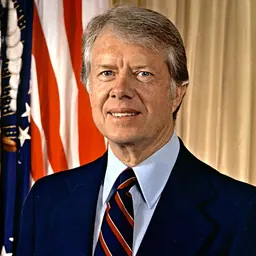
President Carter also commuted the sentence of fellow nationalist Oscar Collazo, to time served on September 6, 1979, after spending 29 years in jail. Collazo had been eligible for parole since April 1966, and Lebrón since July 1969. Both Cancel Miranda and Flores Rodríguez became eligible for parole in July 1979. However, none had applied for parole because of their political beliefs.
Cancel Miranda authored nine books and remained active in the struggle for Puerto Rican independence. He continued to carry the cause of independence to other countries and returned occasionally to the United States on speaking tours on behalf of Puerto Rican political prisoners. In 1979, at the International Conference in Support of Independence for Puerto Rico, held in Mexico City, Cancel Miranda. Irvin Flores Rodríguez, Lolita Lebrón, and Oscar Collazo were recognized as the embodiment of the directive of their teacher Albizu Campos to exercise valor and sacrifice before representatives of fifty-one countries. The Order of Playa Girón is a national order conferred by the Council of State of Cuba on Cubans or foreigners. In 2006, he was awarded the Order of José Martí by the Cuban government for his work. It is the highest honor Cuba accords to non-Cubans.
He died in San Juan, Puerto Rico on March 2, 2020. He was buried at Cementerio Privado de Cementerio Privado de Mayagüez in Mayagüez, Puerto Rico.
Don’t just read it —
keep it.
Full-length biographies made to live with: read them, listen on the way to work, watch them tonight.
- E-book
- Audio
- Video
Instant download · yours to keep · every purchase keeps this site free
Important facts
People in Rafael Cancel Miranda's life
Named in this biography and alive at the same time



Related people
Same field, nearest in time



Contemporaries
People whose lives overlapped Rafael Cancel Miranda's


Frequently asked questions
Who was Rafael Cancel Miranda?
Puerto Rican politician and independence advocate (1930-2020)
When was Rafael Cancel Miranda born?
Rafael Cancel Miranda was born on 18 July 1930 in Mayagüez.
When did Rafael Cancel Miranda die?
Rafael Cancel Miranda died on 2 March 2020 in San Juan.
What was Rafael Cancel Miranda's occupation?
Rafael Cancel Miranda was a politician.
What nationality was Rafael Cancel Miranda?
Rafael Cancel Miranda was American.
Sources & further reading
· Wikipedia: Rafael Cancel Miranda
· DBpedia: Rafael Cancel Miranda
Cite this page
APA: Biography.guide. (2026). Rafael Cancel Miranda. https://biography.guide/rafael-cancel-miranda/
MLA: "Rafael Cancel Miranda." Biography.guide, https://biography.guide/rafael-cancel-miranda/.
Chicago: "Rafael Cancel Miranda." Biography.guide. https://biography.guide/rafael-cancel-miranda/.
Data last updated: 2026-09-20 · Spot an error? Report a correction.
Page generated 2026-09-27 05:14 UTC