
About Iris G.R. Paul
Lived 1945 – 2025 (aged 79–80). Iris G.R. Paul was an Indian physician and missionary.
Iris Grace Rajakumari Paul (1945 – 13 October 2025) was an Indian physician, theologian, missionary and community development worker. Paul was born into a highly religious family and was a devout Christian. She received her bachelor’s degree in zoology from Women's Christian College, Madras and completed her MBBS (Bachelor of Medicine and Bachelor of Surgery) in pediatrics at Kilpauk Medical College.
Paul was inspired to conduct missionary work after reading the biography of Albert Schweitzer, and began her missionary career after marrying RAC Paul in 1972. and moved his family around frequently, including to Tamil Nadu, Chennai and Delhi, where Iris learned to speak Hindi. As a child, Paul was described as rebellious, headstrong, and boisterous, despite the expectations imposed on her by her parents and the rest of society.
Paul grew up in a Christian family and was deeply influenced by her parents' commitment to their religion. During her time at the Women's Christian College, Paul was involved in the Union of Evangelical Studies of India.
After completing her courses in junior college, Paul applied for medical colleges and B.Sc. courses in biology and zoology. Having not received acceptances from any of her medical colleges, she decided to join the B.Sc. course in zoology at Women's Christian College in Madras and graduated in 1964.
In 1985, Paul attended the Indian Institute of Cross Cultural Communication in Nasik, IICCC, Maharashtra to learn about writing spoken language with the goal of writing the New Testament in the Bondo language. While working with the Bondos, she took a medical correspondence course from the Christian Medical College in Velur. Paul also pursued advanced study in theology and received a Bachelor of Divinity from the Senate of Serampore University in 1990.
Missionary work Paul worked as a house surgeon immediately after completing her MBBS degree. She was initially inspired to conduct missionary work in Africa after reading the biography of Albert Schweitzer, She used her medical knowledge to treat common diseases among the Adivasis people such as Malaria, Tuberculosis, skin diseases, and dysentery, as well as helping to deliver babies.
After spending time with the Adivasis, the Pauls decided to work with the Bondo tribes, a relatively uncontacted group characterized by illiteracy, poverty, and high mortality. They set up a roadside clinic that Iris operated to treat Bondo villages visiting the local market. Paul spent much time treating tuberculosis among the Bondos and providing women's health care. The Pauls wanted to devote their work to the Bondos, whereas the IMS wanted to focus on the Adivasis people, and as a result, they left the IMS in 1973 and began to work for the Indian Evangelical Mission, who agreed to support them.
After the death of RAC Paul, Iris returned to Malkangiri, where she focused on community development that combined evangelism with medical care and community empowerment. Paul formed a partnership with the Evangelical Fellowship of India Commission on Relief (EFICOR) to support her efforts to provide educational programs and services for the villages. Paul sent villagers to take courses at EFICOR on evangelism and teaching literacy to implement in their own communities. She built the St. Stephen's Church in Malkangiri and established several congregations for the Indian Missionary Society. During their marriage, she helped to take care of RAC Paul and nurse him throughout his ill health. The couple had two children of their own, Remo and Mano Paul, and also raised two Bondo children as their own, whom they named David Livingstone and Mary Smrutha.
Awards and recognition Paul became a Fellow of the College of Chest Physicians at Delhi University in 1986 for her research on tuberculosis. In 1988, she was presented with the Yoke Fellow Award from the Direct Mission Aid Society for her "evangelic and holistic development work among the Adivasis." In 1996, she was given the Robert Pierce International Award for Christian development work by World Vision International. Paul has said of her work, "Medicine is my life. It doesn't feel like work. I can't think of anything else I would rather do. It does not bother me when people call at odd hours. I just stay 'til I finish the job."
Don’t just read it —
keep it.
Full-length biographies made to live with: read them, listen on the way to work, watch them tonight.
- E-book
- Audio
- Video
Instant download · yours to keep · every purchase keeps this site free
Important facts
People in Iris G.R. Paul's life
Named in this biography and alive at the same time

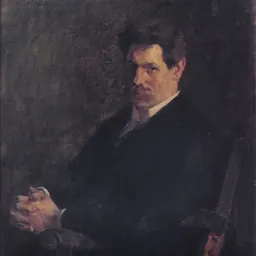


Related people
Same field, nearest in time

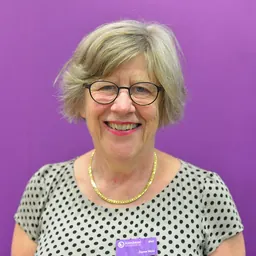


Contemporaries
People whose lives overlapped Iris G.R. Paul's


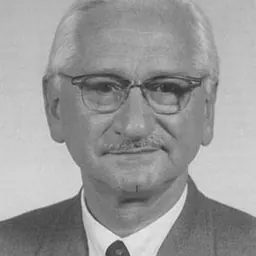
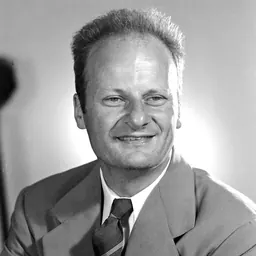
Frequently asked questions
Who was Iris G.R. Paul?
Indian medical missionary
When was Iris G.R. Paul born?
Iris G.R. Paul was born in 1945.
When did Iris G.R. Paul die?
Iris G.R. Paul died on 13 October 2025.
What was Iris G.R. Paul's occupation?
Iris G.R. Paul was a physician and missionary.
What nationality was Iris G.R. Paul?
Iris G.R. Paul was Indian.
Sources & further reading
Cite this page
APA: Biography.guide. (2026). Iris G.R. Paul. https://biography.guide/iris-g-r-paul/
MLA: "Iris G.R. Paul." Biography.guide, https://biography.guide/iris-g-r-paul/.
Chicago: "Iris G.R. Paul." Biography.guide. https://biography.guide/iris-g-r-paul/.
Data last updated: 2026-09-20 · Spot an error? Report a correction.
Page generated 2026-09-27 05:21 UTC