
About Iris Bohnet
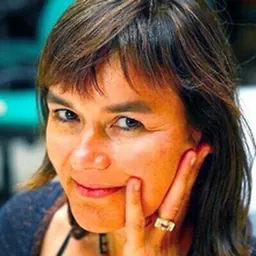
Born 1966. Iris Bohnet is a Swiss economist, university teacher and ecologist.
Iris Bohnet (born March 16, 1966) is a behavioral economist and the Albert Pratt Professor of Business and Government at the Harvard Kennedy School. She is co-director of the Women and Public Policy Program at Harvard Kennedy School and director of the social sciences program at the Harvard Radcliffe Institute. Her research applies insights from economics and psychology to improve decision-making in organizations and society, often with a gender or cross-cultural perspective. She is the author of What Works: Gender Equality by Design and Make Work Fair (2025), the latter coauthored with Siri Chilazi.
Bohnet served as academic dean of Harvard Kennedy School for six years. She serves as a scientific advisor to the UN Secretary-General, on the Workplace Innovation Council, and was a member of the Gender Equality Advisory Council of the G7. She remained at the University of Zurich to complete a doctorate in economics, receiving her Dr. oec. publ. degree in 1997 (equivalent to a U.S. Ph.D. in economics). Since 2024, she has also served as director of the social sciences at the Harvard Radcliffe Institute.
Bohnet collaborated on the ACT (Action to Catalyze Tech) Report, an evidence-based framework for advancing diversity, equity, and inclusion in the technology sector. In 2024, the White House Office of Science and Technology Policy cited the report in Equity and Excellence 2050: A National Strategy for Progress and Prosperity as a model resource for employers and institutions.
Bohnet has been engaged with the World Economic Forum for more than a decade. She has served on the Global Agenda Council on Women's Empowerment, the Global Agenda Council on Behavior, and the Global Future Council on Behavioural Sciences, and has been faculty chair of the Young Global Leaders executive education program Global Leadership and Public Policy for the 21st Century at Harvard Kennedy School. Its ideas also reached prominent audiences through Bohnet's appearances at venues including SXSW, the World Economic Forum meetings in Davos, and Talks at Google.
In Make Work Fair (2025), coauthored with Siri Chilazi, Bohnet extends this framework to workplace fairness more broadly. The book argues that organizations frequently mistake existing systems as meritocratic even though recruitment, promotion, performance evaluation, and compensation processes often contain hidden structural biases. Bohnet and Chilazi advocate for measuring organizational outcomes, testing interventions, and redesigning systems so that merit is assessed more fairly and consistently. Under joint evaluation, these gender differences disappeared and evaluators were more likely to select candidates based on their previous performance.
The authors described joint evaluation as an “evaluation nudge”: rather than attempting to eliminate evaluators' underlying biases, the intervention changes the decision-making environment so that relevant information about individual performance becomes more salient. They argued that comparative evaluation encourages more deliberative and information-based decisions and can therefore improve both gender equality and the quality of the candidates selected.
Personal life Bohnet is married to attorney Michael Zürcher. They have two sons, Dominik and Luca.
Selected works Women and Public Policy Program at Harvard. (2026). Fairness and Meritocracy at Work: How to Be 'FAIR,' Scale Impact, and Shift Norms [Video]. YouTube. https://www.youtube.com/watch?v=eojvDrUmf9U Arslan, C., Chang, E. H., Chilazi, S., Bohnet, I., & Hauser, O. P. (2025). Behaviorally designed training leads to more diverse hiring. Science, 387(6732), 364–366. https://doi.org/10.1126/science.ads5258 Bohnet, I., Hauser, O. P., & Kristal, A. S. (2025). Can gender and race dynamics in performance appraisals be disrupted? The case of social influence. Journal of Economic Behavior & Organization, 235, Article 107032. https://doi.org/10.1016/j.jebo.2025.107032 Bohnet, I., & Saidi, F. (2019). Informational inequity aversion and performance. Journal of Economic Behavior & Organization, 159, 181–191. https://doi.org/10.1016/j.jebo.2019.02.005 Bohnet, I., van Geen, A., & Bazerman, M. (2016). When Performance Trumps Gender Bias: Joint vs. Separate Evaluation. Management Science, 62(5), 1225–1234. https://doi.org/10.1287/mnsc.2015.2186 Bohnet, I., Herrmann, B., & Zeckhauser, R. (2010). Trust and the Reference Points for Trustworthiness in Gulf and Western Countries. The Quarterly Journal of Economics, 125(2), 811–828. https://doi.org/10.1162/qjec.2010.125.2.811 Greig, F., & Bohnet, I. (2009). Exploring gendered behavior in the field with experiments: Why public goods are provided by women in a Nairobi slum. Journal of Economic Behavior & Organization, 70(1), 1–9. https://doi.org/10.1016/j.jebo.2008.12.006 Bohnet, I., Greig, F., Herrmann, B., & Zeckhauser, R. (2008). Betrayal Aversion: Evidence from Brazil, China, Oman, Switzerland, Turkey, and the United States. The American Economic Review, 98(1), 294–310. https://doi.org/10.1257/aer.98.1.294
Don’t just read it —
keep it.
Full-length biographies made to live with: read them, listen on the way to work, watch them tonight.
- E-book
- Audio
- Video
Instant download · yours to keep · every purchase keeps this site free
Important facts
People in Iris Bohnet's life
Named in this biography and alive at the same time

Related people
Same field, nearest in time



Contemporaries
People whose lives overlapped Iris Bohnet's




Frequently asked questions
Who is Iris Bohnet?
Swiss economist & academic
When was Iris Bohnet born?
Iris Bohnet was born in 1966 in Lucerne, Switzerland.
What is Iris Bohnet's occupation?
Iris Bohnet is an economist, university teacher and ecologist.
What nationality is Iris Bohnet?
Iris Bohnet is Swiss.
Sources & further reading
Cite this page
APA: Biography.guide. (2026). Iris Bohnet. https://biography.guide/iris-bohnet/
MLA: "Iris Bohnet." Biography.guide, https://biography.guide/iris-bohnet/.
Chicago: "Iris Bohnet." Biography.guide. https://biography.guide/iris-bohnet/.
Data last updated: 2026-09-20 · Spot an error? Report a correction.
Page generated 2026-09-27 05:20 UTC