
About Irina Odoyevtseva
Lived 1895 – 1990 (aged 95). Irina Odoyevtseva was a Russian and Latvian poet, diarist, writer, novelist and memoirist.
Iraida Heinike (15 June 1895 or 1901 – 14 October 1990), known by the pen name Irina Vladimirovna Odoyevtseva was a Russian poet, novelist and memoirist, and the wife of the poet Georgy Ivanov.
Biography Iraida Heinike was born in Riga, now the capital of the Republic of Latvia but then in the Russian Empire. Her father Gustav Heinike was a Baltic German lawyer. In 1918 she moved to St. Petersburg (then in the throes of revolution and recently rebaptized Petrograd), and adopted the pen name Irina Odoyevtseva. She joined the Second Guild of Poets, was tutored by Nikolai Gumilyov, whom she "worshipped", and become his favorite student. According to Yevgeny Yevtushenko, she "enchanted everybody, her teacher included, with her brilliant, masterful poetry" and had tremendous success with her debut book Dvor Tchudes (Russian: Двор чудес, The Court of Wonders, 1922), "half-starved bohemia [of Petrograd] learning her 'Cabman' (Russian: Извозчик) and 'The Ballad of Crushed Glass' (Russian: Балладу о толченом стекле) poems by heart." These two books caused much controversy among the Russians in France but still "might be regarded as a priceless document of the time, even if full of aberrations and frivolous twists of fantasy," according to poet and Russian poetry historian Yevgeny Yevtushenko. An example of their wild life can be found in the papers of the French writer Georges Bataille: "In December 1937 [...] Laure and myself prepared a dinner: we were expecting Ivanov and Odoyevtseva. Just as we had planned, the dinner proved no less wild than the wind blowing that day. Odoevtseva, naked, began to vomit."
During the Second World War, the couple joined the exodus from Paris and lived in a villa in the coastal resort town of Biarritz, which they had bought in 1932 when Odoyevtseva received an inheritance upon her father's death. The town was occupied by German troops in the summer of 1940. In 1943 their house was requisitioned by the German army, but they remained in Biarritz until 1946. Their house had been looted and later destroyed by American bombing. But the Ivanovs' social position during the war years would later lead to Georgy being charged with Nazi sympathies, particularly by his former friend Georgy Adamovich.
After the War, Ivanov and Odoyevtseva moved back to Paris, but their flat had been looted. They were both excluded from the literary world, which was now dominated by Communists and where their alleged Nazi sympathies earned them ostracism. They lived in more or less desperate poverty, and Ivanov sank into alcoholism. In the early 1950s Ivanov had to move into an assisted living environment. He managed to get into the "Russian House" in Juan-les-Pins in the south of France, a subsidized home for destitute immigrants; then in the winter of 1953 he moved into a government shelter for the elderly in Hyères, also on the southern coast. He died in Hyères in 1958.
Twenty years after Ivanov's death Odoevtseva married another émigré writer, Jacques Gorbof (born Yakov Gorbov), whose work she had translated in the 1950s. She lived with him until his death in 1981.
In 1987, taking advantage of the relaxation of border restrictions, Odoyevtseva returned to Leningrad. She enjoyed a warm public welcome there, and for a couple of years, as Yevtushenko puts it, "was transported from one concert stage to another as a kind of a talking relic and was, indeed, talking a lot — in the most gracious manner, at that." A popular figure on Russian TV during the Perestroika period, Odoyevtseva enjoyed some commercial success too, having 200,000 copies of her memoirs sold — a figure far surpassing whatever she might have sold through her 65 years abroad. She died in Leningrad three years later.
Works in English translation
Irina Odoevtzeva [sic], Out of Childhood (original title: Angel' smerti), London: Constable, 1930 Isolde (original title: Izol'da), tr. Bryan Karetnyk and Irina Steinberg, London: Pushkin Press, 2019
Don’t just read it —
keep it.
Full-length biographies made to live with: read them, listen on the way to work, watch them tonight.
- E-book
- Audio
- Video
Instant download · yours to keep · every purchase keeps this site free
Important facts
Family & relationships
People in Irina Odoyevtseva's life
Named in this biography and alive at the same time


Related people
Same field, nearest in time
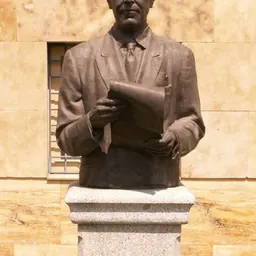
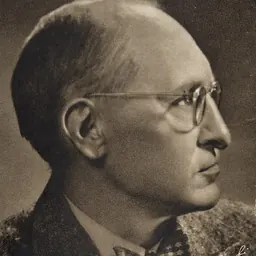
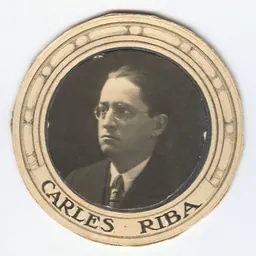

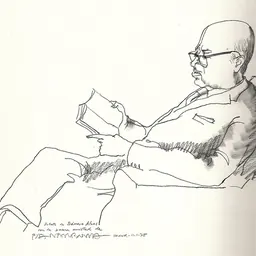
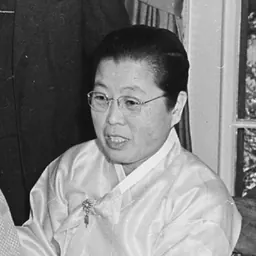
Contemporaries
People whose lives overlapped Irina Odoyevtseva's
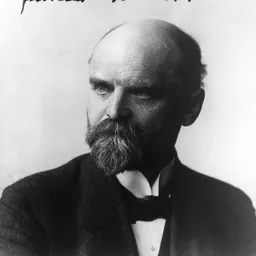
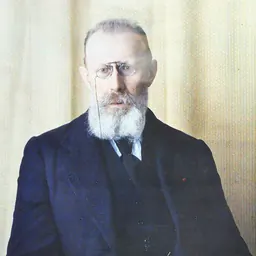
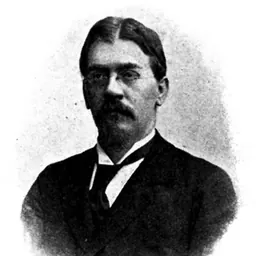

Frequently asked questions
Who was Irina Odoyevtseva?
Russian poet, novelist and author of memoirs resided in France (1895–1990)
When was Irina Odoyevtseva born?
Irina Odoyevtseva was born on 23 February 1895 in Riga.
When did Irina Odoyevtseva die?
Irina Odoyevtseva died on 14 October 1990 in Saint Petersburg.
What was Irina Odoyevtseva's occupation?
Irina Odoyevtseva was a poet, diarist, writer, novelist and memoirist.
What nationality was Irina Odoyevtseva?
Irina Odoyevtseva was Russian and Latvian.
Sources & further reading
· Wikipedia: Irina Odoyevtseva
Cite this page
APA: Biography.guide. (2026). Irina Odoyevtseva. https://biography.guide/irina-odoyevtseva/
MLA: "Irina Odoyevtseva." Biography.guide, https://biography.guide/irina-odoyevtseva/.
Chicago: "Irina Odoyevtseva." Biography.guide. https://biography.guide/irina-odoyevtseva/.
Data last updated: 2026-09-20 · Spot an error? Report a correction.
Page generated 2026-09-27 05:27 UTC