
About Ippolit Myshkin
Lived 1848 – 1885 (aged 37). Ippolit Myshkin was a Russian politician and revolutionary.
Ippolit Nikitich Myshkin (Russian language: Ипполит Никитич Мышкин; 3 February 1848 - 7 February 1885) was a Russian revolutionary and political prisoner in the Russian Empire. After a failed attempt to rescue writer and philosopher Nikolay Chernyshevsky from exile, he was imprisoned multiple times and made several escapes and escape attempts. He was executed after a violent confrontation with a prison warder.
Early life Myshkin was born in Pskov. His father was a non-commissioned officer; his mother was a peasant. Educated at a local school in Kiev, he entered a teacher training college in Saint Petersburg in 1860, but despite being the best student in his year, he was barred from becoming a teacher because of his lowly birth, or as he put it, he was “suddenly expelled, disgraced, just because I am a soldier’s son.”
After graduating in 1864, he worked for the General Staff Academy of the Imperial Russian Army, and learned shorthand. In 1868, he started work as a court reporter, and used money saved from his salary to set up an illegal printing press in Moscow, which was used to print revolutionary literature.
Revolutionary career
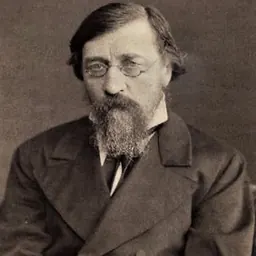
In 1875, Myshkin set out on a lone mission to rescue the writer, Nikolai Chernyshevsky, from exile. He travelled more than 3,200 miles to Irkutsk, where he enlisted as a police officer, created forged documents that instructed him to accompany Chernyshevsky to Blagoveshchenka, stole a captain’s uniform, and travelled to Vilyuysk, where Chernyshevsky had been exiled. He aroused suspicion because it would have been highly unusual for so prominent a prisoner to be moved with just a single escort, and he was told that he would have to get written authorisation from the provincial governor, in Yakutsk. He was accompanied on the road by three armed Cossacks, but broke free, wounded one of them in an exchange of shots, and hid out in the Siberian forest for a week, before he was captured.
After several months of solitary confinement in a prison in Irkutsk, Myshkin was taken under heavy guard to Saint Petersburg, where he was a defendant at the Trial of the 193. In court, he made a defiant speech, that was subsequently published and distributed illegally. He said:
He continued speaking, despite being ordered by the President of the court to be quiet. The upshot, according to a fellow revolutionary, Vera Figner, was that "the court retired; the gendarmes rushed to Myshkin to take him out of the hall, and the defendants rushed to defend their comrade. So, among the general scream and hysterical sobbing of women, there was a scuffle, unheard of in the annals of the court." Back in Kara, Myshkin acted as spokesman for 73 political prisoners who went on hunger strike, in July, in protest against the flogging of a fellow prisoner, a common criminal, and on tightened restrictions in the prison. In retaliation, the authorities removed eight of the prisoners to the Peter and Paul Fortress, in Saint Petersburg.
Death In 1884, Myshkin was transferred to the Shlisselburg Fortress, where prisoners were held in solitary confinement, and a notice in their cells warned that they would be executed if they resisted the prison staff. According to a fellow prisoner, Vera Figner:
Myshkin had apparently staged the incident expecting to be executed, but hoping that it would stir up resistance by other prisoners and that he would be given a public trial in which he could draw attention to conditions in the fortress. In the event, according to Figner, the other prisoners did not know what was happening because they were not allowed to communicate with each other or the outside world. Myshkin was executed by firing squad on 7 February 1885.
Don’t just read it —
keep it.
Full-length biographies made to live with: read them, listen on the way to work, watch them tonight.
- E-book
- Audio
- Video
Instant download · yours to keep · every purchase keeps this site free
Important facts
People in Ippolit Myshkin's life
Named in this biography and alive at the same time

Related people
Same field, nearest in time





Contemporaries
People whose lives overlapped Ippolit Myshkin's




Frequently asked questions
Who was Ippolit Myshkin?
Russian politician (1848-1885)
When was Ippolit Myshkin born?
Ippolit Myshkin was born on 3 February 1848 in Pskov.
When did Ippolit Myshkin die?
Ippolit Myshkin died on 7 February 1885 in Shlisselburg.
What was Ippolit Myshkin's occupation?
Ippolit Myshkin was a politician and revolutionary.
What nationality was Ippolit Myshkin?
Ippolit Myshkin was Russian.
Sources & further reading
Cite this page
APA: Biography.guide. (2026). Ippolit Myshkin. https://biography.guide/ippolit-myshkin/
MLA: "Ippolit Myshkin." Biography.guide, https://biography.guide/ippolit-myshkin/.
Chicago: "Ippolit Myshkin." Biography.guide. https://biography.guide/ippolit-myshkin/.
Data last updated: 2026-09-26 · Spot an error? Report a correction.
Page generated 2026-09-27 05:14 UTC