
Ioannis Makriyannis
Officer and memoirist, Greek war of independence
About Ioannis Makriyannis
Lived 1797 – 1864 (aged 66–67). Ioannis Makriyannis was a Greek and Turkish politician, military personnel, writer and freedom fighter.
Yiannis Makriyiannis (, ; 1797–1864), born Ioannis Triantaphyllou (, ), was a Greek merchant, military officer, politician and author, best known today for his Memoirs. Starting from humble origins, he joined the Greek struggle for independence, achieving the rank of general and leading his men to notable victories, most notably the successful defense of Nafplio in the Battle of the Lerna Mills. Following Greek independence, he had a tumultuous public career, playing a prominent part in the granting of the first Constitution of the Kingdom of Greece and later being sentenced to death and pardoned.
Despite his important contributions to the political life of the early Greek state, general Makriyiannis is mostly remembered for his Memoirs. Aside from being a source of historical and cultural information about the period, this work has also been called a "monument of Modern Greek literature", as it is written in pure Demotic Greek. Indeed, its literary quality led Nobel laureate Giorgos Seferis to call Makriyiannis one of the greatest masters of Modern Greek prose.
Biography
Early life Yiannis Makriyiannis was born to a poor family at the village of Avoriti, in Phocis. "Makriyiannis" (Long Yiannis) was a nickname he acquired because of his height. His father, Dimitris Triantaphyllou, was killed in a clash with the forces of Ali Pasha. His family was forced to flee to Levadeia, where Makriyiannis spent his childhood up to 1811. At age seven, he was given as a foster son to a wealthy man from Levadeia, but the menial labour and beatings he endured were, in his own words, "his death". Thus, in 1811 he left for Arta to stay with an acquaintance who maintained close relations with Ali Pasha. There, still a teenager, he was involved in trade and, according to his memoirs, became a wealthy man. His property amounted to 40,000 piastres. According to Sphyroeras, he probably joined the Filiki Etaireia, a secret anti-Ottoman society, in 1820. and tried to author his own version of an oath instead. There are three versions of the coin, each featuring one of the three leaders of the 3 September movement: one features Makriyiannis, one colonel Dimitrios Kallergis, and one minister (and later prime minister) Andreas Metaxas.
Makriyiannis stopped working on his memoirs in 1850, so information about the rest of his life, including his trial, comes from other sources. He was always outspoken about his views, and as a result he stirred negative reactions among his opponents. He opposed what he perceived as a continued degradation of the veterans of the War of Independence, and had repeatedly been considered suspect of plotting against King Otho. Furthermore, the King never quite forgave him for his part in the 3 September movement. When summoned to the palace and asked to denounce all the conspirators of 1843, Makriyiannis refused, saying "I am not a slave". Two years later, in 1943, the Greek Nobel laureate Giorgos Seferis gave a lecture on him, saying: According to the National Book Centre of Greece, Seferis also stated that Makriyiannis, along with Alexandros Papadiamantis, is one of the two greatest masters of modern Greek prose.
The general's objectivity, however, has often been questioned. Vlahogiannis, in his preface to the Memoirs, praises his honesty and contrasts it to his lack of objectivity and impartiality. While always straightforward, Makriyiannis clearly holds a grudge against people he had come into conflict with. He often uses disparaging language against people like Kolokotronis, while staying silent about the more questionable deeds of people he had a favourable opinion of. According to Sphyroeras, however, his judgements do not stem from selfishness, but rather from his severity against those he considered were defaming the cause of Greece. The events described therein are given briefly, and are used only as an excuse for his meditations and the interpretation of his Visions, on which he particularly insists. Vlahogiannis, according to Sphyroeras, considered the manuscript to be an overzealous work of a deranged mind, and that is the reason he did not publish it. The work, however, is also the product of a physically and mentally tormented soul, who, being isolated at the age of 54, instead converses with God, the Panagia, and the saints. It also shows Makriyiannis's deep religious feeling; he turns away from guns, instead seeking the nation's salvation through divine intervention. Furthermore, as Sphyroeras points out, the work is unique in Modern Greek literature in its subject matter, and is, as the Memoirs, a significant source of linguistic and cultural information.
Works Ἀπομνημονεύματα (Memoirs) first published: Athens: 1907 Ὁράματα καὶ Θάματα (Visions and Wonders) first published: Athens: 1983
Don’t just read it —
keep it.
Full-length biographies made to live with: read them, listen on the way to work, watch them tonight.
- E-book
- Audio
- Video
Instant download · yours to keep · every purchase keeps this site free
Important facts
People in Ioannis Makriyannis's life
Named in this biography and alive at the same time

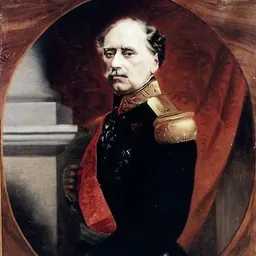
Related people
Same field, nearest in time



Contemporaries
People whose lives overlapped Ioannis Makriyannis's





Frequently asked questions
Who was Ioannis Makriyannis?
officer and memoirist, Greek war of independence (1797–1864)
When was Ioannis Makriyannis born?
Ioannis Makriyannis was born in 1797 in Doris.
When did Ioannis Makriyannis die?
Ioannis Makriyannis died on 27 April 1864 in Athens.
What was Ioannis Makriyannis's occupation?
Ioannis Makriyannis was a politician, military personnel, writer and freedom fighter.
What nationality was Ioannis Makriyannis?
Ioannis Makriyannis was Greek and Turkish.
Sources & further reading
· Wikipedia: Ioannis Makriyannis
Cite this page
APA: Biography.guide. (2026). Ioannis Makriyannis. https://biography.guide/ioannis-makriyannis/
MLA: "Ioannis Makriyannis." Biography.guide, https://biography.guide/ioannis-makriyannis/.
Chicago: "Ioannis Makriyannis." Biography.guide. https://biography.guide/ioannis-makriyannis/.
Data last updated: 2026-09-26 · Spot an error? Report a correction.
Page generated 2026-09-27 05:16 UTC