
About Dimitrios Kallergis
Lived 1803 – 1867 (aged 63–64). Dimitrios Kallergis was a Greek politician, diplomat, military personnel, freedom fighter, embassy of Greece, washington, D.C. and ioannis Kapodistrias.
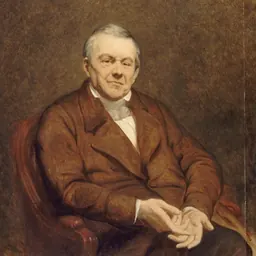
Dimitrios Kallergis (; 18038 April 1867) was a fighter of the Greek War of Independence, major general, politician and one of the most important protagonists of the 3 September 1843 Revolution.
Life Early life Kallergis was born in 1803 in Crete. Hailing from the distinguished Cretan Kallergis family, a historic family of Mylopotamos, the roots of which lay in the Byzantine Empire and which had risen to prominence under the Venetian domination of the island. He was left fatherless at an early age and he was sent to Russia to the care of the Tsar's Minister of Foreign Affairs, Count Nesselrode, who appears in some sources is mentioned as his uncle.
Greek War of Independence On 19 January 1822 he disembarked with his relatives, Emmanuel and Nikolaos Kallergis, and the officer Valianos in Hydra bringing with them ammunitions, whose worth was 100.000 rubles and a recommendation letter of bishop Ignatius Oungrovlachias.
During the summer of 1825 he took on along with his compatriot Emmanuel Antoniadis the leadership of the campaign in Crete. On 2 August 200 revolutionaries occupied the fortress of Gramvousa, in which many pirates assembled during the next months. The campaign failed while, according to the American Philhellene Samuel Gridley Howe, Kallergis was unsuitable for the leader's position. Subsequently he participated in the expedition of Georgios Karaiskakis in Roumeli and he was distinguished. In October 1826 he participated in the failed attack of Colonel Fabvier against Thebes (it was sent as reinforcement by Karaiskakis).
On 30 January 1827 he took part in the victorious Battle of Kastella where he had significant contributions and on 20 February he defended strongly the area of the Three Towers, which was eventually conquered by the Ottomans but she had suffered several losses. He was captured by the enemy forces during the disastrous Battle of Phaleron, where he was leader of the Cretan fighters. Finally, he was released after his family paid a large sum for his ransom but during his captivity, one of his ears was cut by the Ottomans.
After Independence During the government of Ioannis Kapodistrias, Kallergis was one of his supporters. After the governor's assassination he had sided with Augustinos Kapodistrias and he actively participated in the civil conflicts of the time. During January 1832 he fought as a cavalry officer in the Battle of Argos and in March in the Battle of Loutraki where his forces and those of Nikitaras were defeated by the troops of Ioannis Kolettis.
At the same time, he followed a military career as an officer in the regular army while he was actively involved in the political issues of that period, first as a follower of the Russian Party and then of the French Party. In 1834, during the Bavarian regency and the Kolettis government he was imprisoned as a supporter of the Russian Party, whose significant members had made at that time various uprisings in the Greek territory.
Kallergis depicted on horseback during the 3 September 1843 Revolution.
In 1843, as colonel of the cavalry, with the full support of the French occupation troops. This particular government recalled all the Greek officers who participated in the anti-Ottoman revolutionary movements in Thessaly, Epirus and Macedonia to return to Greece while by personal requirement of Kallergis, Otto's adjutants—Gennaios Kolokotronis, Spyromilios, Ioannis Mamouris and Gardikiotis Grivas—were dismissed, while the hitherto Minister of Military Affairs, Skarlatos Soutsos, was suspended.
When he was the minister, Kallergis formed for the first time in Greece a fire brigade. In September 1855, a serious episode of Kallergis with the royal couple entailed the fall of Mavrokordatos' government. In 1861 he was appointed minister plenipotentiary in Paris, in which capacity he took an important part in the negotiations which followed the fall of the Bavarian dynasty and led to the accession of Prince George of Denmark to the Greek throne. In mid-1866 he returned to Greece as chief equerry of King George I. He proposed to the king to assign him the Ministry of Foreign Affairs, arguing that with the help of the governments of France and Italy he would be able to accomplish the vision of the Megali Idea, but King George didn't believe it. In the summer of the same year he was elected by the Cretans as leader of the Cretan Revolt, but in September he refused the post because of health problems.
Kallergis was depicted on the reverse of the Greek 50 drachmas commemorative coin issued in 1994 for the 150th anniversary of the first Greek Constitution.
Don’t just read it —
keep it.
Full-length biographies made to live with: read them, listen on the way to work, watch them tonight.
- E-book
- Audio
- Video
Instant download · yours to keep · every purchase keeps this site free
Important facts
People in Dimitrios Kallergis's life
Named in this biography and alive at the same time



Related people
Same field, nearest in time




Contemporaries
People whose lives overlapped Dimitrios Kallergis's






Frequently asked questions
Who was Dimitrios Kallergis?
Greek politician (1803-1867)
When was Dimitrios Kallergis born?
Dimitrios Kallergis was born in 1803 in Crete.
When did Dimitrios Kallergis die?
Dimitrios Kallergis died on 24 April 1867 in Athens.
What was Dimitrios Kallergis's occupation?
Dimitrios Kallergis was a politician, diplomat, military personnel, freedom fighter, embassy of Greece, washington, D.C. and ioannis Kapodistrias.
What nationality was Dimitrios Kallergis?
Dimitrios Kallergis was Greek.
Sources & further reading
· Wikipedia: Dimitrios Kallergis
· DBpedia: Dimitrios Kallergis
Cite this page
APA: Biography.guide. (2026). Dimitrios Kallergis. https://biography.guide/dimitrios-kallergis/
MLA: "Dimitrios Kallergis." Biography.guide, https://biography.guide/dimitrios-kallergis/.
Chicago: "Dimitrios Kallergis." Biography.guide. https://biography.guide/dimitrios-kallergis/.
Data last updated: 2026-09-26 · Spot an error? Report a correction.
Page generated 2026-09-27 05:14 UTC