
About Ioan Mire Melik
Lived 1840 – 1889 (aged 48). Ioan Mire Melik was a Romanian mathematician, engineer, mining engineer and politician.
Ioan Mire Melik, or Melic (born Iacob Ioan Miren Melik; August 9, 1840 – January 29, 1889), was a Wallachian, later Romanian mathematician, educator and political figure, one of the early members of Junimea literary society. Known for his work in private education, and for his tenure at the University of Iași, he was the author of several early introductions to science—dealing with arithmetic and geometry, but also with topography and surveying. He was perceived as a bland figure at Junimea meetings, and had little to do with its literary agenda, but took care of administrative chores and, for a while, of its publishing venture. In his other job as headmaster of Institutele-Unite high school, where he employed poet Mihai Eminescu as a German-language teacher, he was regarded as remarkably stern, and had a publicized showdown with the students.
Taking his cue from the Junimist leadership, Melik followed the literary club as it transformed itself into a liberal conservative party. He represented Iași city in the Assembly of Deputies in the 1884 legislature, and then, under a Junimist government, helped enforce Titu Maiorescu's policies in the educational field. Melik is also remembered as an engineer and entrepreneur, who contributed to the modern history of Costeștii Botoșanilor village, his personal estate. He died of an unspecified disease at age 48, and was survived by his son Eugen, who followed in his footsteps as both a politician and an academic. Melik Jr was a leader of the Democratic Nationalist Party during and after World War I, but disappeared from public life after being exposed and sentenced as a confidence man.
Biography
Early years The future scientist was born in Bucharest, the Wallachian capital, on August 9, 1840 (although traditionally believed to have been born on August 15 and wrongly credited in some documents as a "Iași native"). He was of Armenian origins: the Meliks traced their origin to Ohan, a Gregorian Armenian clergyman. Ioan's parents were Ohan's son, Arakel "Popovici" Melik, and his wife Maria Gedik; they had two other children: Gavril, a boy, and Anika, a girl. From his new home, Iacob Melik corresponded with the exiled leaders of the 1848 Revolution, in particular the moderate and pro-Ottoman faction of Ion Ghica, Alexandru G. Golescu and Nicolae Pleșoianu.
To the end of his life, Ioan was listed as having "Armenian Gregorian nationality". According to his own testimony, he first attended the Armenian School in Bucharest's Yellow District, and then regular school in that same neighborhood. he began attending the Junimea club in 1865, being one of the outside sympathizers of the cause, and manifestly lacking literary ambitions. Iacob Negruzzi, the Junimea co-founder and biographer of its members, asserted: "[Melik was] once a passionate Junimist, but always kept silent." Negruzzi jokingly added that the standard estimate, according to which the maths teacher had uttered some 23 words at club meetings held between 1865 and 1880, was probably exaggerated in Melik's favor. The mathematician was notorious for not having published a single line in the Junimist tribune, Convorbiri Literare.
Junimist projects With his Junimist credentials, Melik was made substitute Professor of Mathematics at Iași University (February 23, 1865). Melik acquired university tenure in April 1866, shortly after Cuza's regime had been toppled by the "monstrous coalition" and replaced by a Princely Lieutenancy.
Soon after, Melik became a conservative ally of the Junimist Rector Maiorescu, helping him do battle with the University's well connected Factionalists and the other left-liberal groups. As noted by Călinescu, the University's Junimist circle was formed around Professors Melik, Culianu, I. Negruzzi, Ioan Caragiani and Nicolae Mandrea, with Junimea itself being "a political get-together with some cultural aspects." Although still recognized as a secondary and inactive participant, Melik was involved on several early Junimist projects, and referred to by Maiorescu as the group's "banker". It remains primarily noted for its contribution in Humanities, which were assigned to Maiorescu. Constantin Meissner, the dedicated student and future Junimist pedagogue, recalled: "we [students] found ourselves speaking, gesticulating, moving our heads just like our precious model [Maiorescu]." Another former student, and later teacher at the Institute, was scholar A. D. Xenopol. He describes his alma mater as "an eminent private school", and Melik as one of the "leading professorial forces" in Moldavia; he also credits Melik's "complete and measured exactitude" as influential for his own work ethic. Before going down, this commercial branch of Junimea put out a number of general education works, including Melik's textbook Elemente de aritmetică ("Elements of Arithmetic"). Melik was also a cashier during Junimea anniversaries. The author continued his work at the Institute before and after 1875, when it merged with the "New High School" into the private-run Institutele-Unite ("Unified Institutes");
Also in 1875, Melik formalized his adoption by Iași city, by beginning construction work on a townhouse (completed 1882). The new Domnitor, Carol I, recognized Melik's educational merits by granting him the Bene Merenti medal 1st class. However, according to Vincler, he was a "stern" headmaster, and managed to alienate the students by bringing in Mihai Eminescu to serve as their tutor in German; they resented Eminescu because of his cantankerousness and his harsh grading of students. A small-scale student revolt, which involved future socialist agitators Constantin Mille and Vasile Morțun, was curbed by Melik. According to one anecdotal account, he bent their will by ordering the cafeteria not to provide them with any food for the duration of their strike. Reflecting back on his participation in the scandal, Vincler expressed shame, noting that Eminescu had since been discovered as a poetic genius, and elevated into the national pantheon. Mille himself was spared expulsion after a personal interview with Melik, whom he knew, derisively, as Mustață-Roșie ("Red Mustache").
Melik was a distant witness to the Romanian War of Independence (1877–1878), which saw the country cut off her remaining ties of vassalage with the Ottoman monarchy; he collected the letters sent home by his relative, Captain Grigore Bănulescu, who had fought at Plevna. Shortly after the establishment of the Romanian Kingdom in 1881, Melik also made his way into the Junimist political party. Maiorescu, who led Junimea members in and out of the opposition Conservative Party, assigned him a place on the independent list for Iași in the election of 1884. In practice, Melik, Pogor, Negruzzi and others were in a cartel with the ruling National Liberals, and were elected deputies on a united pro-government list. A while after, with Premier Ion Brătianu ignoring repeated Junimist requests for cabinet positions, the entire faction moved back into the opposition. Carol I, the newly crowned King of Romania, again rewarded Melik's services: in February 1884, Monitorul Oficial published news that the mathematician had been made Officer of the Order of the Star of Romania; when later errata informed Melik that he was merely a Knight of that company, he refused to accept the award altogether. He was still an active popularizer on scientific topics, publishing, in 1885, a surveying and ballistics tract: Equerulu grafometru sau quadrantulu de campania al D-lui Colonel de Artilerie A. Costiescu ("The Graphometer or Campaign Quadrant of the Artillery Colonel A. Costiescu"). In 1888, Melik issued three new textbooks: Arithmetic for 3rd- and 4th-graders, Geometry for the primary course, and a Curs practic de Geometrie elementară ("Practical Course in Elementary Geometry").
In March 1888, after prolonged political infighting, Carol I turned his back on both the Conservatives and the National Liberals. The Junimists experienced a moment of triumph, with Theodor Rosetti as Premier and Maiorescu as Education Minister. For a while, Melik himself was Secretary General of the Education Ministry, his position at the University filled in by Ion Ralet. In one such letter, the Minister instructs his subordinate to inquire about whether the known Marxist Ioan Nădejde still had relatives working on a state salary. Melik was struck down with a quickly progressing illness. He died in his home at Iași on January 29, and was buried with military honors at Eternitatea cemetery; despite his lifelong Gregorian faith, the funeral service was Romanian Orthodox, delivered by the local Archiereus, Irimia Galățanu, at the Annunciation Church. His death was perceived as a tragedy by his fellow Junimists. Poet Anton Naum wrote, shortly after the events, "We have lost poor Melik in the space of 7 days, however good and healthy he had been. It left me with a hallowed heart, seeing that we were very close."
Legacy Melik's brief obituary in Familia magazine informed readers that the inspector's schoolbooks had "genuine value"; Later, the post-Junimist historiographer I. E. Torouțiu presented Melik as a highly moral man of action: "He was one of the society's devoted members, without ever asking it for perks [or] advancements, even though he was in a position to demand them, under the governments of his political friends."
The mathematician was survived by his widow and their four children, three of whom were daughters One of her and Ioan's daughters became the wife of Lieutenant Colonel Nicu Scorțescu. A former student of her father, he served with distinction in World War I and died in 1924, while leading the Romanian Police in Hotin County. Ioan's only surviving son, Eugen, took over his papers. he was assigned as that school's headmaster in August 1898. He then became a substitute Law Professor at the University of Iași, beginning in 1903. Unable to complete his Ph. D., and complaining about the criteria for academic advancement, he finally resigned in September 1920. Melik Jr also built the towering landmark of Costeștii Botoșanilor, a castle-shaped vacation home; During the conflict opposing Petre P. Carp and Virgil Arion to Maiorescu, he sided with the former two and their "neo-Junimist" faction. He finally defected to the National Liberal caucus in 1913. During the second half of World War I, when southern Romania under German occupation, Melik was in Iași, which functioned as a provisional capital of the rump Romanian state. He joined Nicolae Iorga and A. C. Cuza's Democratic Nationalist Party (PND), and was designated a candidate for the Assembly in the scheduled elections of December 1918; his home also hosted the Committee for the Defense of Iași's Interests.
Upon the creation of Greater Romania, Melik Jr had become general secretary of the PND. His political career was cut short when he acquired infamy as a confidence man: in June 1924, the Ilfov County tribunal found him guilty of several counts of fraud, after he had illegally obtained control of a Bucharest townhouse from his late aunt Anika. Litigation over this issue, which resulted in Melik being imprisoned for eight months, was initiated by the Armenian Church, as one of the legal successors. In April 1932, he was again charged with fraud, due to his land speculation with Anika's estate in Tisău, and was ordered to pay reparations to his victims. He was living in Botoșani in March 1940, witnessing there the death of his wife Elena; they had two daughters, Ioana and Nicolița. His mother Roxandra died in August 1942, while in monastic seclusion at Agapia Monastery, and was buried next to her husband, at Eternitatea.
Don’t just read it —
keep it.
Full-length biographies made to live with: read them, listen on the way to work, watch them tonight.
- E-book
- Audio
- Video
Instant download · yours to keep · every purchase keeps this site free
Important facts
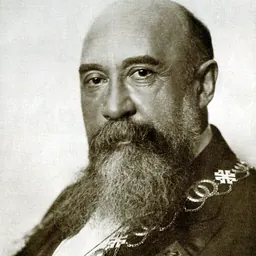
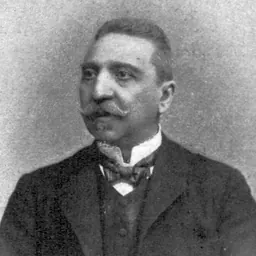
People in Ioan Mire Melik's life
Named in this biography and alive at the same time




Related people
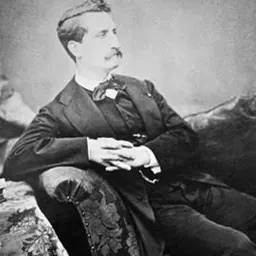
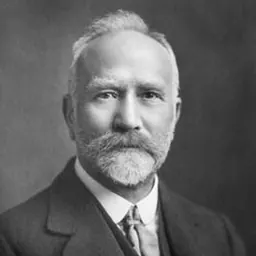
Same field, nearest in time

Contemporaries
People whose lives overlapped Ioan Mire Melik's

Frequently asked questions
Who was Ioan Mire Melik?
Romanian mathematician
When was Ioan Mire Melik born?
Ioan Mire Melik was born on 9 August 1840 in Bucharest.
When did Ioan Mire Melik die?
Ioan Mire Melik died on 29 January 1889.
What was Ioan Mire Melik's occupation?
Ioan Mire Melik was a mathematician, engineer, mining engineer and politician.
What nationality was Ioan Mire Melik?
Ioan Mire Melik was Romanian.
Sources & further reading
Cite this page
APA: Biography.guide. (2026). Ioan Mire Melik. https://biography.guide/ioan-mire-melik/
MLA: "Ioan Mire Melik." Biography.guide, https://biography.guide/ioan-mire-melik/.
Chicago: "Ioan Mire Melik." Biography.guide. https://biography.guide/ioan-mire-melik/.
Data last updated: 2026-09-20 · Spot an error? Report a correction.
Page generated 2026-09-27 05:22 UTC