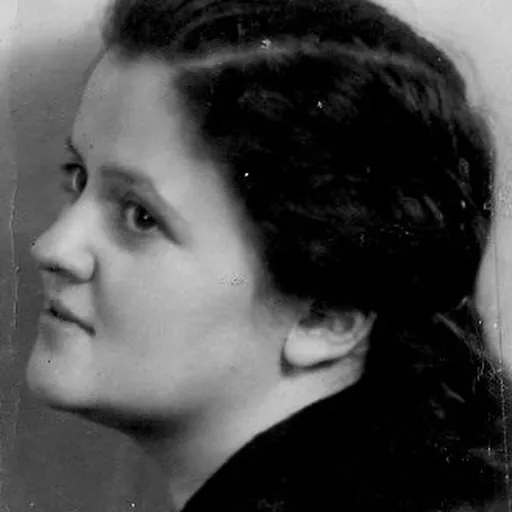
About Inna Meiman-Kitrossky
Lived 1932 – 1987 (aged 54). Inna Meiman-Kitrossky was a Russian linguist, known for Refusenik.
Inna Ilyinichna Meiman-Kitrossky (, 16 October 1932, Moscow – 9 February 1987, Georgetown, Washington, D.C.) was a refusenik, a member of a group of refuseniks-cancer patients, and an author of textbooks for the English language.
Life Inna Meiman was born as Ina Fuxson in a Jewish family in Moscow, and graduated from Moscow State Linguistic University, where she worked for many years teaching English. This experience resulted in being awarded a Ph.D. and also in two textbooks: (English as a second foreign language (basic level)), (Modern English (advanced level)), which was in usage in several Russian Universities. Meiman also translated from English to Russian and vice versa. She was married for several years and had a son.
In 1979, she applied for an exit visa for the first time, but after two years of waiting, she was refused. In 1981, she married the refusenik and activist for human rights, Naum Meiman, and became active in this field as well. She also started to teach Russian to foreigners, including the personnel of the US embassy. The Meimans were under surveillance by the KGB, which disconnected the telephone in Meiman's flat and also searched their home.
In 1983, she was diagnosed with cancer which progressed quickly, requiring several surgeries. Naum Meiman worked hard to enable his wife to go abroad for treatment. Inna Meiman then joined the group of refuseniks-cancer patients. A campaign to help her gradually accelerated, which was joined by US Senators Gary Hart and Paul Simon. Inna Meiman met many people from abroad, and gave an interview to foreign TV. A young American student Lisa Paul, who was very impressed by Inna, held a 25-day hunger strike to bring attention to her case.
In 1987, at the inception of Perestroika, she was finally allowed to leave. Inna Meiman arrived in the US, but died after several weeks in February 1987 in Georgetown (Washington, D.C.). Naum Meiman was not allowed to attend her funeral in Washington D.C.
25 years later, Lisa Paul published a book of memoirs about Inna Meiman. Inna's Meiman life is a dramatic episode in the history of the refusenik movement and helped to expose the internal policy of the Soviet Union in the latter part of its existence. Naum Meiman died in Tel-Aviv, Israel in 2001. Inna's son and seven grandchildren have lived in Israel since 1987.
Don’t just read it —
keep it.
Full-length biographies made to live with: read them, listen on the way to work, watch them tonight.
- E-book
- Audio
- Video
Instant download · yours to keep · every purchase keeps this site free
Important facts
Family & relationships
People in Inna Meiman-Kitrossky's life
Named in this biography and alive at the same time



Related people
Same field, nearest in time




Contemporaries
People whose lives overlapped Inna Meiman-Kitrossky's

Frequently asked questions
Who was Inna Meiman-Kitrossky?
Soviet philologist (1932–1987)
When was Inna Meiman-Kitrossky born?
Inna Meiman-Kitrossky was born on 16 October 1932 in Moscow.
When did Inna Meiman-Kitrossky die?
Inna Meiman-Kitrossky died on 9 February 1987 in Washington, D.C..
What was Inna Meiman-Kitrossky's occupation?
Inna Meiman-Kitrossky was a linguist.
What was Inna Meiman-Kitrossky known for?
Inna Meiman-Kitrossky was known for Refusenik.
What nationality was Inna Meiman-Kitrossky?
Inna Meiman-Kitrossky was Russian.
Sources & further reading
· Wikipedia: Inna Meiman-Kitrossky
· DBpedia: Inna Meiman-Kitrossky
Cite this page
APA: Biography.guide. (2026). Inna Meiman-Kitrossky. https://biography.guide/inna-meiman-kitrossky/
MLA: "Inna Meiman-Kitrossky." Biography.guide, https://biography.guide/inna-meiman-kitrossky/.
Chicago: "Inna Meiman-Kitrossky." Biography.guide. https://biography.guide/inna-meiman-kitrossky/.
Data last updated: 2026-09-22 · Spot an error? Report a correction.
Portrait: Wikimedia Commons · author & licence
Page generated 2026-09-27 04:57 UTC