
About Iko Maran
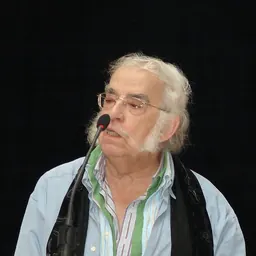
Lived 1915 – 1999 (aged 84). Iko Maran was an Estonian translator, children's writer and writer.
Iko Maran (26 February 1915 – 12 November 1999) was an Estonian playwright and children's book author.
Early life
Maran was born in Pskov to ethnic Estonian parents. His father was killed in the First World War. His family left Russia in 1922 for the newly independent nation of Estonia, settling in the town of Härgla in the parish of Juuru. Maran went to high school in Tallinn, and studied at the University of Tartu from 1936 to 1940. During the German occupation, he scraped by on odd jobs.
During the latter half of the 1940s he was an employee of Eesti Raadio, and later worked as a literary director at various Tallinn theaters, including the Estonian Drama Theatre. He joined the Estonian Writers' Union in 1958 and the Estonian Theater Association in 1967.
Literary career
Maran began his literary career in partnership with Bernhard Lülle. Under the collective pseudonym of Lall Kahas, they authored a drama, The Burning Car ('Põlev alus'), which premiered in Valga in 1946. It appeared in printed form in the same year, and the duo went on to write further plays both for children and adults.
In 1949 the pair wrote their first children's book, Friends ('Sõbrad'), which would be followed by three more. Their books were credited with "broadening the horizons of reading for Estonian children", perhaps because they showed pre-Soviet Estonia in a positive light, a rarity in the Stalinist era.
After 1964, Maran wrote independently and published his works under his own name. His greatest success came with the fairy-tale Londiste, Real Name Phant ('Londiste, õige nimega Vant', 1972) and its sequel Hot Ice Cream ('Tuline jäätis', 1976).
In 1974 he was awarded the Juhan Smuul Prize, the State Prize of the Estonian SSR, for his contributions to children's literature.
Translations
Maran's books have been translated into several languages, principally Russian and German. Foreign translations of his works were generally produced in Tallinn without the involvement of foreign publishers, leading some scholars to characterize these translations as pseudoreception, a process whereby state-sponsored Soviet literature was unilaterally translated and exported into target languages without any involvement or interest from the target audience. Hot Ice Cream was translated into English in 1983 by Aino Jõgi, and is the only one of Maran's works to have received an English translation. Maran himself worked as a translator from Russian into Estonian.
Don’t just read it —
keep it.
Full-length biographies made to live with: read them, listen on the way to work, watch them tonight.
- E-book
- Audio
- Video
Instant download · yours to keep · every purchase keeps this site free
Important facts
People in Iko Maran's life
Named in this biography and alive at the same time


Related people
Same field, nearest in time





Contemporaries
People whose lives overlapped Iko Maran's



Frequently asked questions
Who was Iko Maran?
Estonian writer (1915-1999)
When was Iko Maran born?
Iko Maran was born on 11 March 1915 in Pskov.
When did Iko Maran die?
Iko Maran died on 12 November 1999 in Tallinn.
What was Iko Maran's occupation?
Iko Maran was a translator, children's writer and writer.
What nationality was Iko Maran?
Iko Maran was Estonian.
Sources & further reading
Cite this page
APA: Biography.guide. (2026). Iko Maran. https://biography.guide/iko-maran/
MLA: "Iko Maran." Biography.guide, https://biography.guide/iko-maran/.
Chicago: "Iko Maran." Biography.guide. https://biography.guide/iko-maran/.
Data last updated: 2026-09-20 · Spot an error? Report a correction.
Page generated 2026-09-27 05:23 UTC