
About Ignaz Heinrich von Wessenberg
Lived 1774 – 1860 (aged 85). Ignaz Heinrich von Wessenberg was a writer, historian, catholic priest, theologian, vicar general and bishop.
Ignaz Heinrich Karl von Wessenberg (4 November 17749 August 1860) was a German writer and scholar, and liberal Catholic churchman as well as Vicar general and administrator of the Diocese of Constance. Imbued from his early youth with Josephinistic and Febronian principles, he advocated a German National Church, somewhat loosely connected with Rome, supported by the State and protected by it against papal interference. He encouraged the use of the vernacular in liturgical texts, the hymn book and the regular Sunday sermon.
Life Born at Dresden, Ignaz Heinrich Wessenberg was the son of an aristocratic Breisgau family, and destined for a career in the church. His father, Johann Philipp Karl von Wessenberg, was a tutor of the princes of the electoral House of Wettin. In 1776 his family returned to Freiburg in Outer Austria, most of this now in south Germany. His elder brother Johann von Wessenberg later entered the diplomatic service of the Habsburg monarchy.
Ignaz von Wessenberg studied theology at the Jesuit school of Augsburg and the universities of Dillingen, Würzburg and Vienna. He was influenced theologically by Johann Michael Sailer.
It had already been before this that Wessenberg had revealed his liberal views of religion and the Catholic Church, in a work entitled Der Geist des Zeitalters (Zürich, 1801). In 1802 he founded the monthly review Geistliche Monatsschrift, which he edited and used to spread his ideas of religious enlightenment. The protests against this review were such that Dalberg ordered its suspension on 25 May 1804. It was replaced by the Konstanzer Pastoralarchiv, which was less offensive and continued to be published annually in two volumes till 1827.
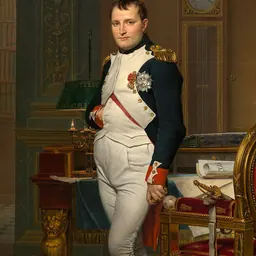
It remained Wessenberg's mission to see a National German Church formed under Primate Dalberg. In pursuit of this, representations he made at Napoleon's 1811 council in Paris, and at the 1815 Congress of Vienna, bore no fruit. He lent particular encouragement to pilgrimages, festivals, brotherhoods, and hearing Mass at religious houses.
After disparate requests from Swiss catholics, Wessenberg's reformist plans in that part of the diocese were halted by Pius VII. In a Brief of 21 October 1814, the Swiss cantons were severed from the Diocese of Constance. On 2 November of the same year the Pope ordered Bishop Dalberg to depose Wessenberg from the office of vicar-general without delay. At the beginning of 1815 Wessenberg was replaced temporarily as Vicar general by Canon von Roll. The reason was kept private and the Pope's order remained secret. In the summer of 1815 Dalberg asked the administration of Baden to confirm Wessenberg as his coadjutor bishop, carrying with it the right of succession. Baden's government acceded to Dalberg's wish, but the coadjutorship was not recognised by Rome.
That same year Wessenberg published anonymously a notorious anti-papal treatise entitled Die deutsche Kirche, Ein Vorschlag zu ihrer neuen Begründung und Einrichtung. It is a plea for his scheme of a German National Church, and suggests detailed plans as to its organisation. On 17 February 1817, a week after Dalberg's death, the chapter of Constance elected Wessenberg as Diocesan administrator and Vicar capitular (a cleric chosen by a cathedral chapter to manage a bishopric during a vacancy. However, in a Brief of 15 March 1817, his election was invalidated by Pius VII.
In July Wessenberg travelled to Rome, planning to win the pope over. He hoped to return as primate of his projected German Church or, at least, as Bishop of Constance. He was kindly received by Cardinal Ercole Consalvi, the secretary of state, but was told that, before the pope would enter into any negotiations with him, he would have to resign as administrator. As had been required of François Fénelon, Wessenberg would have to declare that he abjured all of what the pope disapproved. Refusing to submit, he left Rome and, sanctioned by the government of Baden, continued to act as administrator of Constance, in flagrant disobedience to the pope, until 1827. In his Bull Provida sollersque of 16 August 1821, Pius VII suppressed the Diocese of Constance, distributing its episcopal care between the newly founded dioceses of Rottenburg and Freiburg (whose first archbishop, Bernhard Boll, was appointed in 1827).
After his retirement in 1827 Wessenberg led a private life as a citizen of Konstanz. Here he continued to give vent to his anti-papal sentiments and to canvass his rationalistic views on religion and the Catholic Church, via various treatises, and frequent contributions to the anti-religious review: Freimüthige Blätter für Deutsche, in Beziehung auf Krieg, Politik und Staatswirthschaft (i.e. Straightforward papers for Germans, relating to war, politics and political economy), published in Konstanz over the years 1830–44.
Wessenberg died in Konstanz at age 85, and was buried in the left aisle of the Konstanz Minster.
Legacy The "sanctuary for morally neglected girls", which he had founded in 1855, later became the Wessenberg social centre.
His collection of paintings formed the basis of the Municipal Wessenberg Gallery at the Rosgarten Museum in Konstanz. His comprehensive private library is today kept at the University of Konstanz.
In recognition of his promotion of education, the Wessenberg-Schule in Konstanz was named after him in 1979.
Works Wessenberg's chief literary productions are:
Die grossen Kirchenversammlungen des 15. und 16. Jahrhunderts in Beziehung auf Kirchenverbesserung (4 vols., Constance, 1840, 2nd ed., 1845), extremely anti-papal (cf. Hefele, in Tübinger Quartalschrift, 1841, 616 sq.) Die Stellung des römischen Stuhles gegenuber dem Geiste des 19. Jahrhunderts (Zürich, 1833) Die Bisthumssynode und die Erfordernisse und Bedingungen einer heilsamen Herstellung derselben (Freiburg, 1849). T
The last-named two works were placed on the Index.
Wessenberg is the author of a collection of poems (7 vols., Stuttgart, 1843–54), a number of which were set to music by Beethoven.
Don’t just read it —
keep it.
Full-length biographies made to live with: read them, listen on the way to work, watch them tonight.
- E-book
- Audio
- Video
Instant download · yours to keep · every purchase keeps this site free
Important facts
People in Ignaz Heinrich von Wessenberg's life
Named in this biography and alive at the same time

Related people
Same field, nearest in time




Contemporaries
People whose lives overlapped Ignaz Heinrich von Wessenberg's

Frequently asked questions
Who was Ignaz Heinrich von Wessenberg?
German historian
When was Ignaz Heinrich von Wessenberg born?
Ignaz Heinrich von Wessenberg was born on 4 November 1774 in Dresden.
When did Ignaz Heinrich von Wessenberg die?
Ignaz Heinrich von Wessenberg died on 9 August 1860 in Constance.
What was Ignaz Heinrich von Wessenberg's occupation?
Ignaz Heinrich von Wessenberg was a writer, historian, catholic priest, theologian, vicar general and bishop.
What nationality was Ignaz Heinrich von Wessenberg?
Ignaz Heinrich von Wessenberg's recorded nationality: Grand Duchy of Baden.
Sources & further reading
· Wikipedia: Ignaz Heinrich von Wessenberg
· DBpedia: Ignaz Heinrich von Wessenberg
Cite this page
APA: Biography.guide. (2026). Ignaz Heinrich von Wessenberg. https://biography.guide/ignaz-heinrich-von-wessenberg/
MLA: "Ignaz Heinrich von Wessenberg." Biography.guide, https://biography.guide/ignaz-heinrich-von-wessenberg/.
Chicago: "Ignaz Heinrich von Wessenberg." Biography.guide. https://biography.guide/ignaz-heinrich-von-wessenberg/.
Data last updated: 2026-09-25 · Spot an error? Report a correction.
Page generated 2026-09-27 05:12 UTC