
About Ignatius Bonomi
Lived 1787 – 1870 (aged 82). Ignatius Bonomi was a British architect.
Ignatius Bonomi (1787–1870) was an English architect and surveyor, with Italian origins by his father, strongly associated with Durham in north-east England.
Life He was the son of an architect and draughtsman, Joseph Bonomi (1739–1808), who had worked with Robert and James Adam, while his brother Joseph Bonomi the Younger was a noted artist, sculptor and Egyptologist.
Bonomi was Surveyor of Bridges for the County of Durham, and his works included the Skerne Bridge; one of the first railway bridges in Britain, over the River Skerne, near Darlington, for the Stockton and Darlington Railway, in 1824 (hence he is sometimes referred to as 'the first railway architect').
He was also responsible for a number of church buildings (including commissions at Durham Cathedral). Other historic buildings, in Gothic and neo-classical styles, included Durham Castle, Lambton Castle (continuing the work started by his father), Durham Prison, Elvet Hill House (1820), Burn Hall, Windlestone Hall and Eggleston Hall, all in County Durham. In Derbyshire he designed Christ Church King Sterndale near Buxton, built in 1848–9 for the Pickford family, founders of the Pickfords removals business.
In 1817 Bonomi was contracted to design a mansion, Normanby Hall, in Normanby.
Other works included the remodelling of Crossbeck House (Normanby) (1824) the design of Marton House near Appleby-in-Westmorland, Cumbria (1822), Blagdon Hall (1830) in Stannington near Morpeth, St Mary's Church, Sunderland (1830), rebuilding St Oswald's Church, Durham (1834), the church of St John the Baptist in Leeming, North Yorkshire (1839) and the restoration of St Nicholas, Richmond in North Yorkshire. For his brother Joseph, he also designed a house, "The Camels", at Wimbledon in south-west London. He also designed houses at Masterman Place in Middleton-in-Teesdale.
In 1831, Bonomi took on John Loughborough Pearson as an apprentice. In 1842 he entered into a partnership with John Augustus Cory, later Cumberland County Architect (from 1862). The church of St John the Evangelist, Nenthead (1845, the highest church in England) was one of their joint projects.
Until 1850 he lived in his modest stone villa in Durham City, now the Oriental Museum.
Don’t just read it —
keep it.
Full-length biographies made to live with: read them, listen on the way to work, watch them tonight.
- E-book
- Audio
- Video
Instant download · yours to keep · every purchase keeps this site free
Important facts
People in Ignatius Bonomi's life
Named in this biography and alive at the same time
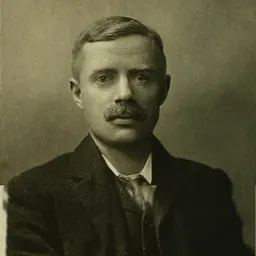
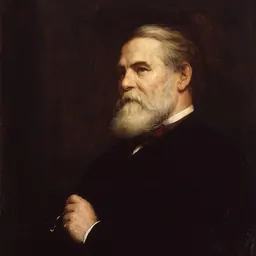

Related people
Same field, nearest in time
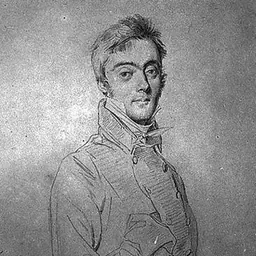


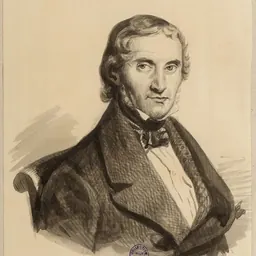
Contemporaries
People whose lives overlapped Ignatius Bonomi's


Frequently asked questions
Who was Ignatius Bonomi?
English architect and surveyor
When was Ignatius Bonomi born?
Ignatius Bonomi was born on 31 October 1787 in London.
When did Ignatius Bonomi die?
Ignatius Bonomi died on 2 January 1870 in Wimbledon.
What was Ignatius Bonomi's occupation?
Ignatius Bonomi was an architect.
What nationality was Ignatius Bonomi?
Ignatius Bonomi was British.
Sources & further reading
Cite this page
APA: Biography.guide. (2026). Ignatius Bonomi. https://biography.guide/ignatius-bonomi/
MLA: "Ignatius Bonomi." Biography.guide, https://biography.guide/ignatius-bonomi/.
Chicago: "Ignatius Bonomi." Biography.guide. https://biography.guide/ignatius-bonomi/.
Data last updated: 2026-09-20 · Spot an error? Report a correction.
Page generated 2026-09-27 05:25 UTC