
About Ida May Park
Lived 1879 – 1954 (aged 74). Ida May Park was an American screenwriter, film director, actor, stage actor and director.
Ida May Park (December 28, 1879 – June 13, 1954) She was praised for her work in the theater, for roles in productions like Frances Hodgson Burnett’s “A Lady of Quality” as well as “The Merchant of Venice” and “Romeo and Juliet.”
Work at Universal
The first screenplay that she wrote was titled A Gypsy Romance which was developed into a short scenario by director Wallace Reid. Reid also directed the next scenario that she wrote, The Man Within. The short, a melodrama, featured themes of self-sacrifice which was a hallmark of the genre at that time. Their first feature-length film was Father and The Boys (1915). The film was based on the 1908 play of the same name written by playwright George Ade, who licensed the play to Universal in late May 1915. The film began production just a few months later in October and starred stage actor Digby Bell as well as Colin Chase and Louise Carbasse. The film released that December to positive reviews. Most of the titles that the two worked on together were for Universal's Bluebird label. Bluebird films were typically made up of five reels, diverging from previous two reel productions common at Universal as feature length pictures became the industry standard. One such film, The Grasp of Greed (1916) was directed by De Grasse and written by Park. It was adapted for the screen from the 1888 novel by H. Rider Haggard titled Mr. Meeson’s Will, a very popular novel at the time. The film, starring Louise Lovely, was criticized for its overly melodramatic tone which diverged from the source material.
Park made her solo directorial debut in 1917 when she directed The Flashlight After this picture, she and DeGrasse took turns directing Bluebird projects featuring Phillips. Eventually, De Grasse moved on to other projects in 1918, but Park stuck with Phillips and continued to direct films with her as the star. Broadway Love (1918), both written and directed by Park and starring Phillips, depicted a modern New York City which, at that time, was suffering from coal shortages. The sets of New York City were dimmed to reflect this shortage, and was the first film to accurately depict what the lack of street lights looked like. Another film Park wrote and directed was Bread (1918) starring Mary MacLaren, Gladys Fox, Edward Cecil, and Louis Morrison. The film received mixed reviews with some critics expressing discomfort with Morrison’s character, Emil Krause. Other critics praised the films technical aspects, such as Park’s direction and the use of rain scenes. Since the film was released towards the end of World War I, MacLaren offered, as advertisement for the film, five dollars to a housewife that could come up with a recipe for "Victory Bread" that used the least amount of wheat in support of the US in the ongoing war. The film featured a prologue involving butterflies. As the film began production at the Astra Film Corporation in Edendale, Los Angeles, Park asked for the help of local school-kids to assist her in collecting up to 1,000 butterflies for the prologue sequence. Park offered to pay fifty cents for each butterfly, and promised to release them after filming. Park not only wrote and directed this film, but also cut and edited it herself. The film was produced by Andrew J. Callaghan who hired De Grasse and Park after a long search for the right director for the project. The second film, The Midlanders (1920), began production before Bonnie May, despite being released later. The film also starred Bessie Love and was produced by Callaghan. The Midlanders marked an important moment for Love, as it was her first independent production. Callaghan had set up a production company for the actress, paying thousands of dollars to gain the rights to Charles Tenney Jackson’s novel, The Midlanders (1912) for her first picture. Bonnie May would be Love’s first official release under her new company. The expanding corporate attitudes of the film industry at the time that often pushed women to the side also offers an explanation as to why Park herself would eventually be on the outs in Hollywood. The last feature film that she wrote was Playthings of Hollywood (1931) for Willis Kent Productions.
Ida May Park died in Los Angeles on June 13, 1954, at age 74.
Personal life
Park met her husband while touring the country in theater troupes. The two married in New York City on May 25, 1901.
Don’t just read it —
keep it.
Full-length biographies made to live with: read them, listen on the way to work, watch them tonight.
- E-book
- Audio
- Video
Instant download · yours to keep · every purchase keeps this site free
Important facts
Family & relationships
People in Ida May Park's life
Named in this biography and alive at the same time


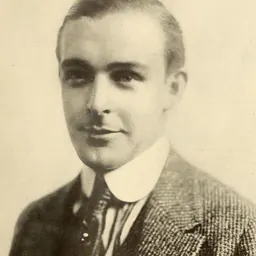

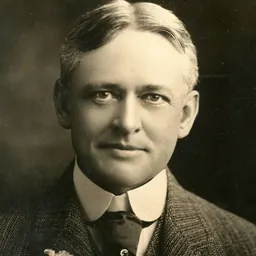


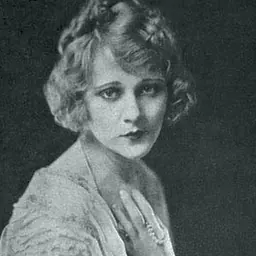
Related people
Same field, nearest in time


Contemporaries
People whose lives overlapped Ida May Park's




Frequently asked questions
Who was Ida May Park?
Screenwriter, Film director (1879-1954)
When was Ida May Park born?
Ida May Park was born on 28 December 1879 in Los Angeles.
When did Ida May Park die?
Ida May Park died on 13 June 1954 in Los Angeles.
What was Ida May Park's occupation?
Ida May Park was a screenwriter, film director, actor, stage actor and director.
What nationality was Ida May Park?
Ida May Park was American.
Sources & further reading
Cite this page
APA: Biography.guide. (2026). Ida May Park. https://biography.guide/ida-may-park/
MLA: "Ida May Park." Biography.guide, https://biography.guide/ida-may-park/.
Chicago: "Ida May Park." Biography.guide. https://biography.guide/ida-may-park/.
Data last updated: 2026-09-22 · Spot an error? Report a correction.
Page generated 2026-09-27 05:32 UTC