
About Ibn Taymiyyah
Lived 1263 – 1328 (aged 65). Ibn Taymiyyah was an islamic jurist, poet, writer, author, scholar and muhaddith.
influences = influenced = image = birth_name =
Ibn Taymiyya (; 22 January 1263 – 26 September 1328) was a Sunni Muslim scholar, traditionist, Qadiri Sufi, proto-Salafist theologian and iconoclast. Born in Harran in 1263 CE and fleeing from the Mongol invasion, he was taught by his grandfather and father in the principles of Islamic Jurisprudence at Damascus. Ibn Taymiyya proved to be a controversial figure among both his contemporaries and in later centuries. Syrian Salafi theologian Muhammad Rashid Rida, one of the major modern proponents of Ibn Taymiyya's works, designated him as the Mujaddid of the 7th Islamic century.
Clerics and state authorities accused Ibn Taymiyya and his disciples of anthropomorphism, which eventually led to the censoring of his works and subsequent incarceration.
Nevertheless, Ibn Taymiyyah has become influential among Sunni scholarly circles in recent times, and his creedal treatises are widely regarded by adherents of the contemporary Salafi movement as important classical scholarly references. Throughout his treatises, Ibn Taymiyya asserted there is no contradiction between reason and revelation, and denounced the usage of philosophy as a pre-requisite in seeking religious truth. He is also notable for his vigorous polemics against various schools of Kalam, particularly Ash'arism.
As a cleric who viewed Shiism as a source of corruption in Muslim societies, Ibn Taymiyya was also known for his anti-Shia polemics throughout treatises such as Minhaj al-Sunna, wherein he denounced the Imami Shia creed as heretical. He issued a ruling to wage jihad against the Shias of Kisrawan and personally fought in the Kisrawan campaigns himself, accusing Shias of acting as the fifth-columnists of the Frank Crusaders and Mongol Ilkhanids. He is also known for his diplomatic involvement with the Ilkhanid ruler Ghazan Khan at the Battle of Marj al-Saffar, which ended the Mongol invasions of the Levant. A legal jurist of the Hanbali school, Ibn Taymiyya's condemnation of numerous Sufi practices associated with saint veneration and visitation of tombs made him a controversial figure with many rulers and scholars of the time, which caused him to be imprisoned several times as a result.
Within recent history, Ibn Taymiyya has been widely regarded as a major scholarly influence in militant Islamist movements, such as Salafi jihadism. Major aspects of his teachings, had a profound influence on Muhammad ibn Abd al-Wahhab, the founder of the Wahhabism reform movement formed in the Arabian Peninsula, as well as other later Sunni scholars. Ibn Taymiyya's doctrinal positions, such as his takfir of the Mongol Ilkhanids and allowing jihad against other Muslims, were referenced by later Islamist political movements, including the Muslim Brotherhood, Hizb ut-Tahrir, al-Qaeda, and Islamic State, to justify social uprisings against the contemporary governments of the Muslim world. Although Ibn Taymiyya is frequently cited by followers of the Wahhabi movement in anti-Sufi polemics, While he sometimes criticized certain practices associated with Sufism, he acknowledged that Sufism is an integral part of Islam and praised many Sufi masters; he himself was affiliated with the Qadiriyya order.
Early years Ibn Taymiyya was born on 10 Rabi' al-Awwal 661 AH (January 22, 1263 CE) in Harran, Mamluk Sultanate to a family of traditional Hanbali scholars. He had Arab and Kurdish lineages by way of his Arab father and Kurdish mother. His father, Shihab al-Din Abd al-Halim ibn Taymiyya, held the Hanbali chair in Harran and later at the Umayyad Mosque. At the time, Harran was a part of the Mamluk Sultanate, near what is today the border of Syria and Turkey, currently in the Şanlıurfa Province. Before its destruction by the Mongols, Harran was also well-known since the early days of Islam for its tradition of adhering to the Hanbali school, to which Ibn Taymiyya's family belonged. His grandfather, Majd al-Din ibn Taymiyya, and his uncle, Fakhr al-Din, were both reputable scholars of the Hanbali school, and their scholarly achievements well-known.
Education In 1269, Ibn Taymiyya, aged seven, left Harran together with his father and three brothers; however, the city was completely destroyed by the ensuing Mongol invasion. Ibn Taymiyya's family moved and settled in Damascus, Syria, which was ruled by the Mamluk Sultanate at the time.
In Damascus, his father served as the director of the Sukkariyya Madrasa, a place where Ibn Taymiyya also received his early education. He acquainted himself with the religious and secular sciences of his time. His religious studies began in his early teens when he committed the entire Quran to memory, and later came to learn the disciplines of the Quran. From his father, he learnt the religious science of jurisprudence and its principles. Ibn Taymiyya studied the works of Ahmad ibn Hanbal, Abu Bakr al-Khallal, and Ibn Qudama, as well as the works of his own grandfather, Majd al-Din. His study of jurisprudence was not limited to the Hanbali tradition, as he also studied the other schools of jurisprudence.
The number of scholars under which he studied hadith is said to number more than two-hundred, four of whom were women. Those who are known by name amount to forty hadith teachers, as recorded by Ibn Taymiyya in his work titled Arba'un Haditha. Serajul Haque says, based on this, Ibn Taymiyya started to hear hadith from the age of five. One of Ibn Taymiyya's teachers was the first Hanbali Chief Justice of Syria, Shams al-Din al-Maqdisi, who held the newly created position instituted by Baibars as part of a reform of the judiciary. Al-Maqdisi later came to give Ibn Taymiyya permission to issue legal verdicts, making him a judge at the age of seventeen.
Ibn Taymiyya's secular studies led him to devote attention to the Arabic language and literature by studying Arabic grammar and lexicography under Ali ibn Abd al-Qawi al-Tufi. He went on to master the famous book of Arabic grammar al-Kitab, written by the grammarian Sibawayhi. He also studied mathematics, algebra, calligraphy, speculative theology, philosophy, history, and heresiography. With the knowledge he gained from history and philosophy, he set to refute the prevalent philosophical discourses of his time, one of which was Aristotelianism. A year later he started giving lessons, as chair of the Hanbali Zawiya on Fridays at the Umayyad Mosque, on the subject of tafsir (exegesis of Qur'an). Professor Al-Matroudi stated that this may be why he was able to engage fully with the political affairs of his time without holding any official position such as that of a qadi. Though he spent much of his life following this school, he renounced blind-following near the end of his life.
His work was most influenced by the sayings and actions of the first three generations of Muslims (salaf), which is displayed in his works where he would give preference to their opinions over those of his contemporaries. The modern Salafi movement derives its name from these generations.
Relationship with the authorities Ibn Taymiyya's own relationship, as a religious scholar, with the ruling apparatus was not always amicable. with the total time spent inside prison coming to over six years. His detentions were due to the pushback from the clerical establishment of the Mamluk Sultanate, who opposed certain elements of his creed and his views on some jurisprudential issues. He accepted the invitation and delivered his fatwa, calling for the man to receive the death penalty. Yahya Michot says that some of these incidences included: "shaving children's heads", leading "an anti-debauchery campaign in brothels and taverns", hitting an atheist before his public execution, destroying what was thought to be a sacred rock in a mosque, attacking astrologers and obliging "deviant Sufi Shaykhs to make public acts of contrition and adhere to the Sunnah."
A few years later in 1296, he took over the position of one of his teachers (Zayn al-Din Ibn al-Munadjdjaal), taking the post of professor of Hanbali jurisprudence at the Hanbaliyya madrasa, the oldest such institution of this tradition in Damascus. This is seen by some to be the peak of his scholarly career. Lajin desired to commission an expedition against the Christians of the Armenian Kingdom of Cilicia who formed an alliance with the Mongol Empire and participated in the military campaign which lead to the destruction of Baghdad, the capital of the Abbasid Caliphate, and the destruction of Harran, the birthplace of Ibn Taymiyya, for that purpose, he urged Ibn Taymiyya to call the Muslims to Jihad. The book is about divine attributes and it served as an answer to a question from the city of Hama, Syria. and according to Carole Hillenbrand, the confrontation with the Alawites occurred because they "were accused of collaborating with Christians and Mongols." in the Kasrawan region of the Lebanese mountains where they were defeated.
Involvement in the Mongol invasions
First invasion
The first invasion took place between December 1299 and April 1300 due to the military campaign by the Mamluks against the Armenian Kingdom of Cilicia who were allied with the Mongols. Due to the Mongol legal system that neglected sharia and implemented Yassa; Ibn Taymiyya had declared Takfir upon the Ilkhanid regime and its armies for ruling by man-made laws and believing in them, despite these laws being rarely enforced in Muslim majority regions in an extensive manner. Openly rejecting Ghazan Khan's claim to "pādishāh al-islām" (King of Islam), a title which Ghazan took to legitimise his military campaigns, Ibn Taymiyya denounced him as an "infidel king" and issued numerous fatwas condemning the political order of the Tatars. The Ilkhanate army managed to defeat the Mamluk Sultanate in The Third Battle of Homs and reach Damascus by the end of December 1299. Fearful of Mongol atrocities, many scholars, intellectuals and officers began to flee Damascus in panic. Ibn Taymiyya was one of those clerics who stood firm alongside the vulnerable Damascus citizens and called for an uncompromising and heroic resistance to the Tatar invaders. Ibn Taymiyya drew parallels of their crisis with the Riddah wars (Apostate wars) fought by the first Muslim Caliph, Abu Bakr, against the renegade Arabian tribes that abandoned sharia. Ibn Taymiyya severely rebuked those Muslims escaping in the face of Mongol onslaught and compared their state to the withdrawal of Muslims in the Battle of Uhud. In a passionate letter to the commander of the Damascene Citadel, Ibn Taymiyya appealed: "Until there stands even a single rock, do everything in your power to not surrender the castle. There is great benefit for the people of Syria. Allah declared it a sanctuary for the people of Shām—where it will remain a land of faith and sunna until the descent of the Prophet Jesus." Despite political pressure, Ibn Taymiyya's directives were heeded by the Mamluk officer and Mongol negotiations to surrender the Citadel stalled. Shortly after, Ibn Taymiyya and a number of his acolytes and pupils took part in a counter-offensive targeting various Shia tribes allied to the Mongols in the peripheral regions of the city; thereby repelling the Mongol attack. By early January 1300, the Mongol allies, the Armenians and Georgians, had caused widespread damage to Damascus and they had taken Syrian prisoners. Ibn Taymiyya also spoke to and encouraged the Governor of Damascus, al-Afram, to achieve victory over the Mongols. |character=Ibn Taymiyya
Third invasion and Takfir of Ilkhanate Allies
The year 1303 saw the third Mongol invasion of Syria by Ghazan Khan. What has been called Ibn Taymiyya's "most famous" fatwā was his third fatwa issued against the Mongols in the Mamluk's war. Ibn Taymiyya declared that jihad against the Mongol attack on the Malmuk sultanate was not only permissible, but obligatory. Not only were Ilkhanate political elites and its military disbelievers in the eyes of Ibn Taymiyya; but anybody who joined their ranks were as guilty of riddah (apostasy) as them:
The fatwa broke new Islamic legal ground because "no jurist had ever before issued a general authorization for the use of lethal force against Muslims in battle", and would later influence modern-day Jihadists in their use of violence against other Muslims whom they deemed as apostates.
Ibn Taymiyya called on the Muslims to jihad once again and personally participated in the Battle of Marj al-Saffar against the Ilkhanid army; leading his disciples in the field with a sword. He was imprisoned several times for conflicting with the prevailing opinions of the jurists and theologians of his day. A judge from the city of Wasit, Iraq, requested that Ibn Taymiyya write a book on creed. His subsequent creedal work, Al-Aqidah Al-Waasitiyyah, caused him trouble with the authorities. Within the space of two years (1305–1306) four separate religious council hearings were held to assess the correctness of his creed.
Return to Damascus and later years He spent his last fifteen years in Damascus. Aged 50, Ibn Taymiyya returned to Damascus via Jerusalem on February 28, 1313. Damascus was now under the governorship of Tankiz. There, Ibn Taymiyya continued his teaching role as professor of Hanbali fiqh. This is when he taught his most famous student, Ibn Qayyim Al-Jawziyya, who went on to become a noted scholar in Islamic history. Ibn Qayyim was to share in Ibn Taymiyya's renewed persecution.
Three years after his arrival in the city, Ibn Taymiyya became involved in efforts to deal with the increasing Shia influence amongst Sunni Muslims. An agreement had been made in 1316 between the amir of Mecca and the Ilkhanid ruler Öljaitü, brother of Ghazan Khan, to allow a favourable policy towards Shi'ism in the city. Around the same time the Shia theologian Al-Hilli, who had played a crucial role in the Mongol ruler's decision to make Shi'ism the state religion of Persia, wrote the book Minhaj al-Karamah (The Way of Charisma'), In response, Ibn Taymiyya wrote his famous book, Minhaj as-Sunnah an-Nabawiyyah, as a refutation of Al-Hilli's work.
His fatwa on divorce and imprisonment In 1318, Ibn Taymiyya wrote a treatise that would curtail the ease with which a Muslim man could divorce his wife. Ibn Taymiyya's fatwa on divorce was not accepted by the majority of scholars of the time and this continued into the Ottoman era. However, almost every modern Muslim nation-state has come to adopt Ibn Taymiyya's position on this issue of divorce.
According to the scholars of the time, an oath of divorce counted as a full divorce and they were also of the view that three oaths of divorce taken under one occasion counted as three separate divorces. For this, Ibn Taymiyya, was imprisoned in the Citadel of Damascus sixteen years later on July 18, 1326, aged 63, along with his student Ibn Qayyim. The sultan also prohibited him from issuing any further fatwas. Hanbali scholar Ahmad ibn Umar al-Maqdisi accused Ibn Taymiyya of apostasy over the treatise.
His life in prison
Ibn Taymiyya referred to his imprisonment as "a divine blessing". Ibn Taymiyya's clerical enemies accused him of advocating anthropomorphism, and in 1306, he was imprisoned for more than a year. Upon his release, he condemned popular Sufi practices and he also condemned the influence of Ibn Arabi (d. 1240), causing him to earn the enmity of leading Sufi shaykhs in Egypt and causing him to serve another prison sentence. In 1310, he was released by the Egyptian Sultan.
In 1313, the Sultan allowed Ibn Taymiyya to return to Damascus, where he worked as a teacher and a jurist. He had supporters among the powerful, but his outspokenness and his nonconformity to traditional Sunni doctrines and his denunciation of Sufi ideals and practices continued to draw the wrath of the religious and political authorities in Syria and Egypt. He was arrested and released several more times, but while he was in prison, he was allowed to write Fatwas (advisory opinions on matters of law) in defense of his beliefs. Despite the controversy that surrounded him, Ibn Taymiyya's influence grew and it spread from Hanbali circles to members of other Sunni legal schools and Sufi groups. Among his foremost students were Ibn Kathir (d. 1373), a leading medieval historian and a Quran commentator, and Ibn Qayyim al-Jawziya (d. 1350), a prominent Hanbali jurist and a theologian who helped spread his teacher's influence after his teacher's death in 1328. Ibn Taymiyya died while he was a prisoner in the citadel of Damascus and he was buried in the city's Sufi cemetery.
Death He fell ill in early September 1328 and died at the age of 65, on September 26 of that year, whilst in prison at the Citadel of Damascus. Once this news reached the public, there was a strong show of support for him from the people. After the authorities had given permission, it is reported that thousands of people came to show their respects. They gathered in the Citadel and lined the streets up to the Umayyad Mosque. The funeral prayer was held in the citadel by scholar Muhammad Tammam, and a second was held in the mosque. A third and final funeral prayer was held by Ibn Taymiyya's brother, Zain al-Din. He was buried in Damascus, in Maqbara Sufiyya ("the cemetery of the Sufis"). His brother Sharafuddin had been buried in that cemetery before him.
Oliver Leaman says that being deprived of the means of writing led to Ibn Taymiyya's death. Ibn Kathir says that in the history of Islam, only the funeral of Ahmad ibn Hanbal received a larger attendance. His tomb received "pilgrims and sightseers" for 600 years. His resting place is now "in the parking lot of a maternity ward", though as of 2009 its headstone was broken, according to author Sadakat Kadri.
Contemporary Impact Ibn Taymiyya's three unprecedented fatwas (legal verdicts) that excommunicated the Ilkhanid authorities and their supporters as apostates over their neglect to govern by Sharia (Islamic law) and preference of the traditional Mongol imperial code of Yassa; would form the theological basis of 20th century Islamist and Jihadist scholars and ideologues. Reviving Ibn Taymiyya's fatwas during the late 20th-century, Jihadist ideologues like Sayyid Qutb, Abd al-Salam al-Faraj, Abdullah Azzam, Usama bin Laden, Ayman al-Zawahiri, etc. made public Takfir (excommunication) of contemporary governments of the Muslim world and called for their revolutionary overthrowal through armed Jihad.
Students Several of Ibn Taymiyya's students became notable scholars in their own right. His students came from different backgrounds and belonged to various different schools of thought. The most well-known of them are Ibn Qayyim al-Jawziyya and Ibn Kathir, while his other students include:
Philosophy Ibn Taimiyya was a materialist and held physicalist view on the world. This also extends to his view on God, who, according to ibn Taimiyya, is also composed of particles perceptible by at least one of the five senses. Denying the existence of external universals, the meaning of God's attributes and characteristics derive from the context and through analogical reasoning. God's body – understood as indivisible – fills the entirety of unoccupied space, filling and surrounding the entire universe. Accordingly, similar to Aristotelian philosophy, the passing of time results from motion. Time is thus generated through God's eternal motion.
However, most scholars argue that Ibn Taymiyya did not enjoy popularity among the intelligentsia of his day. Yossef Rapoport and Shahab Ahmed assert that he was a minority figure in his own times and the centuries that followed. Caterina Bori goes further, arguing that despite popularity Ibn Taymiyya may have enjoyed among the masses, he appears to have been not merely unpopular among the scholars of his day, but somewhat of an embarrassment. Khalid El-Rouayheb notes similarly that Ibn Taymiyya had "very little influence on mainstream Sunni Islam until the nineteenth century" and that he was "a little-read scholar with problematic and controversial views." He also comments "the idea that Ibn Taymiyya had an immediate and significant impact on the course of Sunni Islamic religious history simply does not cohere with the evidence that we have from the five centuries that elapsed between his death and the rise of Sunni revivalism in the modern period." It was only since the late nineteenth and the early twentieth centuries that the scholarly influence of Ibn Taymiyya has come to acquire an unprecedented prominence in Muslim societies, due to the efforts of Islamic revivalists like Rashid Rida, who also gave him the title muhaddid. However, no known earlier Muslim scholar has given him that title and it does not appear in al-Suyuti's tajdid, but rather considers him a mujtahid.
In the pre-modern era, Ibn Taymiyya was considered a controversial figure within Sunni Islam and had a number of critics during his life and in the centuries thereafter.
He also stated that,
Taqi al-Din al-Hisni condemned Ibn Taymiyya in even stronger terms by referring to him as the "heretic from Harran" Taqi al-Din al-Subki criticised Ibn Taymiyya for "contradicting the consensus of the Muslims by his anthropomorphism, by his claims that accidents exist in God, by suggesting that God was speaking in time, and by his belief in the eternity of the world." Ibn Battūta (d. 770/1369) famously wrote a work questioning Ibn Taymiyya's mental state. The possibility of psychological abnormalities not with-standing, Ibn Taymiyya's personality, by multiple accounts, was fiery and oftentimes unpredictable.
The historian Al-Maqrizi said, regarding the rift between the Sunni Ash'ari's and Ibn Taymiyya, "People are divided into two factions over the question of Ibn Taymiyya; for until the present, the latter has retained admirers and disciples in Syria and Egypt." Both his supporters and rivals grew to respect Ibn Taymiyya because he was uncompromising in his views. His praise of Ibn Taymiyya is invariably qualified with criticism and misgivings The Hanafi-Maturidi scholar 'Ala' al-Din al-Bukhari said that anyone that gives Ibn Taymiyya the title Shaykh al-Islām is a disbeliever.
Despite the prevalent condemnations of Ibn Taymiyya outside Hanbali school during the pre-modern period, many prominent non-Hanbali scholars such as Ibrahim al-Kurrani (d.1690), Shāh Walī Allāh al-Dihlawi (d. 1762), Mehmet Birgiwi (d. 1573), Ibn al-Amīr Al-San'ani (d. 1768), Muḥammad al-Shawkānī (d. 1834), etc. would come to the defense of Ibn Taymiyya and advocate his ideas during this era. In the 18th century, influential South Asian Islamic scholar and revivalist Shah Waliullah Dehlawi would become the most prominent advocate of the doctrines of Ibn Taymiyya, and profoundly transformed the religious thought in South Asia. His seminary, Madrasah-i-Rahimya, became a hub of intellectual life in the country, and the ideas developed there quickly spread to wider academic circles. Making a powerful defense of Ibn Taymiyya and his doctrines, Shah Waliullah wrote:
Our assessment of Ibn Taimiyya after full investigation is that he was a scholar of the 'Book of God' and had full command over its etymological and juristic implications. He remembered by heart the traditions of the prophet and accounts of elders (salaf)... He excelled in intelligence and brilliance. He argued in defence of Ahl al-Sunnah with great eloquence and force. No innovation or irreligious act is reported about him... there is not a single matter on which he is without his defence based on the Qur'an and the Sunnah. So it is difficult to find a man in the whole world who possesses the qualities of Ibn Taimiyya. No one can come anywhere near him in the force of his speech and writing. People who harassed him [and got him thrown in prison] did not possess even one-tenth of his scholarly excellence... Ibn Taymiyya has been noted to have influenced Rashid Rida, Abul A`la Maududi, Sayyid Qutb, Hassan al-Banna, Abdullah Azzam, and Osama bin Laden. The terrorist organization Islamic State in Iraq and the Levant used a fatwa of Ibn Taymiyya to justify the burning alive of Jordanian pilot Muath al-Kasasbeh. After the Iranian revolution, conservative Sunni ulema robustly championed Ibn Taymiyya's anti-Shia polemics across the Islamic World since the 1980s; and vast majority of Sunni intellectual circles adopted Ibn Taymiyya's rhetoric against Shi'ism.
Influence in the modern period In the 21st century, Ibn Taymiyya is one of the most cited medieval authors and his treatises are regarded to be of central intellectual importance by several Islamic revivalist movements. Ibn Taymiyya's disciples, consisting of both Hanbalis and non-Hanbalis, were attracted to his advocacy of ijtihad outside the established boundaries of the madhabs and shared his taste for activism and religious reform. Some of his unorthodox legal views in the field of Fiqh were also regarded as a challenge by mainstream Fuqaha.
Many modern thinkers looked upon ibn Taimiyya as a paragon of modern thinking. All thinkers emerging from Saudi Arabia looked upon ibn Taimiyya for inspiration. Abu Yaareb Al-Marzouki saw in ibn Taimiyya a herald of a religious nominalism. Scholars like Yahya Michot have noted that Ibn Taymiyya "has thus become a sort of forefather of al-Qaeda." (Ibn Taymiyya included a fourth. When the Mongols, whom he considered unbelievers, took control of the city of Mardin the population included many Muslims. Believing Mardin was neither the domain of Islam, as Islam was not legally applied with an armed forces consisting of Muslims, nor the domain of war because the inhabitants were Muslim, ) A second concept is making a declaration of apostasy (takfir) against a Muslim who does not obey Islam. Ibn Taymiyya's fatwa on Alawites as "more infidel than Christians and Jews" has been recited by Muslim Brotherhood affiliated scholar Yusuf al-Qaradawi.
Ibn Taymiyya's role in the Islamist movements of the twentieth and twenty first century have also been noted by the previous Coordinator for Counterterrorism at the United States Department of State, Daniel Benjamin, who labels the chapter on the history of modern Islamic movements in his book The Age of Sacred Terror, as "Ibn Taymiyya and His children". Yossef Rapoport, a reader in Islamic history at Queen Mary, however, says this is not a probable narrative.
Mardin fatwas and the Mardin Conference One of Ibn Taymiyya's most famous fatwas are regarding the Mongols who had conquered and destroyed the Abbasid caliphate in 1258 and had then converted to Islam. He was also asked whether Muslims living in Mardin had to emigrate (Hijrah) to Islamic territories on account of implementation of man-made laws. Ibn Taymiyya responded in a detailed fatwa:
According to Nettler and Kéchichian, Ibn Taymiyya affirmed that Jihad against the Mongols, "was not only permissible but obligatory because the latter ruled not according to Sharīʿah but through their traditional, and therefore manmade, Yassa code. This essentially meant that Mongols were living in a state of jāhilīyah (ignorance)." Yahya Mochet says that, Ibn Taymiyya's call to war was not simply to cause a "rebellion against the political power in place" but to repel an "external enemy". Citing these and various other reasons, Ibn Taymiyya pronounced:
"Fighting them [the Tatars] is obligatory by consensus of the Muslims.. If fighting against the Kurds and the Arabs and others from the Bedouins who do not adhere to the Law of Islam is obligated even if they are not of harm to the people living in the cities, then how about these people? Yes, it is required to exhibit the laws in fighting them.. They call to the religion of Islam and praise the religion of these disbelievers over the religion of the Muslims.. and they legislate in what they dispute between themselves with the legislation of the time of ignorance, not with the legislation of Allah and His Messenger. Such is the case of the elders among their viziers and others who put the religion of Islam similar to the religion of the Jews and Christians, and claiming that these are all ways to Allah.. Then among them are those who choose the religion of the Jews or Christians, and those who choose the religion of the Muslims. This phenomenon is increasing in great number among them, even in their jurists and worshippers, especially the Jahmites from the Pharaonic Atheists and the like, as philosophy has overtaken their thought... The viziers who spread the views of their leader ultimately lead them into the aforementioned class [i.e., they leave Islam], they become these Philosopher Jews, ascribing to Islam what they have of their Judaism and philosophy." — They have based their understanding on the original manuscript in the Al-Zahiriyah Library, and the transmission by Ibn Taymiyya's student Ibn Muflih. The participants of the Mardin conference also rejected the categorization of the world into different domains of war and peace, stating that the division was a result of the circumstances at the time.
According to Lebanese philosopher Majid Fakhry, "Ibn Taymiyah protests against the abuses of philosophy and theology and advocates a return to the orthodox ways of the ancients (al-salaf)... in his religious zeal he is determined to abolish centuries of religious truth as they had been long before they became troubled by theological and philosophical controversies."
Jamaat-e Islami leader Abdul Haq Ansari contends the ubiquitous notion that Ibn Taymiyya rejected Sufism outright as erroneous. While "the popular image of Ibn Taymiyya [is] ... that he [criticized] Sufism indiscriminately ... [was] deadly against the Sufis, and ... [saw] no place for Sufism in Islam," it is historically known, according to the same scholar, that Ibn Taymiyya actually considered Tasawwuf to be a significant discipline of Islam. "Far from saying [Sufism] has no place in Islam", Ibn Taymiyya was on the whole "sympathetic" Saudi scholar Hatem al-Awni has criticised Ibn Taymiyya over his sectarian discourse against Ash'arite and Maturidite schools as well as his creedal beliefs like three-fold classification of Tawhid (monotheism).
Western scholarship Scholars like Ignac Goldziher described Ibn Taymiyya as a "Hanbalite zealot" who harshly denounced various practices as bid'ah (religious innovations) and rejected all forms of philosophical influences, speculative theology, Sufism and doctrines like Wahdat al-Wujud.
Others such as the French scholar Henri Laoust (1905–1983) have argued that such portrayals of Ibn Taymiyya are flawed inasmuch as they are often borne of a limited reading of the theologian's substantial corpus of works, many of which have not yet been translated from the original Arabic. According to Laoust, Ibn Taymiyya wanted to reform the practice of medieval Sufism as part of his wider aim to reform Sunni Islam (of which Sufism was a major aspect at the time) by divesting both these traditions of what he perceived as heretical innovations within them.
According to James Pavlin, Professor of theology at Rutgers University: "Ibn Taymiyya remains one of the most controversial Islamic thinkers today because of his supposed influence on many fundamentalist movements. The common understanding of his ideas have been filtered through the bits and pieces of his statements that have been misappropriated by alleged supporters and avowed critics alike."
Works
Ibn Taymiyya left behind a considerable body of work, ranging from 350 (according to his student Ibn Qayyim al-Jawziyya) to 500 (according to his student al-Dhahabi). Oliver Leaman says Ibn Taymiyya produced some 700 works in the field of Islamic sciences.
Extant books and essays
Majmu' al-Fatawa al-Kubra – collected centuries after his death, and contains several of the works mentioned below; 36 volumes. Minhaj al-Sunna al-Nabawiyya – four volumes; in modern critical editions it amounts to more than 2,000 pages. Al-Aqida al-Wasitiyya Al-Siasat Al-Shariah Fi 'Islahul Rai Wal Raiyah Al-Jawab al-Sahih li-man Baddala Din al-Masih – a response to Christianity; seven volumes; in modern critical editions it amounts to more than 2,000 pages. Dar Ta'arud al-Aql wa-l-Naql (also called al-Muwafaqa) – 11 volumes; in modern critical editions it amounts to some 4,000 pages. Al-Aqida al-Hamawiyya Al-Asma' wa-l-Sifat – two volumes Kitab al-Iman Kitab al-Safadiyya – against the philosophers who said the miracles of Muhammad are merely manifestations of the strength of inherent faculties, and who said the universe is eternal Al-Sarim al-Maslul ala Shatim al-Rasul — written in response to an incident in which Ibn Taymiyya heard a Christian insulting Muhammad Fatawa al-Kubra Fatawa al-Misriyya Al-Radd ala al-Mantiqiyyin Diseases of the Hearts and their Cures The Relief from Distress Fundamentals of Enjoining Good & Forbidding Evil The Concise Legacy The Goodly Word The Madinan Way Ibn Taymiyya against the Greek Logicians Muslims Under Non-Muslim Rule
Lost works Many of Ibn Taymiyya's books are thought to be lost. Their existence is only known through various reports written by scholars throughout history as well as some treatises written by Ibn Taymiyya himself. One particularly notable lost work is al-Bahr al-Muhit, which was 40 volumes of Quranic exegesis that Ibn Taymiyya wrote in the prison of Damascus. Ibn Hajar al-Asqalani mentions the existence of this work in his work, al-Durar al-Kamina.
Don’t just read it —
keep it.
Full-length biographies made to live with: read them, listen on the way to work, watch them tonight.
- E-book
- Audio
- Video
Instant download · yours to keep · every purchase keeps this site free
Important facts
People in Ibn Taymiyyah's life
Named in this biography and alive at the same time


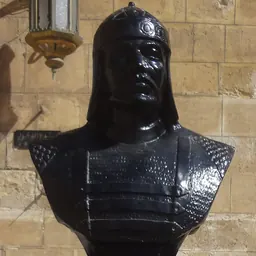


Related people
Same field, nearest in time
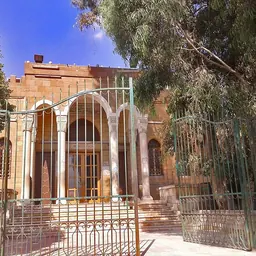



Contemporaries
People whose lives overlapped Ibn Taymiyyah's




Frequently asked questions
Who was Ibn Taymiyyah?
Islamic scholar, jurist and philosopher (1263–1328)
When was Ibn Taymiyyah born?
Ibn Taymiyyah was born on 22 January 1263 in Harran.
When did Ibn Taymiyyah die?
Ibn Taymiyyah died on 26 September 1328 in Damascus.
What was Ibn Taymiyyah's occupation?
Ibn Taymiyyah was an islamic jurist, poet, writer, author, scholar and muhaddith.
What nationality was Ibn Taymiyyah?
Ibn Taymiyyah's recorded nationality: Mamluk Sultanate of Egypt.
Sources & further reading
Cite this page
APA: Biography.guide. (2026). Ibn Taymiyyah. https://biography.guide/ibn-taymiyyah/
MLA: "Ibn Taymiyyah." Biography.guide, https://biography.guide/ibn-taymiyyah/.
Chicago: "Ibn Taymiyyah." Biography.guide. https://biography.guide/ibn-taymiyyah/.
Data last updated: 2026-09-23 · Spot an error? Report a correction.
Portrait: Wikimedia Commons · author & licence
Page generated 2026-09-27 05:07 UTC