
About Öljaitü
Lived 1280 – 1316 (aged 36). Öljaitü was a sovereign and military personnel.
Öljaitü, also known as Mohammad-e Khodabandeh (24 March 1282 – 16 December 1316), was the eighth Ilkhanid dynasty ruler from 1304 to 1316 in Tabriz, Iran. His name 'Öjaitü' means 'blessed' in the Mongolian language and his last name 'Khodabandeh' means 'God's servant' in the Persian language.
He was the son of the Ilkhan ruler Arghun, brother and successor of Mahmud Ghazan (5th successor of Genghis Khan), and great-grandson of the Ilkhanate founder Hulegu Khan.
Early life
Öljaitü was born to Arghun and his third wife, Keraite Christian Uruk Khatun on 24 March 1282 during his father's viceroyalty in Khorasan. He was given the name Khar-banda (mule driver) at birth, raised as Buddhist and later baptised in 1291, receiving the name Nikolya (Nicholas) after Pope Nicholas IV. However, according to Tarikh-i Uljaytu (History of Oljeitu), Öljeitu was at first known as "Öljei Buqa", and then "Temüder", and finally "Kharbanda". Various c. Same source also mentions that it rained when he was born, and the delighted Mongols called him by the Mongolian name Öljeitu (Өлзийт), meaning auspicious. He was later converted to Sunni Islam along with his brother Ghazan. Like his brother, he changed his first name to the Islamic name Muhammad.
He participated in battles involving Ghazan's fight against Baydu. After his brother Ghazan's accession to throne, he was appointed as viceroy of Khorasan. Despite being appointed heir of Ghazan since 1299, after hearing news of his death he sought to eliminate potential rivals to throne. First such act was taken against Prince Alafrang, son of Gaykhatu. He was killed by an emissary of Öljaitü on 30 May 1304. Another powerful emir, Horqudaq was likewise captured and executed.
Reign He arrived in the Ujan plain on 9 July 1304 and was crowned on 19 July 1304. or 50.000 followers.
He undertook an expedition to Herat against the Kartid ruler Fakhr al-Din in 1306, but succeeded only briefly; his emir Danishmend was killed during the ambush. He started his second military campaign in June 1307 towards Gilan. It was a success thanks to combines forces of emirs like Sutai, Esen Qutluq, Irinjin, Sevinch, Chupan, Toghan and Mu'min. Despite initial success, his commander-in-chief Qutluqshah was defeated and killed during the campaign, which paved way for Chupan to rise in ranks. Following this, he ordered another campaign against Kartids, this time commanded by the late emir Danishmend's son Bujai. Bujai was successful after a siege from 5 February to 24 June 1306, finally capturing the citadel. A corps of Frankish mangonel specialists is known to have accompanied the Ilkhanid army in this conquest.
Another important event of 1307 was the completion of the Jami al-Tawarikh by Rashid al-Din on 14 April 1307. Later in 1307, a revolt broke in Kurdistan under the leadership of certain Musa, who claimed to be the Mahdi. The uprising was swiftly defeated. Another religious revolt, this time by 10.000 strong Christians, broke out in Irbil. Despite Mar Yahballaha's best efforts to avert the impending doom, the citadel was at last taken after a siege by Ilkhanate troops and Kurdish tribesmen on 1 July 1310, and all the defenders were massacred, including many of the Assyrian inhabitants of the lower town.
Friday Mosque of Soltaniyeh, built by Uljaytu. A possible prototype of the Bibi-Khanym Mosque. François Préault in 1808. An important change in administration happened in 1312 when Öljaitü's vizier Sa'd al-Din Savaji was arrested on charges of corruption and executed on 20 February 1312. He was soon replaced by Taj al-Din Ali Shah, who would head the Ilkhanate civil administration until 1323. Another victim of the purge was Taj al-Din Avaji, a follower of Sa'd al-Din. Öljaitü also finally launched a last campaign against the Mamluks, in which he was unsuccessful, though he reportedly briefly took Damascus. It was when Mamluk emirs, former governor of Aleppo—Shams al-Din Qara Sonqur and governor of Tripoli—al-Afram defected to Öljaitü. Despite extradition requests from Egypt, Ilkhan invested Qara Sonqur (now under the new name Aq Sonqur) with the governorate of Maragheh and al-Afram with Hamadan.
Death He died in Soltaniyeh on 17 December 1316, Although another source indicates he converted to Islam through the persuasions of his wife. Upon Al-Hilli's death, Oljeitu transferred his teacher's remains from Baghdad to a domed shrine he built in Soltaniyeh. Later, alienated by the factional strife between the Sunnis, Oljeitu changed his school of thought to Shi'a Islam in 1310. At some point, he even considered converting to Tengriism in early 1310.
Legacy He oversaw the end of construction of city of Soltaniyeh
Relations with Europe
Trade contacts Trading contacts with European powers were very active during the reign of Öljeitu. The Genoese had first appeared in the capital of Tabriz in 1280, and they maintained a resident Consul by 1304. Oljeitu also gave full trading rights to the Venetians through a treaty in 1306 (another such treaty with his son Abu Said was signed in 1320). According to Marco Polo, Tabriz was specialized in the production of gold and silk, and Western merchants could purchase precious stones in quantities. Pope Clement V, and Edward I of England. The letter to Philip IV, the only one to have survived, describes the virtues of concord between the Mongols and the Franks:
He also explained that internal conflicts between the Mongols were now over:
This message reassured the European nations that the Franco-Mongol alliance, or at least attempts towards such an alliance, had not ceased, even though the Khans had converted to Islam.
1307 embassy Another embassy was sent to the West in 1307, led by Tommaso Ugi di Siena, an Italian described as Öljeitu's ildüchi ("Sword-bearer"). This embassy encouraged Pope Clement V to speak in 1307 of the strong possibility that the Mongols could remit the Holy Land to the Christians, and to declare that the Mongol embassy from Öljeitu "cheered him like spiritual sustenance". Relations were quite warm: in 1307, the Pope named John of Montecorvino the first Archbishop of Khanbalik and Patriarch of the Orient.
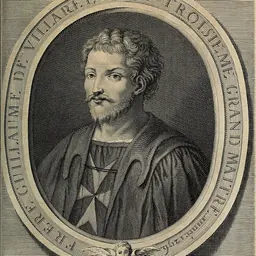
European nations accordingly prepared a crusade, but were delayed. A memorandum drafted by the Grand Master of the Knights Hospitallers Guillaume de Villaret about military plans for a Crusade envisaged a Mongol invasion of Syria as a preliminary to a Western intervention (1307/8).
Military operation 1308 Byzantine Emperor Andronicus II gave a daughter in marriage to Oljeitu and asked the Ilkhan's assistance against growing the power of the Ottomans. In 1305, Oljeitu promised his father in law 40,000 men, and in 1308 dispatched 30,000 men to recover many Byzantine towns in Bithynia and the Ilkhanid army crushed a detachment of Osman I.
1313 embassy On 4 April 1312, a Crusade was promulgated by Pope Clement V at the Council of Vienne. Another embassy was sent by Oljeitu to the West and to Edward II in 1313. That same year, the French king Philippe le Bel "took the cross", making the vow to go on a Crusade in the Levant, thus responding to Clement V's call for a Crusade. He was however warned against leaving by Enguerrand de Marigny, and died soon after in a hunting accident.
A final settlement with the Mamluks would only be found when Oljeitu's son signed the Treaty of Aleppo with the Mamluks in 1322.
Family Öljaitü had thirteen consorts with several issues, albeit only one surviving son and daughter: Terjughan Khatun, daughter of Lagzi Güregen (son of Arghun Aqa) and Baba Khatun Dowlandi Khatun (died 1314) married on 30 September 1305 to Amir Chupan Eltuzmish Khatun (m. 1296, d. 10 October 1308, buried in Dome of Sultaniyeh ), daughter of Qutlugh Timur Kurkan of the Khongirad, sister of Taraqai Kurkan (widow of Abaqa Khan and previously that of Gaykhatu Khan) Bastam (1297 - d. 15 October 1309 near Sahneh) - married Uljay Qutlugh Khatun on 12 January 1305 (named after Bayazid Bastami) Bayazid (d. 19 April 1308) (named after Bayazid Bastami) Muhammad Tayfur (b. 3 December 1306) (named after Bayazid Bastami) Sati Beg Khatun - with Eltuzmish Khatun, married firstly on 6 September 1319 to Amir Chupan, married secondly in 1336 to Arpa Ke'un, married thirdly in 1339 to Suleiman Khan; Hajji Khatun, daughter of Chichak, son of Sulamish and Todogaj Khatun; Abu Sa'id Bahadur Khan Qutlughshah Khatun (betrothed 18 March 1305, m. 20 June 1305), daughter of Irinjin, and Konchak Khatun; Sultan Khatun Bulughan Khatun Khurasani (m. 23 June 1305, d. 5 January 1310 in Baghdad), daughter of Tasu and Mangli Tegin Khatun (widow of Ghazan Khan) Kunjuskab Khatun (m. 1305), daughter of Shadi Kurkan and Orqudaq Khatun (widow of Ghazan Khan) Oljatai Khatun (m. 22 March 1305, died 4 October 1315) - half-sister of Hajji Khatun (widow of Arghun Khan), daughter of Sulamish and Todogaj Khatun Abu'l Khayr (b. 1305, died in infancy, buried next to Ghazan in Shanb Ghazan) Soyurghatmish Khatun, daughter of Amir Husayn Jalayir, and sister of Hasan Buzurg; Qongtai Khatun, daughter of Timur Kurkan; Dunya Khatun, daughter of al-Malik al-Malik Najm ad-Din Ghazi, ruler of Mardin; Adil Shah Khatun, daughter of Amir Sartaq, the amir-ordu of Bulughan Khatun Buzurg; Sulayman Shah (d. 10 August 1310) Despina Khatun, daughter of Andronikos II Palaiologos; Tugha Khatun, a lady accused of having an affair with Demasq Kaja;
Öljaitü also allegedly had an additional son, Ilchi who was claimed as an ancestor of the Arghun and Tarkhan dynasties of Afghanistan and India.
Don’t just read it —
keep it.
Full-length biographies made to live with: read them, listen on the way to work, watch them tonight.
- E-book
- Audio
- Video
Instant download · yours to keep · every purchase keeps this site free
Important facts
more
Euldjaïtou, Muhammad Khodabandeh (Oljeitu), Oljaitu, Oljeitue, Euldjaitou, Oljaitue, Uljaytu, Charbanda, OljaytuFamily & relationships
People in Öljaitü's life
Named in this biography and alive at the same time

Related people
Same field, nearest in time


Contemporaries
People whose lives overlapped Öljaitü's


Frequently asked questions
Who was Öljaitü?
the eighth Ilkhan of Mongol Ilkhanate (1304–1316)
When was Öljaitü born?
Öljaitü was born on 24 March 1280.
When did Öljaitü die?
Öljaitü died on 16 December 1316 in Soltaniyeh.
What was Öljaitü's occupation?
Öljaitü was a sovereign and military personnel.
What nationality was Öljaitü?
Öljaitü's recorded nationality: Ilkhanate.
Sources & further reading
Cite this page
APA: Biography.guide. (2026). Öljaitü. https://biography.guide/oljaitu/
MLA: "Öljaitü." Biography.guide, https://biography.guide/oljaitu/.
Chicago: "Öljaitü." Biography.guide. https://biography.guide/oljaitu/.
Data last updated: 2026-09-20 · Spot an error? Report a correction.
Page generated 2026-09-27 05:19 UTC