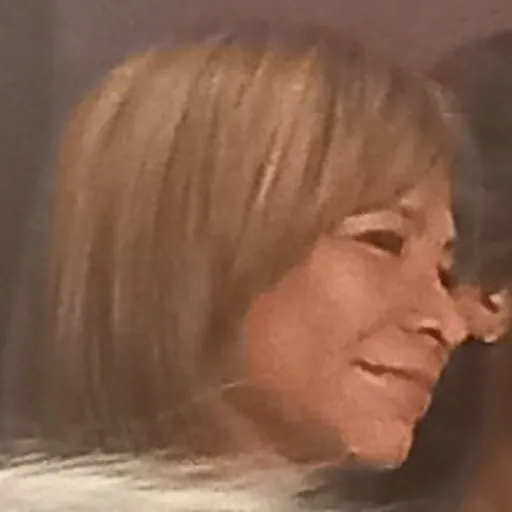
About Ibéyise Pacheco
Born 1961. Ibéyise Pacheco is a Venezuelan journalist.
Ibéyise Pacheco (born 29 January 1961) is a Venezuelan journalist and writer, specializing in investigative journalism, who has been linked with politics due to her opposition to the governments of Hugo Chávez and Nicolás Maduro.
Biography Career Ibéyise Pacheco graduated from the Central University of Venezuela at the age of 25 with a Bachelor in Social Communication. At the time she was also interested in literature, and had won a scholarship for narrative writing in the Centro de Estudios Latinoamericanos Rómulo Gallegos (CELARG). While still in university, she worked for the newspaper El Universal as a test corrector, and for the television channel RCTV as a writer on several telenovelas.
After her graduation in 1986, she started her professional career working for El Diario de Caracas as an investigative journalist. In 1988 Pacheco was awarded the National Prize for Journalism, mention for investigative journalism, for her work on the “Manzopol” case, which dealt with extortion and drug trafficking connected with the police. The investigation caused the Minister of Justice, José Manzo González, to resign. and in 2012 she published El Grito Ignorado (The Ignored Scream).
Confrontation with the government Pacheco was politically persecuted during the government of Hugo Chávez due to her commentaries and investigations, and has faced 17 legal proceedings. and the hacking of her Twitter account.
Pacheco has categorized the government of president Maduro as a dictatorship that tries to keep news of interest to the population secret, and for this reason she aims to promote worthy and responsible journalism that delivers truthful information to Venezuelans.
Personal attack On 31 January 2002 the head office of the newspaper directed by Pacheco, Así es la noticia, was attacked with an explosive tossed by two persons on a motorcycle. This occurred a day after she and journalists Patricia Poleo, Marta Colomina, and Marianella Salazar published a video about conversations between the Venezuelan Army and the Colombian guerrilla FARC. Two months later the Inter-American Court of Human Rights issued a protection measure for the group.
Books Bajo la Sotana. ¡Las Confesiones del Padre Pablo! (Beneath the Cassock. The Confessions of Father Pablo!): Her first book, published in 2006 by El Nacional. Written after recording various interviews with former priest Pablo Hernández. Pacheco discloses the workings of the ecclesiastical world, starting from the revelations of Hernández.
Sangre en el Diván: El extraordinario caso del doctor Chirinos (Blood on the Divan: The Extraordinary Case of Doctor Chirinos): Ibéyise Pacheco's most famous work. This book relates the story of the death of Roxana Vargas, a journalism student who was treated by the well-known psychiatrist Edmundo Chirinos, and the subsequent investigation. Chirinos was accused of sexually abusing Vargas and other patients, and was convicted of murdering Vargas. This case had serious repercussions on public opinion in the country, because then-president Hugo Chávez had also been a patient of Chirinos, and Chirinos had been a prominent academic and politician. Due to the great interest of Venezuelans in the case, the author decided to adapt the book for the theatre, in the form of a dramatic monologue. The theatrical work focused on the chapter El Delirio, and has seen more than 100 performances in the Centro Cultural BOD in Caracas; it has also been performed in other Venezuelan states further inland, and internationally in Miami and Panama. In 2015 the channel Venevisión Plus broadcast a drama series based on the book.
El grito ignorado (The Ignored Scream): Brings together information on the case of a boy who was murdered in Guanare, in the state of Portuguesa, She also strongly criticizes the public institutions, which did not act in accordance with written laws for the protection of minors, and highlights the passivity of Venezuelan society towards situations of familial abuse.
Demente criminal (Criminal Lunatic): With this new edition of Sangre en el Diván, Ibéyise Pacheco took her writing to the United States and international markets.
Don’t just read it —
keep it.
Full-length biographies made to live with: read them, listen on the way to work, watch them tonight.
- E-book
- Audio
- Video
Instant download · yours to keep · every purchase keeps this site free
Important facts
People in Ibéyise Pacheco's life
Named in this biography and alive at the same time


Related people
Same field, nearest in time






Contemporaries
People whose lives overlapped Ibéyise Pacheco's



Frequently asked questions
Who is Ibéyise Pacheco?
Venezuelan journalist and writer
When was Ibéyise Pacheco born?
Ibéyise Pacheco was born on 29 January 1961 in Caracas.
What is Ibéyise Pacheco's occupation?
Ibéyise Pacheco is a journalist.
What nationality is Ibéyise Pacheco?
Ibéyise Pacheco is Venezuelan.
Sources & further reading
Cite this page
APA: Biography.guide. (2026). Ibéyise Pacheco. https://biography.guide/ibeyise-pacheco/
MLA: "Ibéyise Pacheco." Biography.guide, https://biography.guide/ibeyise-pacheco/.
Chicago: "Ibéyise Pacheco." Biography.guide. https://biography.guide/ibeyise-pacheco/.
Data last updated: 2026-09-24 · Spot an error? Report a correction.
Portrait: Wikimedia Commons · author & licence
Page generated 2026-09-27 05:08 UTC