
Hüseyin Velioğlu
Kurdish Islamic activist
About Hüseyin Velioğlu
Lived 1952 – 2000 (aged 47–48). Hüseyin Velioğlu was a Turkish militant.
Hüseyin Velioğlu (born Hüseyin Durmaz; January 1, 1952 – January 17, 2000) was the founder and leader of the Kurdish Hezbollah, a Kurdish separatist and Islamist group which was designated as a terrorist group by the Turkish government. He was killed by Turkish police during the raids in Istanbul in 2000.
Life Velioğlu was born in Bağözü, Gercüş on January 1, 1952, to a Sunni Kurdish family from the Habezbenî tribe. He was the youngest of the 5 children of Osman and Fatime Durmaz. He legally changed his surname to Velioğlu ("son of Veli") in 1978. His family was known among Kurds as "Mala Welî" ("House of Welî"). Welî was his paternal grandfather. He viewed it as a more authentic surname, unlike Durmaz which was imposed by the Turkish government. In addition to his native Kurmanji, he significantly understood many other dialects.
Velioğlu and Abdullah Öcalan studied together at the Faculty of Political Sciences of the University of Ankara. While Velioğlu was in university, he joined the Turkish National Student Union (MTTB) in 1978. The MTTB was a Turkish nationalist organization from its foundation in 1946 to 1960, Turkish–Islamic synthesist during the 1960s, and entirely Islamist from 1970 until its closure after the 1980 coup.
Velioğlu claimed that Kurdish separatism was justified, unlike Turkish or Arab nationalism. He considered himself the leader of the Kurdish movement in Turkey, while encouraging the Kurdish movement in the other countries. He claimed that Kurds need to be nationalist and separatist, and stated that the enemies of Kurds will never abandon their nationalism, and will continue wronging Kurds. Velioğlu told Kurds that Turkey was not their country and that Turks were not their allies. He also claimed that a shared belief in Islam did not mean that Kurds were obliged to accept the borders. He displayed some Pan-Islamist tendencies by claiming that the first thing Kurdistan should seek after independence is good relations with Muslim states, and prioritize them above those of non-Muslim states.
When he first founded the Kurdish Hezbollah, he had good relations with the PKK. Some of the earliest Kurdish Hezbollah militants received their initial training in PKK camps. However, differences between the Kurdish Hezbollah and the PKK later arose. During his leadership of the Kurdish Hezbollah, Velioğlu made many attempts to form a united front with the PKK against Turkey, although he had failed, mostly due to the reluctance of the PKK to work with a heavily Islamist group. He initially avoided conflicts with the PKK, although the conflict eventually began when Hezbollah began retaliating. Velioğlu claimed that throughout the conflict, he had always offered to stop fighting the PKK if it would stop targeting Hezbollah. He ordered Hezbollah to only fight the PKK in self-defense, and to not retaliate after PKK attacks. He claimed that the conflict only benefitted Turkey and that it should have been avoided. According to a retired JITEM agent, Turkey had offered support to Hezbollah against the PKK, which Velioğlu had refused. The clashes between Hezbollah and the PKK ended in 1995, although there was no official ceasefire until 1998. Velioğlu was very extreme in achieving his goals, and went as far as completely banning the use of Turkish among female affiliates of Hezbollah, claiming that it would raise a generation which further retained Kurdish.
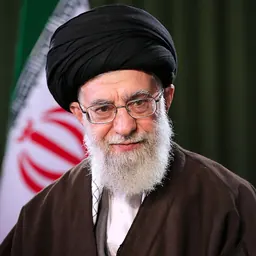
Velioğlu was infamous and seen as very competent for evading authorities throughout his career, even managing to travel to other countries with considerably large groups of Hezbollah militants for training. Velioğlu claimed that he cut ties with Iran in 1996 because of Ali Khamenei insisting that Velioğlu convert to Shia Islam. He claimed that Iran was never sincere. Velioğlu avoided sectarianism between Sunnis and Shias, and claimed that Shias were equally as Muslim as Sunnis.
In 1998, Velioğlu travelled to Iraqi Kurdistan with Hezbollah militants who received military training from the Kurdistan Islamic Movement, led by Osman Abdulaziz.
On January 17, 2000, was at a safehouse in Beykoz with many Hezbollah leaders. Shortly after the Afternoon prayer, they heard the Turkish police attempting to break down the door. A Hezbollah member informed Velioğlu, who told him to "grab the kalashnikovs". Velioğlu approached the door, and a militant stood behind him, while the rest went to fire at the police from the windows. When the police broke the door, they were instantly met with heavy fire, and Velioğlu and the militant were both killed after a brief shootout. After seeing that it was Velioğlu, the police briefly left and later raided the house for the remaining two Hezbollah members. Edip Gümüş, a close friend of Velioğlu, claimed that Velioğlu, in the days before his death, would often say "God willing, I will not survive the hands of the enemy." Turkish undertakers refused to prepare his body, and he was left in the morgue for 20 days before being buried. His supporters clashed with Turkish police during his burial. Velioğlu was buried in Batman. Supporters of Velioğlu referred to him as "Şehîd Rehber" (Kurdish for "the martyred leader").
In 2016, there were tensions between the Kurdish Hezbollah and Cübbeli Ahmet, who allegedly insulted Hüseyin Velioğlu.
Don’t just read it —
keep it.
Full-length biographies made to live with: read them, listen on the way to work, watch them tonight.
- E-book
- Audio
- Video
Instant download · yours to keep · every purchase keeps this site free
Important facts
People in Hüseyin Velioğlu's life
Named in this biography and alive at the same time

Related people
Same field, nearest in time




Contemporaries
People whose lives overlapped Hüseyin Velioğlu's


Frequently asked questions
Who was Hüseyin Velioğlu?
Kurdish Islamic activist (1952–2000)
When was Hüseyin Velioğlu born?
Hüseyin Velioğlu was born in 1952 in Bağözü.
When did Hüseyin Velioğlu die?
Hüseyin Velioğlu died on 17 January 2000 in Beykoz.
What was Hüseyin Velioğlu's occupation?
Hüseyin Velioğlu was a militant.
What nationality was Hüseyin Velioğlu?
Hüseyin Velioğlu was Turkish.
Sources & further reading
Cite this page
APA: Biography.guide. (2026). Hüseyin Velioğlu. https://biography.guide/huseyin-velioglu/
MLA: "Hüseyin Velioğlu." Biography.guide, https://biography.guide/huseyin-velioglu/.
Chicago: "Hüseyin Velioğlu." Biography.guide. https://biography.guide/huseyin-velioglu/.
Data last updated: 2026-09-20 · Spot an error? Report a correction.
Page generated 2026-09-27 05:06 UTC