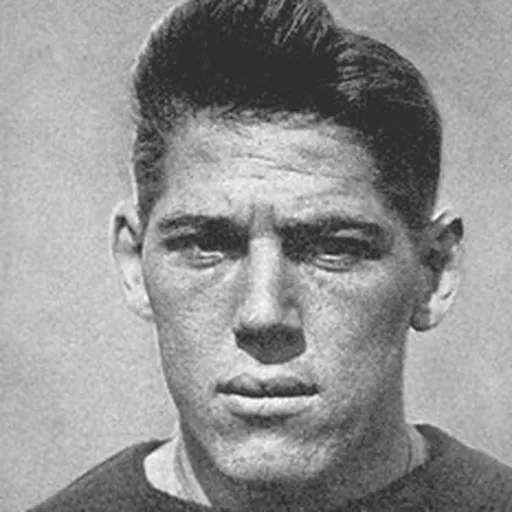
About Huntington Hardwick
Lived 1892 – 1949 (aged 56). Huntington Hardwick was an American american football player.
Huntington Reed "Tack" Hardwick (October 15, 1892 – June 26, 1949) was an American football player. He played at the halfback and end positions for the Harvard Crimson. He never lost a game during his three years on the varsity, and was selected as a unanimous first-team All-American in 1914. He was elected to the College Football Hall of Fame in 1954. Later in life he co-founded the Boston Garden.
Biography Early life A native of Quincy, Massachusetts, Hardwick was the son of Charles Theodore Hardwick and Leslie Baldwin Hardwick. His family immigrated to the United States from Germany in 1752 and had operated a granite quarry in Quincy since 1868.
Harvard University Hardwick attended Harvard from 1911 to 1915. He lettered in football, baseball, and track and field. He captained Harvard's baseball team and played center field. He was also a shot putter for the track team and was rated Harvard's strongest man two consecutive seasons.
Hardwick gained his greatest fame, however, playing for Percy Haughton's Harvard football teams from 1912 to 1914. During Hardwick's three years as a starter for Harvard, the football team did not lose a single game, going 9–0 in 1912, 9–0 in 1913, and 7–0–2 in 1914.
As a sophomore in 1912, Hardwick had a 60-yard touchdown run against Amherst College, scored a touchdown in Harvard's first victory over Princeton in 25 years, and caused a fumble that led to a game-winning touchdown against Yale. Vanity Fair (selected based on the votes of 175 newspapermen), Walter Eckersall of the Chicago Tribune, and Frank G. Menke, the sporting editor of the International News Service.
World War I During his senior year, several colleges and high schools offered Hardwick coaching jobs. He briefly worked as an assistant coach at the United States Naval Academy, under Jonas Ingram. He left coaching and became a clerk at his father-in-law Galen Stone's financial firm Hayden, Stone & Co.
Hardwick's business career was interrupted by World War I. He joined the U.S. Army in May 1917, one month after America entered the war. He served in the 105th Trench Mortar Battery in France (part of the 30th Infantry Division), participating at Messines Ridge, Verdun, St. Mihiel, the Argonne, and Woevre.
Business career Following the war, Hardwick went on to have a successful career in business in Boston. He returned to Hayden Stone,
Hardwick was an early supporter of professional sports. In 1926, the National Hockey League awarded its Chicago franchise (now known as the Chicago Blackhawks) to a syndicate of investors led by Hardwick, but after the existing franchise owners quarreled over Hardwick's business ties to Tex Rickard, Hardwick resold the franchise to Chicago businessman Frederic McLaughlin, explaining that the team would henceforth be run by "Chicago men." Two years later, he and Rickard co-founded the Boston Garden, which opened in 1928. In 1939, he became vice president of Tris Speaker's brand-new National Professional Indoor Baseball League, but it collapsed within a year.
Family In 1915, Hardwick married Margaret Stone; The couple had one child, Margaret "Peggy" Hardwick, born in 1917, who later married Richard Treadway.
Margaret Stone Hardwick filed for divorce in 1933, citing incompatibility; Hardwick told the press at the time that the breakup of the marriage was entirely his fault and that both parties regretted the action.
Rice described Hardwick as "a big, fine-looking aristocrat from blue-blood stock," who "loved combat—body contact at crushing force—a fight to the finish." He closed his column by noting, "College football will bring us many stars. But college football will never bring us another Tack Hardwick—the spirit of football."
Appraisal Hardwick was posthumously elected to the College Football Hall of Fame as part of its second induction class in 1954.
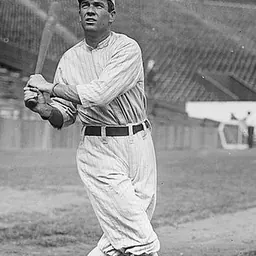
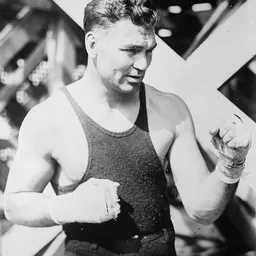
Michigan football coach Fielding Yost named Hardwick to his all-time All-American team in 1920. Columnist Grantland Rice called Hardwick "dynamite on the football field" and selected him years later as one of the five greatest competitors he had ever seen, along with Ty Cobb, Walter Hagen and Jack Dempsey.
In 1969, in honor of the centennial of collegiate football, the Football Writers Association of America named two "College Football All-Time Teams" of eleven players—an "early" team consisting of players who played prior to 1920, and a "modern" team who played in 1920 and after. Hardwick was chosen as one of two ends on the pre-1920 squad.
Don’t just read it —
keep it.
Full-length biographies made to live with: read them, listen on the way to work, watch them tonight.
- E-book
- Audio
- Video
Instant download · yours to keep · every purchase keeps this site free
Important facts
People in Huntington Hardwick's life
Named in this biography and alive at the same time




Related people
Same field, nearest in time


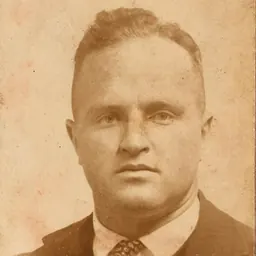
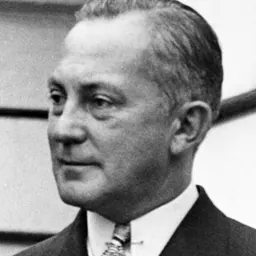
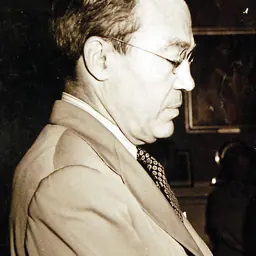
Contemporaries
People whose lives overlapped Huntington Hardwick's
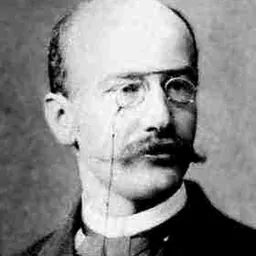
Frequently asked questions
Who was Huntington Hardwick?
American football player (1892-1949)
When was Huntington Hardwick born?
Huntington Hardwick was born on 15 October 1892 in Quincy.
When did Huntington Hardwick die?
Huntington Hardwick died on 26 June 1949 in Cuttyhunk Island.
What was Huntington Hardwick's occupation?
Huntington Hardwick was an american football player.
What nationality was Huntington Hardwick?
Huntington Hardwick was American.
Sources & further reading
· Wikipedia: Huntington Hardwick
· DBpedia: Huntington Hardwick
Cite this page
APA: Biography.guide. (2026). Huntington Hardwick. https://biography.guide/huntington-hardwick/
MLA: "Huntington Hardwick." Biography.guide, https://biography.guide/huntington-hardwick/.
Chicago: "Huntington Hardwick." Biography.guide. https://biography.guide/huntington-hardwick/.
Data last updated: 2026-09-22 · Spot an error? Report a correction.
Portrait: Wikimedia Commons · author & licence
Page generated 2026-09-27 05:04 UTC