
Hugo Nathan
German Jewish art collector (1861-1921, leaving art collection to his widow Martha)
About Hugo Nathan
Lived 1861 – 1921 (aged 59–60). Hugo Nathan was an art collector.
Hugo Nathan (1861–1921) was a German Jewish banker and art collector.
Life Born in Frankfurt am Main, Hugo Nathan was a director at the Deutsche Bank in Frankfurt.
Nathan died in 1921, leaving his art collection to his widow.
Art Collection Nathan collected art. His collection included Dutch art (Josef Israels, "Alte Frau"), German art, with works by Max Liebermann ("Schreitende Bauerné, 1894/95, "Selbstbildnis" 1908, "Reiter am Meeresstrand" 1901, "Schulgang in Laren" 1899,), Wilhelm Trübner ("Kunstpause", "Brustbild einer Frau", "Blick auf Kloster Seon", "Kirchengang im Klster Seeon", "Atelierecke", "Waldinneres", "Vorgang ds Stift Neuburg", "Weg am Buchenwald", "Neustift bei Heidelberg", "Screinerwerkstatt") and Max Slevoft ("Spaziergan"), as well as Swiss art by Ferdinand Hodler (Aussicht vom Thunersee bei Niesen" 1876, "Jungfrau, Mönch und Eiger", "Mönch in Abendbeleuchtung").
In 1912 he purchased Van Gogh's The Diggers. In 1913, he lent artworks to an exhibition at the Kunstverein (July-September) entitled Frankfurter Kunstschatze. She had managed, however, to move some paintings to safety Switzerland. The circumstances surrounding the sale of these paintings have been disputed in lawsuits.
Postwar claims for restitution
In May 2004, Nathan's heir contacted the Detroit Institute of Arts after seeing Van Gogh's The Diggers on the museum website. The museum argued that a claim was time barred. Nathan's heirs also contacted the Toledo Museum of Art requesting the return of a Gauguin that she had sold in 1938 to three dealers. The Toledo Museum of Art filed a lawsuit against Nathan's heirs.
In 2013, Simon J. Frankel and Ethan Forrest defended the museums' use of legal tactics such as declaratory judgement against Nathan.
In 2015, the World Jewish Restitution Organization (WJRO) criticized the use of procedural defenses by museums and cited the Nathan case as an example.
The heirs of Hugo and Martha Nathan registered 116 artworks lost to Nazi persecution on the German Lost Art Foundation Lostart database.
In 2022, La Pauvresse de Village (Die Dorfarme also known as La Femme à la chèvre ou La Fagotière) by Gustav Courbet was the object of a settlement with the family.
In May 2026, following a claim, the SKKG Foundation in Winterthur restituted the painting "Lake Thun with Blüemlisalp and Niesen" by Ferdinand Hodler.
Lawsuits concerning Hugo and Martha Nathan's art collection Toledo Museum of Art v Claude George Ullin, et al.,
Don’t just read it —
keep it.
Full-length biographies made to live with: read them, listen on the way to work, watch them tonight.
- E-book
- Audio
- Video
Instant download · yours to keep · every purchase keeps this site free
Important facts
People in Hugo Nathan's life
Named in this biography and alive at the same time

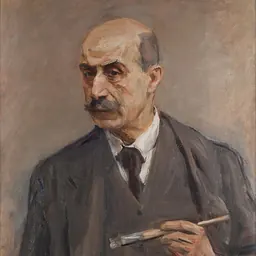

Related people
Same field, nearest in time


Contemporaries
People whose lives overlapped Hugo Nathan's


Frequently asked questions
Who was Hugo Nathan?
German Jewish art collector (1861-1921, leaving art collection to his widow Martha)
When was Hugo Nathan born?
Hugo Nathan was born in 1861.
When did Hugo Nathan die?
Hugo Nathan died in 1921.
What was Hugo Nathan's occupation?
Hugo Nathan was an art collector.
Sources & further reading
Cite this page
APA: Biography.guide. (2026). Hugo Nathan. https://biography.guide/hugo-nathan/
MLA: "Hugo Nathan." Biography.guide, https://biography.guide/hugo-nathan/.
Chicago: "Hugo Nathan." Biography.guide. https://biography.guide/hugo-nathan/.
Data last updated: 2026-09-20 · Spot an error? Report a correction.
Page generated 2026-09-27 05:16 UTC