
About Hugo Heimann
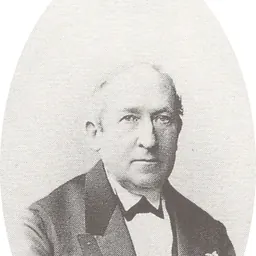
Lived 1859 – 1951 (aged 91). Hugo Heimann was a German politician, alderman, publisher and writer.
Hugo Heimann (15 April 1859 – 23 February 1951) was a German publisher and Social Democratic politician.
Biography Heimann was born in Konitz, Kingdom of Prussia, the son of Eduard (1818–1861) and Marie Heimann. The family moved to Berlin, where he attended the Evangelisches Gymnasium zum Grauen Kloster but left school without passing his Abitur. He started an apprenticeship as a bookseller and worked at Nicholas Trübner publishing house in London from 1880 to 1884. He became Trübner's private secretary and returned to Berlin after Trübner's death. Here, he became a partner of the J. Guttentagsche Verlagsbuchhandlung publishing house and its sole proprietor in 1890. Heimann's publishing house became the official publisher for juridical publications of the Reichsjustizamt, especially regarding the new nationwide civil law code, the Bürgerliches Gesetzbuch. In 1898, he sold the company, which would become part of Walter de Gruyter in 1919.
In 1899, with a donation of 600,000 goldmarks, he founded the Free Public library in Berlin-Kreuzberg. Initially stocked with 7,000 books it soon reached a number of 20,000 volumes and 540 newspapers and magazines. The first floor of the library housed the official archives of the Social Democratic Party, about 8000 printed and numerous handwritten documents. The archive included the private library of Karl Marx and Friedrich Engels, which was systematized under the supervision of Max Schippel. While the bulk of the official archive was moved to the SPD's headquarter in November 1904, 443 books remained at Heimann's library, including a large number of books of Marx and Engels' provenance.
Following World War I Heimann gifted the library to the City of Berlin in 1919 which renamed the library "Hugo Heimannsche Bücherei und Lesehalle" in 1920. Since opening it had attracted 2.5 million visitors.
Political career
Heimann joined the Social Democratic Party of Germany and became a close friend of August Bebel and Paul Singer. He was a member of the Berlin city council from 1900 to 1932, his fraction's chairman from 1911 to 1925 and the city council chairman from 1919 to 1932.
Exile in the US In 1939 Heimann emigrated via the United Kingdom to the United States, where both of his sons, Leonhard and Eduard Heimann, lived. His daughter Johanna remained in Germany and was either deported and killed in a Concentration camp
In exile he was active in the Social Democratic Federation. He did not return to Germany after World War II and died in New York City in 1951. at Hugo-Heimann-Straße remember him.
Don’t just read it —
keep it.
Full-length biographies made to live with: read them, listen on the way to work, watch them tonight.
- E-book
- Audio
- Video
Instant download · yours to keep · every purchase keeps this site free
Important facts
Family & relationships
People in Hugo Heimann's life
Named in this biography and alive at the same time



Related people
Same field, nearest in time



Contemporaries
People whose lives overlapped Hugo Heimann's



Frequently asked questions
Who was Hugo Heimann?
German politician (1859-1951)
When was Hugo Heimann born?
Hugo Heimann was born on 15 April 1859 in Chojnice.
When did Hugo Heimann die?
Hugo Heimann died on 23 February 1951 in New York City.
What was Hugo Heimann's occupation?
Hugo Heimann was a politician, alderman, publisher and writer.
What nationality was Hugo Heimann?
Hugo Heimann was German.
Sources & further reading
Cite this page
APA: Biography.guide. (2026). Hugo Heimann. https://biography.guide/hugo-heimann/
MLA: "Hugo Heimann." Biography.guide, https://biography.guide/hugo-heimann/.
Chicago: "Hugo Heimann." Biography.guide. https://biography.guide/hugo-heimann/.
Data last updated: 2026-09-20 · Spot an error? Report a correction.
Page generated 2026-09-27 05:28 UTC