
About Hugo Claus
Lived 1929 – 2008 (aged 78). Hugo Claus was a Belgian screenwriter, poet, writer, film director, painter and translator.
Hugo Maurice Julien Claus (; 5 April 1929 – 19 March 2008) was a leading Belgian author who published under his own name as well as various pseudonyms. Claus' literary contributions spanned the genres of drama, novels, and poetry; he also left a legacy as a painter and film director. He wrote primarily in Dutch, although he also wrote some poetry in English. He won the 2000 International Nonino Prize in Italy.
His death by euthanasia, which is legal in Belgium, led to considerable controversy.
Life Hugo Claus was born on 5 April 1929 at Sint-Janshospitaal in Bruges, Belgium. He was the eldest of four sons born to Jozef Claus and Germaine Vanderlinden. Jozef worked as a printer but was also fond of theatre. A sympathizer of the political left at a more mature period in his life, Claus lauded the socialist model after a visit to Cuba in the 1960s. He lived in Paris from 1950 until 1952, where he met many of the members of the CoBrA art movement.
From February 1953 until the beginning of 1955, Hugo Claus lived in Italy where his girlfriend (born in 1928) acted in a few films. They were married on 31 May 1955, and had a son, Thomas, on 7 October 1963.
In the early 1970s, he had an affair with actress Sylvia Kristel, who was 23 years younger, with whom he had a son, Arthur, in 1975. They lived in the Raamgracht 5–7 building in Amsterdam. The relationship ended in 1977, when she left him for actor Ian McShane.
He was a "contrarian", of "anarchist spirit". Journalist Guy Duplat recalls that Claus had organized in Knokke the election of a "Miss Knokke Festival", which was a typical beauty contest, except for the Claus ruling that the members of the all-male jury would have to be naked. Claus published the novel Schola Nostra (1971) under the pseudonym Dorothea Van Male. He also used the pseudonyms Jan Hyoens and Thea Streiner. The 1962 De verwondering (The Astonishment) and the 1983 Het verdriet van België (The Sorrow of Belgium) rank among Claus' most significant works as a novelist. Lee views Het verdriet van België as a postmodern critique of national identity.
Most prolific in literary endeavours as a dramatist, Claus wrote 35 original pieces and 31 translations from English, Greek, Latin, French and Spanish plays and novels. His dramatic sketch Masscheroen was first staged at Knokke Casino and featured an all-nude cast: three naked men were given the task of portraying the Christian Holy Trinity of God the Father, God the Son, and the Holy Spirit; the work also made light of the Holy Virgin, a Belgian saint, and the Three Wise Men. Attacked as blasphemous and deleterious to the public's moral well-being, the light-hearted play's performance triggered a notable legal case in which Claus was prosecuted: convicted on charges of public indecency, Claus was ordered to pay a ten-thousand-Belgian franc fine and serve a four-month prison sentence. In 1985, Claus also wrote a series of satirical poems about Pope John Paul II's upcoming visit to Belgium that year, titled Een Weerzinwekkend Bezoek. The poems were illustrated with cartoons by GAL.
Hugo Claus' name had been put forward many times for the Nobel Prize in Literature, on which he would casually comment "this prize money would suit me fine".
Painting and film As a painter, Claus was a participant in the CoBrA art movement from 1950. He had developed friendships with some of its members and illustrated a book by Pierre Alechinsky in 1949. He collaborated with key figures in the movement including Karel Appel and Corneille and participated in some exhibitions.
Claus wrote the screenplay for the 1966 film, De dans van de reiger (Dance of the Heron) which he adapted from his own 1962 stage play, self subtitled 'a macabre comedy in two parts.' It was directed by Fons Rademakers.
Claus directed seven films between 1964 and 2001. De Vijanden (The Enemies), a 1968 film about an American soldier, a German soldier and a young Flemish man wandering around in the midst of the 1944 Ardennes Offensive, was co-written by him. His film Het sacrament was screened in the Un Certain Regard section at the 1990 Cannes Film Festival.
Death Claus suffered from Alzheimer's disease and requested his life to be terminated through euthanasia, which is a legal procedure in Belgium, at the Middelheim Hospital in Antwerp on 19 March 2008.
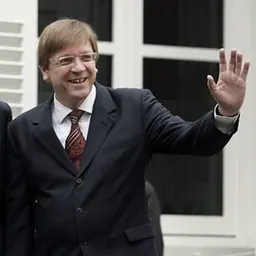
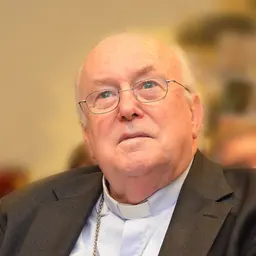
Bert Anciaux, then Flemish Minister of Culture, stated "I knew him well enough to know that he wanted to depart with pride and dignity." Former Belgian Prime Minister Guy Verhofstadt said that he imagined the onset of Alzheimer's must have been "inevitable and unbearable torture". "I can live with the fact that he decided thus," he said, "because he left us as a great glowing star, right on time, just before he would have collapsed into a Stellar black hole." The Roman Catholic Church criticized the media coverage; Belgian Cardinal Godfried Danneels referred to Claus' euthanasia in his Easter Homily. The Belgian Alzheimer League respects Claus' decision, but believes the media coverage of his death neglects other options for Alzheimer's patients.
Prizes
Amongst others: 1950 – for 1952 – Arkprijs van het Vrije Woord for De Metsiers 1964 – August Beernaertprize for De verwondering 1965 – Henriëtte Roland Holst-prize for all his plays 1967 – Edmond Hustinxprize for all his plays 1979 – Constantijn Huygens Prize 1985 – Cestoda-prize 1986 – Herman Gorterprize for Alibi 1986 – Prijs der Nederlandse Letteren 1994 – Prijs voor Meesterschap for his complete oeuvre 1994 – VSB Poetry Prize for De Sporen 1997 – Libris Prize for De Geruchten 1998 – Aristeion Prize for De Geruchten 2000 – International Nonino Prize for La sofferenza del Belgio
Don’t just read it —
keep it.
Full-length biographies made to live with: read them, listen on the way to work, watch them tonight.
- E-book
- Audio
- Video
Instant download · yours to keep · every purchase keeps this site free
Important facts
People in Hugo Claus's life
Named in this biography and alive at the same time





Related people
Same field, nearest in time


Contemporaries
People whose lives overlapped Hugo Claus's

Frequently asked questions
Who was Hugo Claus?
Belgian author (1929–2008)
When was Hugo Claus born?
Hugo Claus was born on 5 April 1929 in Bruges.
When did Hugo Claus die?
Hugo Claus died on 19 March 2008 in Antwerp.
What was Hugo Claus's occupation?
Hugo Claus was a screenwriter, poet, writer, film director, painter and translator.
What nationality was Hugo Claus?
Hugo Claus was Belgian.
Sources & further reading
Cite this page
APA: Biography.guide. (2026). Hugo Claus. https://biography.guide/hugo-claus/
MLA: "Hugo Claus." Biography.guide, https://biography.guide/hugo-claus/.
Chicago: "Hugo Claus." Biography.guide. https://biography.guide/hugo-claus/.
Data last updated: 2026-09-20 · Spot an error? Report a correction.
Page generated 2026-09-27 05:19 UTC