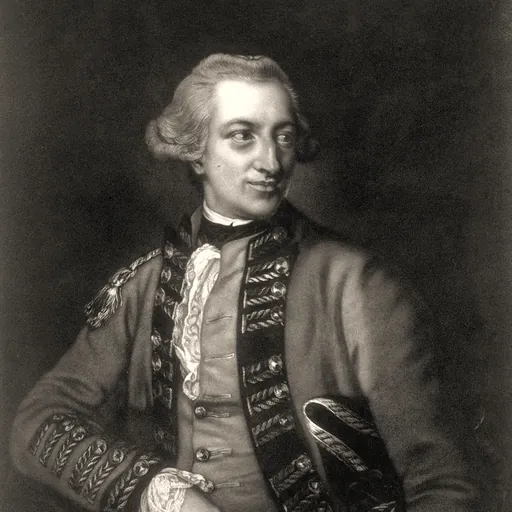
About Hugh Percy, 2nd Duke of Northumberland
Lived 1742 – 1817 (aged 74). Hugh Percy, 2nd Duke of Northumberland was a British politician and military officer.
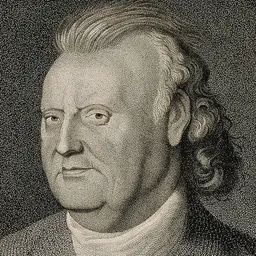
Lieutenant-General Hugh Percy, 2nd Duke of Northumberland, (born Hugh Smithson; 14 August 174210 July 1817) was a British Army officer and politician. He participated in the Battles of Lexington and Concord and the Battle of Long Island during the American War of Independence, but resigned his command in 1777 due to disagreements with his superior, General William Howe. He assumed the surname of Percy along with his father in 1750 by Hugh Earl of Northumberland's Name and Arms Act 1749 (23 Geo. 2. c. 14 ) and was styled Lord Warkworth from 1750 until 1766. He was styled Earl Percy from 1766, when his father was created Duke of Northumberland. He acceded to the dukedom in 1786.
Family
He was the son of Sir Hugh Smithson and Lady Elizabeth Seymour, heiress of the House of Percy. In 1750, upon the death of his maternal grandfather Algernon Seymour, 7th Duke of Somerset, his father became Earl of Northumberland and changed his name to Percy.
Early career In 1759, he joined the British Army as a teenager and was a captain of the 85th Regiment of Foot by age 17, an achievement that demonstrated the power of wealth and family standing. He was, nonetheless, a good soldier and fought with distinction in 1759 at the battles of Bergen and Minden. In 1760, he went up to St John's College, Cambridge. Afterwards, he married Lady Anne Crichton-Stuart, daughter of Lord Bute, on 2 July 1764.
In 1766, his father was granted a dukedom and he was styled Earl Percy. As a Member of Parliament and the son-in-law of Lord Bute, Percy was promoted to full colonel and appointed an aide-de-camp to the King in 1764, having barely reached his majority. Percy was in chronically poor health from gout and had poor eyesight. He was physically unattractive, being overly thin and having a large nose. Yet, "He was honorable and brave, candid and decent, impeccably mannered, and immensely generous with his wealth."
American War of Independence
In Parliament, where he was member for Westminster from 1763 to 1776, he had opposed the policy that led to the American War of Independence. However, he was sent to Boston in 1774 with the local rank of brigadier general, colonel of the 5th Regiment of Foot (later called the Northumberland Fusiliers). His views on the military discipline were ahead of their time. "He detested corporal punishments. At a time when other commanders were resorting to floggings and firing squads on Boston Common, he led his regiment by precept and example." When a final colonial force tried to block British progress at Prospect Hill, "Percy advanced his cannon to the front of his column, and cleared the hill with a few well-placed rounds. It was the last of his ammunition for the artillery. Percy's attitude towards New Englanders turned from contempt to grudging respect. He wrote: During the whole affair, the rebels attacked us in a very scattered, irregular manner, but with perseverance and resolution, nor did they ever dare to form into a regular body. Indeed they knew too well what was proper, to do so. Whoever looks upon them as an irregular mob, will find himself very much mistaken. They have men amongst them who know very well what they are about, having been employed as rangers against the Indians and Canadians, and this country being very much covered with wood, and hilly, is very advantageous for their method of fighting.
He was absent from the main action during the Battle of Bunker Hill, tasked with firing artillery into Roxbury.
The following year, Percy commanded a division during the Battle of Long Island and led the storming of Fort Washington. By 1777, he had achieved the rank of lieutenant general, but grew so disgusted with the conduct of the war by General Howe that he resigned his command and left America in 1777 in part after a dispute over a quantity of hay. More substantively, while in command of a detached British force garrisoning Rhode Island he fell into disagreement with General Howe over the feasibility of advancing into the hostile New England hinterland.
Second marriage The Children of the Second Duke of Northumberland, oil on canvas, Gilbert Stuart, 1787. Percy was granted a divorce in Parliament from Lady Anne in 1779 on the grounds of her adultery and immediately married Frances Julia Burrell on 23 May 1779, Lady Julia Percy Island is named after the second Lady Percy or one of her daughters.
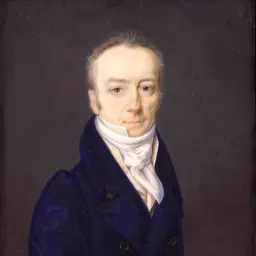
In 1786, he acceded to the title upon his father's death and continued his father's agricultural improvements. For example, when corn prices fell after 1815, he reduced his rents by twenty-five percent. He held twice-weekly gatherings at Alnwick Castle, inviting tenants and local tradespeople. He exercised considerable influence in politics, though he never obtained office. He was created a Knight of the Garter in 1788. He became a general in 1793, Percy's illegitimate half brother was James Smithson, whose bequest founded the Smithsonian Institution.
Don’t just read it —
keep it.
Full-length biographies made to live with: read them, listen on the way to work, watch them tonight.
- E-book
- Audio
- Video
Instant download · yours to keep · every purchase keeps this site free
Important facts
Family & relationships
People in Hugh Percy, 2nd Duke of Northumberland's life
Named in this biography and alive at the same time
Related people
Same field, nearest in time
Contemporaries
People whose lives overlapped Hugh Percy, 2nd Duke of Northumberland's




Frequently asked questions
Who was Hugh Percy, 2nd Duke of Northumberland?
British Army general (1742-1817)
When was Hugh Percy, 2nd Duke of Northumberland born?
Hugh Percy, 2nd Duke of Northumberland was born on 14 August 1742 in Coventry.
When did Hugh Percy, 2nd Duke of Northumberland die?
Hugh Percy, 2nd Duke of Northumberland died on 10 July 1817 in Kingston upon Hull.
What was Hugh Percy, 2nd Duke of Northumberland's occupation?
Hugh Percy, 2nd Duke of Northumberland was a politician and military officer.
What nationality was Hugh Percy, 2nd Duke of Northumberland?
Hugh Percy, 2nd Duke of Northumberland was British.
Sources & further reading
· Wikipedia: Hugh Percy, 2nd Duke of Northumberland
· DBpedia: Hugh Percy, 2nd Duke of Northumberland
Cite this page
APA: Biography.guide. (2026). Hugh Percy, 2nd Duke of Northumberland. https://biography.guide/hugh-percy-2nd-duke-of-northumberland/
MLA: "Hugh Percy, 2nd Duke of Northumberland." Biography.guide, https://biography.guide/hugh-percy-2nd-duke-of-northumberland/.
Chicago: "Hugh Percy, 2nd Duke of Northumberland." Biography.guide. https://biography.guide/hugh-percy-2nd-duke-of-northumberland/.
Data last updated: 2026-09-26 · Spot an error? Report a correction.
Portrait: Wikimedia Commons · author & licence
Page generated 2026-10-04 11:08 UTC