
Hugh Lloyd-Jones
British classical philologist
About Hugh Lloyd-Jones
Lived 1922 – 2009 (aged 87). Hugh Lloyd-Jones was a British classical philologist, university teacher, literary historian and regius Professor of Greek (Oxford).
Sir Peter Hugh Jefferd Lloyd-Jones (21 September 1922 – 5 October 2009) was a British classical scholar and Regius Professor of Greek at the University of Oxford. Educated at Westminster School and at Christ Church, Oxford, he served as a linguist and intelligence officer during the Second World War, including a stint at the code-breaking centre at Bletchley Park. After a brief fellowship at Jesus College, Cambridge, he moved to Corpus Christi College, Oxford, where he remained for the rest of his academic career. In 1961, he was made Regius Professor of Greek.
Lloyd-Jones's publications included editions of the Greek playwrights Menander, Sophocles and Aeschylus, as well as works on classical literature and classical reception. He was knighted on his retirement in 1989, and died in 2009 in Wellesley, Massachusetts, where he lived with his second wife, Mary Lefkowitz.
Early life and education Lloyd-Jones was educated at Westminster School where he developed an interest in Modern History before being converted to classics by his headmaster, J. T. Christie. He pursued undergraduate and postgraduate studies at Christ Church, Oxford. He achieved first class honours in "Mods" in 1941.
His studies, however, were interrupted by the Second World War. In February 1942, he was one of a group consisting mostly of classicists from Oxford and Cambridge who were assigned to study Japanese at the secret Bedford Japanese School run by Captain Oswald Tuck of the Royal Navy. Lloyd-Jones was in the first course run at the school, which lasted for only five months. After Bedford he was sent to the Military Wing at Bletchley Park, and then he received further training at the Foreign Office and the Ministry of Economic Warfare. He was granted an emergency commission as a second lieutenant in the British Indian Army on 15 December 1942. Subsequently he was posted to the Wireless Experimental Centre, Delhi, where he worked as an officer in the Intelligence Corps. According to Oswald Tuck's account, these three were the "key men" at the Wireless Experimental Centre. He transferred to the British Army on 1 September 1945, with seniority in the rank of lieutenant from 15 June 1943. Following the end of the war, he was invited to join the British Commonwealth Occupation Force in Japan, but turned it down as he was eager to get back to his studies. He ended the war as a captain. Annette Harder, Martin Litchfield West, and Stephanie West. In his inaugural address as Regius Professor in 1961 he called for a reduction in the emphasis laid on composition taught to undergraduates and suggested that Honour Moderations might have to be reformed to encompass studies taken from ancient philosophy and history as well as the traditional literature and language. and was a member of five foreign academies, holding honorary doctorates from the universities of Chicago, Tel Aviv, Göttingen and Thessaloniki. He was a member of both the American Academy of Arts and Sciences and the American Philosophical Society. His retirement from the Regius Chair in 1989, after twenty-nine years, was marked by a knighthood.
He married his second wife Mary R. Lefkowitz, Professor Emerita of Classical Studies at Wellesley College in Massachusetts, in 1982, and spent his last 27 years at their home in Wellesley.
Major publications
Don’t just read it —
keep it.
Full-length biographies made to live with: read them, listen on the way to work, watch them tonight.
- E-book
- Audio
- Video
Instant download · yours to keep · every purchase keeps this site free
Important facts
Family & relationships
People in Hugh Lloyd-Jones's life
Named in this biography and alive at the same time

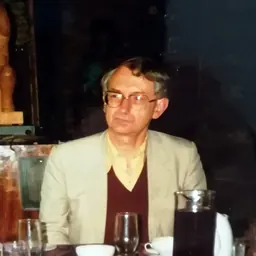


Related people
Same field, nearest in time




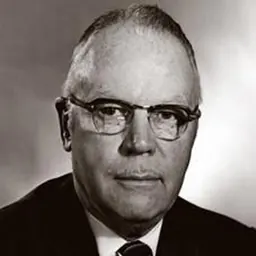
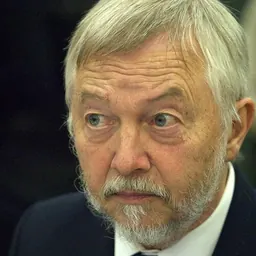
Contemporaries
People whose lives overlapped Hugh Lloyd-Jones's

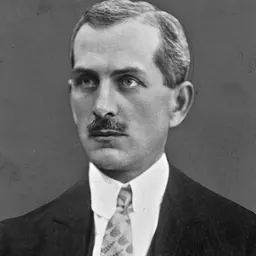
Frequently asked questions
Who was Hugh Lloyd-Jones?
British classical philologist (1922–2009)
When was Hugh Lloyd-Jones born?
Hugh Lloyd-Jones was born on 21 September 1922 in Saint Peter Port.
When did Hugh Lloyd-Jones die?
Hugh Lloyd-Jones died on 5 October 2009 in Wellesley.
What was Hugh Lloyd-Jones's occupation?
Hugh Lloyd-Jones was a classical philologist, university teacher, literary historian and regius Professor of Greek (Oxford).
What nationality was Hugh Lloyd-Jones?
Hugh Lloyd-Jones was British.
Sources & further reading
Cite this page
APA: Biography.guide. (2026). Hugh Lloyd-Jones. https://biography.guide/hugh-lloyd-jones/
MLA: "Hugh Lloyd-Jones." Biography.guide, https://biography.guide/hugh-lloyd-jones/.
Chicago: "Hugh Lloyd-Jones." Biography.guide. https://biography.guide/hugh-lloyd-jones/.
Data last updated: 2026-09-22 · Spot an error? Report a correction.
Page generated 2026-09-27 05:29 UTC