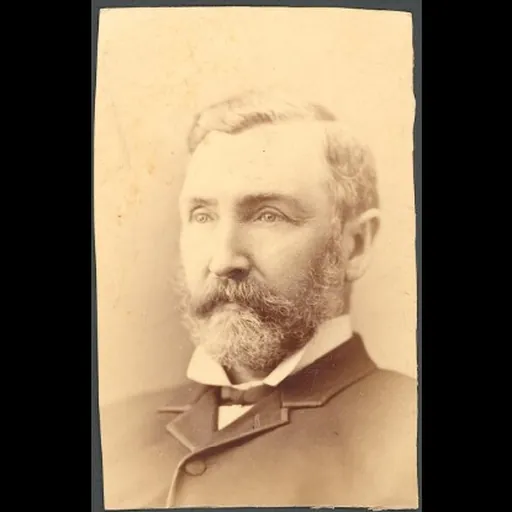
Hugh Junor Browne
(1829-1905) Spiritualist and distiller
About Hugh Junor Browne
Lived 1829 – 1905 (aged 75–76).
Hugh Junor Browne (1829 – 3 December 1905) was an Australian businessman and Spiritualist. He was born in Scotland and first arrived in Australia during the Victorian gold rush, developing diverse business interests in Melbourne. His daughter Pattie married Australian prime minister Alfred Deakin.
Early life Browne was born in 1829 in Edinburgh, Scotland. He was the son of Martha and Archibald Browne. His father was a Church of Scotland minister from Paisley who moved to the South American colony of Demerara and became the first minister of St. Andrew's Kirk, Georgetown. His mother was the widow of Hugh Junor, a merchant originally from the Black Isle who came to own a timber plantation and a substantial number of slaves in Essequibo.
Browne was educated in Scotland and England. He studied medicine for two years and also briefly studied law, but at the age of 21 moved to the Colony of Natal in South Africa where he took up cattle farming. He first came to Australia in 1852 during the Victorian gold rush, where he took up a mining claim at Fryer's Creek for six months.
Personal life
In 1858, Browne married Elizabeth Alice Turner, with whom he had four daughters and seven sons. His daughter Pattie married Australian prime minister Alfred Deakin.
Spiritualism Browne became influenced by Spiritualism in the 1860s. He attended lectures at the Victorian Association of Progressive Spiritualists and in 1874 attended a séance led by American medium Charles H. Foster, where he believed he made contact with his deceased father. This experience "led to his final endorsement of Spiritualism and entire renouncement of the old faith". He was active in the Association of Progressive Spiritualists and wrote for its monthly journal Harbinger of Light. In 1876 he published a Spiritualist tract titled The Holy Truth; or, the Coming Reformation, Universal and Eternal Because Founded on Demonstrable Truth. He later published the autobiographical Reasons for the Hope That is in Me in 1891.
After their sons' disappearance, Browne and his wife engaged clairvoyant George Spriggs to assist in the search. Spriggs purported to make contact with their spirits and produced a detailed account of their death, which Browne attempted to submit as evidence to a coronial inquest. His account of Spriggs' contact with his sons was accepted by other Spiritualists, including Arthur Conan Doyle.
Don’t just read it —
keep it.
Full-length biographies made to live with: read them, listen on the way to work, watch them tonight.
- E-book
- Audio
- Video
Instant download · yours to keep · every purchase keeps this site free
Important facts
People in Hugh Junor Browne's life
Named in this biography and alive at the same time
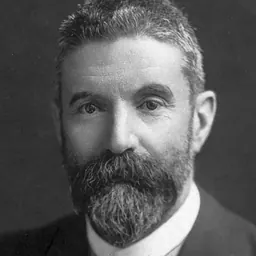

Contemporaries
People whose lives overlapped Hugh Junor Browne's





Frequently asked questions
Who was Hugh Junor Browne?
(1829-1905) Spiritualist and distiller
When was Hugh Junor Browne born?
Hugh Junor Browne was born in 1829 in Edinburgh.
When did Hugh Junor Browne die?
Hugh Junor Browne died on 3 December 1905.
Sources & further reading
· Wikipedia: Hugh Junor Browne
· DBpedia: Hugh Browne (businessman)
Cite this page
APA: Biography.guide. (2026). Hugh Junor Browne. https://biography.guide/hugh-junor-browne/
MLA: "Hugh Junor Browne." Biography.guide, https://biography.guide/hugh-junor-browne/.
Chicago: "Hugh Junor Browne." Biography.guide. https://biography.guide/hugh-junor-browne/.
Data last updated: 2026-09-22 · Spot an error? Report a correction.
Portrait: Wikimedia Commons · author & licence
Page generated 2026-09-27 05:04 UTC