
Hubert von Goisern
Austrian singer-songwriter and bandleader
About Hubert von Goisern
Born 1952. Hubert von Goisern is an Austrian singer-songwriter, recording artist, singer, actor, writer and author.
Hubert von Goisern (born Hubert Achleitner, 17 November 1952) is an Austrian singer-songwriter and world musician. With his mix of rock music and elements of traditional Volksmusik he has become a prominent exponent of the so-called New Volksmusik and Alpine Rock in Austria, Switzerland and Germany. His stage name von Goisern refers to his hometown. Hubert von Goisern has won numerous record certifications and several national and international awards.
Biography He was born in Bad Goisern. Already interested in music as a youth, he joined the local brass band where he learned playing the trumpet as his first instrument. When conflicts arose with the band leader about the band's repertoire and Hubert's long hair, he had to leave the band and return the trumpet. He then learned to play guitar starting with an acoustic guitar and then expanding his skills to a self-purchased electric guitar. He also took lessons in trumpet and clarinet. Other instruments like the Steirische Harmonika that was introduced to him by his grandfather were learned in private study.
South Africa, Canada, Philippines (1972–1983) Aged 20, he left Austria with his girlfriend and relocated to South Africa where he worked in a chemical laboratory. He became involved in the struggle against apartheid but returned to Austria five years later. There he married his Canadian wife and adopted her surname Sullivan.
At the age of 27 he decided to become a professional musician. He studied guitar in Toronto for two years and learned to play flamenco music. After separating from his wife, he went on another journey and learned to play the nose flute on the Philippines. This was also where he began to develop his own musical style by incorporating elements of a foreign traditional music into the traditional music of his home country Austria.
Together with Wolfgang Ambros, Joesi Prokopetz and Manfred Tauchen the Alpinkatzen performed the Watzmann tour, a stage adaption of the audio drama Der Watzmann ruft [Mount Watzmann is calling]. Afterwards the band parted with Wolfgang Staribacher. Hubert von Goisern kept his stage name and continued the project with a number of new musicians: Stefan Engel (keys), Wolfgang Maier (drums), Reinhard Stranzinger (guitar) and Sabine Kapfinger (vocals). Kapfinger became later known as "Alpine Sabine" and eventually "Zabine". At first she participated in studio recordings only, but taught von Goisern how to yodel. The Alpinkatzen toured across German language countries and became one of the most successful Alpenrock bands.
In 1994, the second album Omunduntn (dialectal for "Up and down") was released. It contains the track "Goisern" which is a German language adaption of Ray Charles' song "Georgia", and also reworked versions of the songs "Cocaine" and "Kren & Speck" [horse radish and bacon] from the Alpinkatzen's first album Alpine Lawine. A new tour was conducted through Austria, Switzerland and Germany. Another quick tour included performances in Paris, San Antonio and Austin, Texas, and New York City. It was the last concert tour by the Alpinkatzen. Their last concert was given on 1 November 1994. Shortly before, a performance at the Circus Krone Building had been filmed by director Joseph Vilsmaier and his wife Dana Vávrová. The documentary Wia die Zeit vergeht [how time passes by] was presented at the 1995 Munich Festival and was later published on VHS and DVD. The concert at Circus Krone was declared the farewell performance by the band.
Tseten Zöchbauer, chairwoman of the Austrian organisation Save Tibet introduced von Goisern to artists of the India-based Tibetan Institute of Performing Arts (TIPA). Subsequently, he accompanied and presented their Austrian tour. Afterwards he planned a voyage to Tibet and invited Zöchbauer, who had left her native country aged two, to come along. For six weeks they travelled through Tibet and later, in an ORF interview, reported on the status of the Tibetan people, culture, and relationship with their Chinese national government.
Together with Wolfgang Spannberger he later travelled to Dharamshala, Himachal Pradesh, India, where the Central Tibetan Administration is located. There they met Tenzin Gyatso, the 14th Dalai Lama. With a mobile sound studio they recorded traditional Tibetan music performed by artists of TIPA. These recordings and other songs from a recording session with Tibetan guest musicians in Salzburg, Austria, were released in 1998 on the album Inexile [in exile]. The Dalai Lama followed an invitation by Hubert von Goisern and visited him in Bad Ischl in 1998. In his acceptance speech, which turned out to have been edited by ORF prior to airing, he criticised the Austrian music industry for a lack in supporting Austrian artists.
Following the Fön tour, Hubert von Goisern played a number of concerts in Egypt and West African countries. In Assiut he shared the stage with Mohamed Mounir, one of the best-known Egyptian musicians, who fuses elements of traditional Sufi music and modern rock. During his tour through West Africa, von Goisern was accompanied by a film team that recorded a documentary Grenzenlos [Without Borders] about connecting the meetings of the Austrian musicians with various African artists. In the summer of 2002, a concert tour was made in Germany, and the album Iwasig [Above] was released.
The same year, when the Dalai Lama performed a kalachakra ceremony in Graz, Austria, Hubert von Goisern and Tseten Zöchbauer presented several Sounds of Tibet concerts with TIPA artists. After presenting Trad II on Mount Krippenstein in October 2003, von Goisern went on the Trad II tour in 2004.
In January 2005, Hubert von Goisern and his band performed at the Festival au Désert in Mali together with balafon player Kele Tigi. Again, this trip was recorded on film and was later shown as Warten auf Timbuktu (Waiting for Timbuktu).
After the numerous tours of the past years, von Goisern turned to different activities. Examples include the presentation of a sound installation in a cave of the Dachstein mountains. In November 2005 he recorded the duet Rita mir zwei with Wolfgang Niedecken which was released on the anniversary album of the German band BAP: Dreimal zehn Jahre [Three times ten years].
In April 2006, the Freedom Party of Austria used von Goisern's song "Heast as nit" [Don't you hear it?] in an election campaign. Hubert von Goisern then published an open letter to party leader Heinz-Christian Strache, demanding that the Freedom Party stopped using his songs. The letter included a statement: "I stand for an open, tolerant society, for the destruction of fear of the unknown and new, and not for the fomentation thereof. I stand for looking changes in the eye and looking forward, not for the attempt to stop time, or to even turn it back; that is the content of 'Heast as nit...'."
Linz Europe Tour 2007–2009
In 2007, von Goisern started the Linz Europe Tour 2007–2009 which was a promotional tour for Linz as European Capital of Culture 2009. The planning had already begun in 2005. Until 2009, he navigated several European rivers with a convoy of three ships, including a cargo ship converted to a floating stage, a towboat MS Wallsee, and a houseboat. This included concerts with local musicians in numerous towns along the route. Performances were made at the 2007 Donauinselfest in Vienna (featuring Willi Resetarits), The first part of the tour lead down the river Danube to its delta at the Black Sea. In 2008, a documentary DVD of this tour was released: Goisern goes East.
In 2008, the second leg of the tour went upstream the Danube via Passau and Regensburg, through the Rhine–Main–Danube Canal, and downstream the Rhine to Rotterdam in the Netherlands. Simultaneously the album s'Nix [The Void] was released. The river tour ended with a three-day-long celebration in Linz, the ships' homeport. Participating musicians included Klaus Doldinger, BAP, Haindling, Konstantin Wecker and Xavier Naidoo.
Music
Style Hubert von Goisern is counted among the exponents of the so-called "Neue Volksmusik", lit. "New Folk Music". He is however more often associated with "Alpenrock" or "Alpine rock". His music fuses modern rock and traditional Alpine music. His style is significant for stressing the sound of the harmonica which is then balanced by electric guitars.
Other influences include traditional African music as recorded on Gombe as well as Brazilian samba and also funk. The latter genres have helped von Goisern develop from Alpine music towards world music.
Lyrics The lyrics of Hubert von Goisern's songs are often political and critical of society. An example are the references to far right politician Jörg Haider who hailed also from Goisern, and whose Freedom Party enjoyed high polls during the late 20th century and early 2000s.
Discography
Albums
Alpinkatzen feat. Hubert von Goisern 1988: Alpine Lawine [Alpine avalanche]
Hubert von Goisern und die Alpinkatzen Year Title Type Peak positions CertificationsAUT SWI
Don’t just read it —
keep it.
Full-length biographies made to live with: read them, listen on the way to work, watch them tonight.
- E-book
- Audio
- Video
Instant download · yours to keep · every purchase keeps this site free
Important facts
People in Hubert von Goisern's life
Named in this biography and alive at the same time


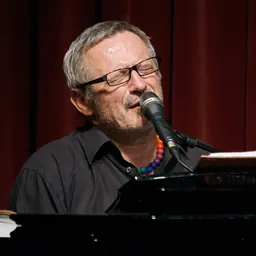

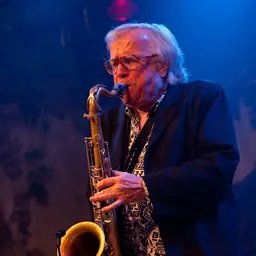


Related people
Same field, nearest in time



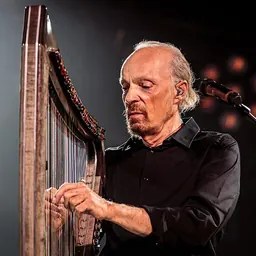

Contemporaries
People whose lives overlapped Hubert von Goisern's
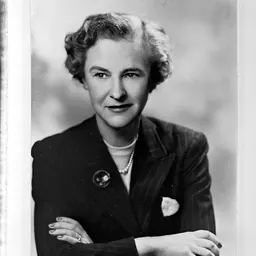



Frequently asked questions
Who is Hubert von Goisern?
Austrian singer-songwriter and bandleader
When was Hubert von Goisern born?
Hubert von Goisern was born on 17 November 1952 in Bad Goisern am Hallstättersee.
What is Hubert von Goisern's occupation?
Hubert von Goisern is a singer-songwriter, recording artist, singer, actor, writer and author.
What nationality is Hubert von Goisern?
Hubert von Goisern is Austrian.
Sources & further reading
· Wikipedia: Hubert von Goisern
Cite this page
APA: Biography.guide. (2026). Hubert von Goisern. https://biography.guide/hubert-von-goisern/
MLA: "Hubert von Goisern." Biography.guide, https://biography.guide/hubert-von-goisern/.
Chicago: "Hubert von Goisern." Biography.guide. https://biography.guide/hubert-von-goisern/.
Data last updated: 2026-09-20 · Spot an error? Report a correction.
Page generated 2026-09-27 05:17 UTC