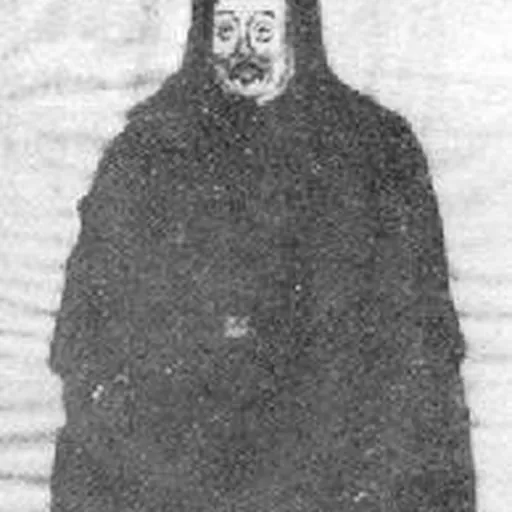
About Huang Juezi
Lived 1793 – 1853 (aged 59–60). Huang Juezi was a Chinese politician.
Huang Juezi (1793 – 1853) was a Chinese Qing dynasty scholar and civil servant and a fervent opponent of the opium trade. His 1838 official memorial to the Daoguang Emperor detailing the problems caused by opium helped lead to the appointment of Lin Zexu as Imperial Commissioner responsible for tackling the opium problem, a move that would ultimately result in the First Opium War with Great Britain.
Early life and career Born in Yihuang County, Jiangxi Province, by the age of seven Huang could compose classical poetry. In 1808 during the reign of the Qing Jiaqing Emperor he entered the government school and in 1823 graduated as a chosen scholar or Jìnshì (进士/進士). Thereafter he held a series of positions at the Imperial Court including Imperial Censor (御史Yù shǐ), Minister of Works (工科给事中Gōngkē gěi shì zhōng) and Minister Herald (鸿胪寺卿/鴻臚寺卿 Hóng lú sì qīng).
Petition to the emperor By the early years of the Daoguang Emperor's reign, the pernicious influence of opium had spread all across China, leading to a serious outflow of silver bullion and a society wide crisis. In 1838, Huang, by now Minister Herald, presented the emperor with a petition entitled "Plug the leak firmly to grow the country" (严塞漏卮以培国本疏 Yán sè lòu è yǐ péi guó běn shū) - the leak in question being of silver bullion. In his memorial Huang asked the emperor to grant a one-year period of grace after which ordinary citizens who continued to smoke opium would face the death penalty while officials would face the same punishment with their offspring banned from sitting the imperial examination. He mistakenly believed that Britain already had death penalty for opium smokers. The petition gained the support of officials including Lin Zexu and Tao Zhu, as well as praise from the emperor himself. On the eve of the First Opium War, Huang knew that control of China's coastal regions was vital to the suppression of the opium trade. He made two trips to Fujian Province and presented the emperor with a map showing suggested coastal defences, the Hǎifáng túbiǎo .
Later career When the First Opium War broke out in 1839, Huang joined Deng Tingzhen in resisting the British army then later took charge of the Yuzhang Confucian Academy . He died in Beijing in 1853; thereafter his body was returned to Yihuang County for burial.
Don’t just read it —
keep it.
Full-length biographies made to live with: read them, listen on the way to work, watch them tonight.
- E-book
- Audio
- Video
Instant download · yours to keep · every purchase keeps this site free
Important facts
People in Huang Juezi's life
Named in this biography and alive at the same time

Related people
Same field, nearest in time



Contemporaries
People whose lives overlapped Huang Juezi's





Frequently asked questions
Who was Huang Juezi?
Chinese scholar and civil servant
When was Huang Juezi born?
Huang Juezi was born in 1793.
When did Huang Juezi die?
Huang Juezi died in 1853.
What was Huang Juezi's occupation?
Huang Juezi was a politician.
What nationality was Huang Juezi?
Huang Juezi was Chinese.
Sources & further reading
Cite this page
APA: Biography.guide. (2026). Huang Juezi. https://biography.guide/huang-juezi/
MLA: "Huang Juezi." Biography.guide, https://biography.guide/huang-juezi/.
Chicago: "Huang Juezi." Biography.guide. https://biography.guide/huang-juezi/.
Data last updated: 2026-09-22 · Spot an error? Report a correction.
Portrait: Wikimedia Commons · author & licence
Page generated 2026-09-27 05:04 UTC