
About Hsing Yun
Lived 1927 – 2023 (aged 95). Hsing Yun was a Chinese and Taiwanese calligrapher, buddhist monk, writer and monk.
Hsing Yun (; 19 August 1927 – 5 February 2023) was a Chinese Buddhist monk, teacher, and philanthropist based in Taiwan. He was the founder of the Fo Guang Shan Buddhist monastic order as well as the layperson-based Buddha's Light International Association. Hsing Yun was considered a major proponent of Humanistic Buddhism and one of the most influential teachers of modern Taiwanese Buddhism. In Taiwan, he was popularly referred to as one of the "Four Heavenly Kings" of Taiwanese Buddhism, along with his contemporaries: Master Sheng-yen of Dharma Drum Mountain, Master Cheng Yen of Tzu Chi and Master Wei Chueh of Chung Tai Shan.
Biography Hsing Yun was born Lee Kuo-shen (pinyin: Lǐ Guóshēn) in 1927 in Jiangdu village (modern day Yangzhou), Jiangsu Province in the Republic of China. Hsing Yun's first exposure to Buddhism came from his grandmother, a practicing Buddhist and meditator. Just prior to monastic life, he had accompanied his mother to Nanjing to search for his missing father but they were unsuccessful. In 1938 he entered the monastic life at the age of 12, ordaining as a novice at Qixia Temple under Zhikai, where he received the novice name Jinjue. He received the upasampadā vinaya precepts under Ruoshun at the same temple in 1941 and received the dharma name Wuche. He fled mainland China to Taiwan in 1949 following the communist victory in the civil war but was arrested along with several other Buddhist monastics. Hsing Yun and the others were released after 23 days, and he then spent the next several years developing a large following and founding numerous temples. In 1966, Hsing Yun bought some land in Kaohsiung and started building a large monastery. After partial completion, the temple opened in 1967 and would later become the headquarters of the Fo Guang Shan Buddhist organization.
Hsing Yun's Fo Guang Shan Buddhist order is a proponent of "Humanistic" Buddhism, Following his resignation, Hsing Yun founded the Buddha's Light International Association (BLIA) as a layperson based Humanistic Buddhist organization. In the 1950s, he started the first island-wide dharma propagation tour. and runs orphanages, homes for the elderly, and drug rehabilitation programs in prisons. Fo Guang Shan has also been involved in some international relief efforts.
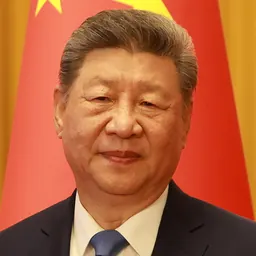
Fo Guang Shan entered mainland China in the early 21st century, focusing more on charity and Chinese cultural revival rather than Buddhist propagation in order to avoid conflict with the Chinese government, which opposes proselytizing. Fo Guang Shan's presence in China increased under the premiership of General Secretary Xi Jinping after he started a program to revive traditional Chinese faiths. According to Hsing Yun, his goal in mainland China was to work with the mainland government to rebuild China's culture following the destruction of the Cultural Revolution, rather than promote Buddhism in the mainland. During the 2008 presidential election, Hsing Yun publicly endorsed Kuomintang candidate Ma Ying-jeou. During the second World Buddhist Forum in 2009, Hsing Yun asserted that there are "no Taiwanese" and that Taiwanese "are Chinese". Despite his Kuomintang partisanship, Hsing Yun was generally known to be respected by politicians of both parties.
He encouraged reconciliation between China and the Dalai Lama, but tried hard to avoid causing rifts between him and his organisation and the Chinese government.
Illness and death On 26 December 2011, Hsing Yun suffered a minor ischemic stroke, his second in that year. In his older years Hsing Yun began suffering from numerous health issues, including diabetes and near blindness.
Hsing Yun died at his residence in Fo Guang Shan monastery on the afternoon of 5 February 2023, after years of unstable health. He was 95 (97 according to East Asian age reckoning), and had spent 85 years of his life as a monastic.
The next day his body was placed in a seated position inside a dome-like container in the shape of the Parinirvana Stupa in Kushinagar, India. His body was placed upon a dais inside the Cloud Dwelling Building where he lay in state for seven days while visitors paid their respects.
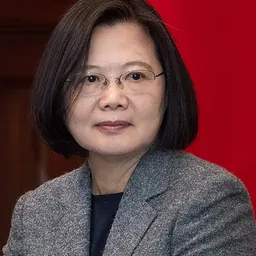
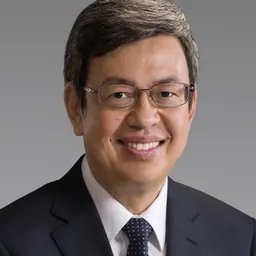
Hsing Yun's funeral was held on 13 February, with President Tsai Ing-wen, Premier Chen Chien-jen, KMT chairman Eric Chu, and Kaohsiung mayor Chen Chi-mai in attendance. His remains were cremated at Daxian Temple in nearby Tainan, Baihe District. His urn was returned to Fo Guang Shan's Longevity Memorial Park the same evening. His cremated remains and sarira were interred inside the Patriarch's Shrine nearby the Fo Guang Shan monastery campus. In March 2026, his remains were portioned into twelve smaller stupas and presented to twelve Fo Guang Shan branch temples across Asia, North America, South America, Europe, and Oceania.
Awards In 2008, Hsing Yun was awarded the honorary Doctor of Humane Letters (L.H.D.) from Whittier College.
On the morning of 13 February 2023, President Tsai Ing-wen conferred a posthumous presidential citation upon Hsing Yun, extolling his many achievements.
Don’t just read it —
keep it.
Full-length biographies made to live with: read them, listen on the way to work, watch them tonight.
- E-book
- Audio
- Video
Instant download · yours to keep · every purchase keeps this site free
Important facts
more
Li GuoshenPeople in Hsing Yun's life
Named in this biography and alive at the same time



Related people
Same field, nearest in time




Contemporaries
People whose lives overlapped Hsing Yun's

Frequently asked questions
Who was Hsing Yun?
Taiwanese Buddhist monk (1927–2023)
When was Hsing Yun born?
Hsing Yun was born on 19 August 1927 in Jiangdu County.
When did Hsing Yun die?
Hsing Yun died on 5 February 2023 in Kaohsiung.
What was Hsing Yun's occupation?
Hsing Yun was a calligrapher, buddhist monk, writer and monk.
What nationality was Hsing Yun?
Hsing Yun was Chinese and Taiwanese.
Sources & further reading
Cite this page
APA: Biography.guide. (2026). Hsing Yun. https://biography.guide/hsing-yun/
MLA: "Hsing Yun." Biography.guide, https://biography.guide/hsing-yun/.
Chicago: "Hsing Yun." Biography.guide. https://biography.guide/hsing-yun/.
Data last updated: 2026-09-25 · Spot an error? Report a correction.
Page generated 2026-09-27 05:10 UTC