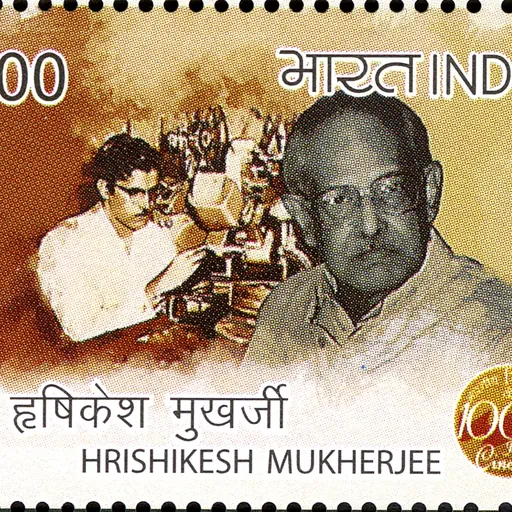
About Hrishikesh Mukherjee
Lived 1922 – 2006 (aged 83). Hrishikesh Mukherjee was an Indian film director, screenwriter, film producer, film editor and director.
Hrishikesh Mukherjee (30 September 1922 – 27 August 2006) was an Indian film director, editor and writer. He is regarded as one of the greatest filmmakers of Indian cinema. Popularly known as Hrishi-da, he directed 42 films during his career spanning over four decades, and is named the pioneer of the 'middle cinema' of India. Renowned for his social films that reflected the changing middle-class ethos, Mukherjee "carved a middle path between the extravagance of mainstream cinema and the stark realism of art cinema".
He is known for a number of films, including Anari, Satyakam, Chupke Chupke, Anupama, Anand, , Guddi, Gol Maal, Majhli Didi, Chaitali, Aashirwad, Bawarchi, Khubsoorat, , and .
He also remained the chairman of the Central Board of Film Certification (CBFC) and of the National Film Development Corporation (NFDC). He studied science and graduated in chemistry from the University of Calcutta. He taught mathematics and science for some time before taking up filmmaking as a career.
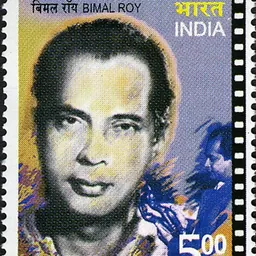
Career Mukherjee initially worked as a cameraman, and then film editor, in B. N. Sircar's New Theatres in Calcutta in the late 1940s, where he learned his skills from Subodh Mitter ('Kenchida'), a well known editor at the time. He later worked with Bimal Roy in Mumbai as a film editor and assistant director in 1951, participating in the landmark Roy films Do Bigha Zamin and Devdas.
His debut directorial venture, Musafir (1957), was not a success, but he later received acclaim for his second film Anari in 1959. The film, crew and cast won five Filmfare Awards, with Mukherjee only losing the Best Director Award to his mentor, Bimal Roy.
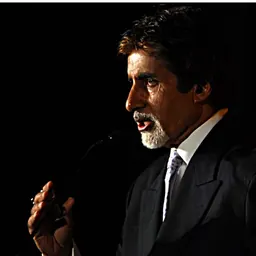
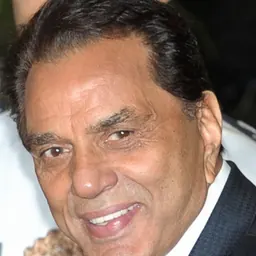
In the following years, he made numerous films. Some of his most notable films include: Anuradha (1960), Chhaya (1961), Asli-Naqli (1962), Anupama (1966), Aashirwad (1968), Satyakam (1969), Guddi (1971), Anand (1971), Bawarchi (1972), (1973), (1973), Mili (1975), Chupke Chupke (1975), Alaap (1977), Gol Maal (1979), Khubsoorat (1980) and Bemisal (1982). He was the first to introduce Dharmendra in comedy roles, through Chupke Chupke, and gave Amitabh Bachchan his big break with Anand in 1970, along with Rajesh Khanna, he also introduced Jaya Bhaduri to Hindi cinema in his film Guddi. Having worked with his mentor, Bimal Roy as an editor, in films like Madhumati, he was much sought after as an editor as well.
Later life In 1999, Mukherjee was honoured with the Dadasaheb Phalke Award by the Government of India. Mukherjee was the chairman of the Central Board of Film Certification and of the National Film Development Corporation. In 2001, he was awarded the Padma Vibhushan, the second highest civilian award for his contribution to Indian cinema by the Government of India. The International Film Festival of India honoured him with a retrospective of his films in November 2005. He holds the distinction of working with many of the top Indian stars since the independence of India in 1947.
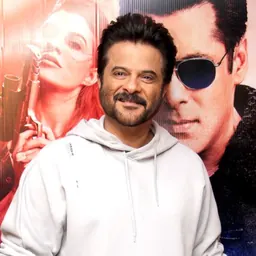
His last film was Jhooth Bole Kauwa Kaate. Since his original hero, Amol Palekar, had grown old, he opted to cast Anil Kapoor. He has directed TV serials including Talaash.
Death In later life, Mukherjee suffered from chronic kidney failure and would go to Lilavati Hospital for dialysis. He was admitted to Lilavati Hospital in Mumbai early on Tuesday, 6 June 2006 after he complained of uneasiness. Mukherjee died a few weeks later on 27 August 2006.
Personal life Mukherjee was married and has three daughters and two sons. His wife died over three decades before him. His younger brother, Dwarkanath Mukherjee, helped write the screenplay for many of his films. He was an animal lover and had many dogs and occasionally cats at his residence in Bandra, Mumbai. In his final years, Mukherjee was exclusively staying with his servants and pets. Family members and friends would visit him regularly.
Awards 2001: Padma Vibhushan by the Government of India 2001: NTR National Award Rashtriya Kishore Kumar Samman from the Government of Madhya Pradesh for 1997-1998
Berlin International Film Festival 1961: Golden Bear: Nomination: Anuradha
Filmfare Awards 1956: Filmfare Best Editing Award: Naukari 1959: Filmfare Best Editing Award: Madhumati 1970: Filmfare Best Screenplay Award: 1972: Filmfare Best Movie Award: Anand shared with N. C. Sippy 1972: Filmfare Best Editing Award: Anand 1972: Filmfare Best Story Award: Anand 1981: Filmfare Best Movie Award: Khubsoorat shared with N. C. Sippy 1994: Filmfare Lifetime Achievement Award – South (1994)
Kerala State Film Awards
1970: Kerala State Film Award for Best Editor: Priya 1974: Kerala State Film Award for Best Editor: Nellu National Film Awards 1957: Certificate of Merit for Third Best Feature Film in Hindi – Musafir 1959: President's Silver Medal for Best Feature Film in Hindi – Anari 1960: President's Gold Medal for the All India Best Feature Film – Anuradha 1966: President's Silver Medal for Best Feature Film in Hindi – Anupama 1968: President's Silver Medal for Best Feature Film in Hindi – Aashirwad 1969: President's Silver Medal for Best Feature Film in Hindi – Satyakam 1970: President's Silver Medal for Best Feature Film in Hindi – Anand 1999: Dada Saheb Phalke Award
Filmography Films as director
Films as editor, writer or assistant director
TV serials Hum Hindustani (1986) Talaash (1992) Dhoop Chhaon Rishte Ujaale Ki Or Agar Aisa Ho Toh
Don’t just read it —
keep it.
Full-length biographies made to live with: read them, listen on the way to work, watch them tonight.
- E-book
- Audio
- Video
Instant download · yours to keep · every purchase keeps this site free
Important facts
People in Hrishikesh Mukherjee's life
Named in this biography and alive at the same time



Related people
Same field, nearest in time



Contemporaries
People whose lives overlapped Hrishikesh Mukherjee's
Frequently asked questions
Who was Hrishikesh Mukherjee?
Indian film director (1922–2006)
When was Hrishikesh Mukherjee born?
Hrishikesh Mukherjee was born on 30 September 1922 in Kolkata.
When did Hrishikesh Mukherjee die?
Hrishikesh Mukherjee died on 27 August 2006 in Mumbai.
What was Hrishikesh Mukherjee's occupation?
Hrishikesh Mukherjee was a film director, screenwriter, film producer, film editor and director.
What nationality was Hrishikesh Mukherjee?
Hrishikesh Mukherjee was Indian.
Sources & further reading
· Wikipedia: Hrishikesh Mukherjee
· DBpedia: Hrishikesh Mukherjee
Cite this page
APA: Biography.guide. (2026). Hrishikesh Mukherjee. https://biography.guide/hrishikesh-mukherjee/
MLA: "Hrishikesh Mukherjee." Biography.guide, https://biography.guide/hrishikesh-mukherjee/.
Chicago: "Hrishikesh Mukherjee." Biography.guide. https://biography.guide/hrishikesh-mukherjee/.
Data last updated: 2026-09-22 · Spot an error? Report a correction.
Portrait: Wikimedia Commons · author & licence
Page generated 2026-09-27 05:03 UTC