
About Hoyt Wilhelm
Lived 1922 – 2002 (aged 80). Hoyt Wilhelm was an American baseball player.
James Hoyt Wilhelm (July 26, 1922 – August 23, 2002), nicknamed "Old Sarge", was an American professional baseball pitcher in Major League Baseball (MLB) with the New York Giants, St. Louis Cardinals, Cleveland Indians, Baltimore Orioles, Chicago White Sox, California Angels, Atlanta Braves, Chicago Cubs, and Los Angeles Dodgers between 1952 and 1972. Wilhelm was elected to the Baseball Hall of Fame in 1985.
Wilhelm grew up in North Carolina, fought in World War II, and then spent several years in the minor leagues before starting his major league career at the age of 29. He was best known for his knuckleball, which enabled him to have great longevity. He appeared occasionally as a starting pitcher, but pitched mainly as a reliever. Wilhelm won 124 games in relief, which is still the major league record as of . He was the first pitcher to reach 200 saves, and the first to appear in 1,000 games.
Wilhelm was nearly 30 years old when he entered the major leagues, and pitched until he was nearly 50. He retired with one of the lowest career earned run averages, 2.52, in baseball history. After retiring as a player in 1972, Wilhelm held longtime coaching jobs with the New York Yankees and Atlanta Braves.
Wilhelm was inducted into the National Baseball Hall of Fame in 1985 with 83.8% of the vote in his eighth year of eligibility. He holds the record with Satchel Paige and Goose Gossage for the most franchises played for (9) by a Hall of Fame pitcher. Wilhelm lived in Sarasota, Florida, for many years, and died there in 2002.
Early life James Hoyt Wilhelm was born on July 26, 1922, long thought to have been 1923, in Huntersville, North Carolina. (Biographer Mark Armour notes that Wilhelm's birth year was erroneously believed to be 1923 until he died and his birth certificate was examined.) He played baseball at Cornelius High School in Cornelius, North Carolina. hoping it was his best shot at Big League success. He rose to the rank of staff sergeant while in the Army, and played his entire career with a piece of fragmentation lodged in his back as a result of the wounds he received in battle. Wilhelm carried the nickname "Old Sarge" because of his service in the military. and on November 20, 1947, he was drafted by the New York Giants from the Braves in the 1947 minor league draft.
Wilhelm made his MLB debut with the Giants on April 18, 1952, at age 29, giving up a hit and two walks while only recording one out. On April 23, 1952, in his third game with the New York Giants,
Pitching exclusively in relief, Wilhelm led the NL with a 2.43 ERA in his rookie year. He won 15 games and lost three. Wilhelm finished fourth in the NL Most Valuable Player Award voting that season, behind rookie reliever Joe Black of the Dodgers. Jim Konstanty had won it for the Phillies in 1950, and Ellis Kinder had finished seventh in the AL voting in 1951, so it was a time when relief pitchers were starting to receive appreciation from the sportswriters. Wilhelm finished second in the Rookie of the Year Award voting to Joe Black. Wilhelm made 69 relief appearances in 1953, his win–loss record decreased to 7–8 and he issued 77 walks against 71 strikeouts. The Giants renewed Wilhelm's contract in February 1954.
In 1954, Wilhelm was a key piece of the pitching staff that led the 1954 Giants to a world championship. When Stan Musial set a record by hitting five home runs in a doubleheader that year, Wilhelm was pitching in the second game and gave up two of the home runs. The 1954 World Series represented Wilhelm's only career postseason play. The team won the World Series in a four-game sweep.
Wilhelm's ERA increased to 3.93 over 59 games and 103 innings pitched in 1955, but he managed a 4–1 record. He finished the 1956 season with a 4–9 record and a 3.83 ERA in innings.
St. Louis Cardinals (1957) On February 26, 1957, Wilhelm was traded by the Giants to the St. Louis Cardinals for Whitey Lockman. In 40 games with the Cardinals that season, he earned 11 saves but finished with a 1–4 record and his highest ERA to that point in his career (4.25).
Cleveland Indians (1957–1958) The Cardinals placed him on waivers in September and he was claimed by the Cleveland Indians, who used him in two games that year. He allowed two baserunners on walks and struck out eight. The no-hitter had been threatened at one point in the ninth inning when Hank Bauer bunted along the baseline, but Robinson allowed the ball to roll and it veered foul. The no-hitter was the first in the franchise's Baltimore history; the Orioles had moved from St. Louis after the 1953 season.
Orioles catchers had difficulty catching the Wilhelm knuckleball again in 1959 and they set an MLB record with 49 passed balls. Author Bill James has written that Wilhelm and Triandos "established the principle that a knuckleball pitcher and a big, slow catcher make an awful combination." Triandos once said, "Heaven is a place where no one throws a knuckleball." Richards was well equipped with starting pitchers during that year. By the middle of the season, he said that eight of his pitchers could serve as starters. Wilhelm started 11 of the 41 games in which he appeared. He earned an 11–8 record, a 3.31 ERA and seven saves. He started only one game the following year, but he was an All-Star, registered 18 saves and had a 2.30 ERA. He registered 21 saves and a 2.64 ERA. Despite Wilhelm's success, the White Sox, who had won at least 83 games per season in the 1960s, performed poorly. They finished 1968 with a 67–95 record.
Wilhelm was noted during this period for his mentoring of relief pitcher Wilbur Wood, who came to the 1967 White Sox in a trade. Wood sometimes threw a knuckleball upon his arrival in Chicago, but Wilhelm encouraged him to throw it full-time. By 1968, Wood won 13 games, saved 16 games and earned a 1.87 ERA. He credited Wilhelm with helping him to master the knuckleball, as the White Sox coaches did not know much about how to throw it. Between 1968 and 1970, Wood pitched in more games (241) than any other pitcher and more innings――than any other relief pitcher.
California Angels (1969) After the 1968 season, MLB expanded and an expansion draft was conducted in which the new teams could select certain players from the established teams. The White Sox left Wilhelm unprotected, possibly because they did not believe that teams would have interest in a much older pitcher. On October 15, 1968, Wilhelm was chosen in the expansion draft by the Kansas City Royals as the 49th pick. That offseason, he was traded by the Royals to the California Angels for Ed Kirkpatrick and Dennis Paepke. As the Cubs had acquired Wilhelm late in the season to bolster their playoff contention, the trade back to the Braves was a source of controversy. Commissioner Bowie Kuhn investigated the transaction, and in December ruled that he did not find evidence of impropriety associated with the transactions that sent Wilhelm to the Cubs and quickly back to the Braves.
Wilhelm was released by the Braves on June 29, 1971, having pitched in three games for that year's Braves.
Los Angeles Dodgers (1971–1972) Wilhelm signed with the Los Angeles Dodgers on July 10, 1971, and appeared in nine games for the Dodgers, giving up two earned runs in innings.
Wilhelm pitched in 16 games for the Dodgers in 1972, registering a 4.62 ERA over 25 innings. The Dodgers released him on July 21, 1972. He never appeared in another game. After his retirement as a player, Wilhelm managed two minor league teams in the Atlanta Braves system for single seasons. He led the 1973 Greenwood Braves of the Western Carolinas League to a 61–66 record, then had a 33–33 record with the 1975 Kingsport Braves of the Appalachian League. The Yankees gave Wilhelm permission to work with Mickey Lolich in 1979 even though Lolich pitched for the San Diego Padres.
Wilhelm was on the ballot for the Baseball Hall of Fame for eight years before he was elected. After Wilhelm failed to garner enough votes for induction in 1983, sportswriter Jim Murray criticized the voters, saying that while Wilhelm never had the look of a baseball player, he was "the best player in history at what he does." He fell short by 13 votes in 1984. Wilhelm was inducted into the Baseball Hall of Fame in 1985. At his induction ceremony, he said that he had achieved all three of his initial major league goals: appearing in a World Series, being named to an All-Star team, and throwing a no-hitter.
Legacy
Wilhelm was known as a "relief ace", and his teams used him in a new way that became a trend. Rather than bringing in a relief pitcher only when the starting pitcher had begun to struggle, teams increasingly called upon their relief pitchers toward the end of any close game. Wilhelm was the first relief pitcher elected to the Baseball Hall of Fame. Baseball executive Roland Hemond agreed, saying, "Wilhelm's knuckleball did more than anyone else's ... There was so much action on it."
Wilhelm appeared as a special guest on the September 22, 1954 episode of the CBS television show, I've Got a Secret.
Don’t just read it —
keep it.
Full-length biographies made to live with: read them, listen on the way to work, watch them tonight.
- E-book
- Audio
- Video
Instant download · yours to keep · every purchase keeps this site free
Important facts
People in Hoyt Wilhelm's life
Named in this biography and alive at the same time

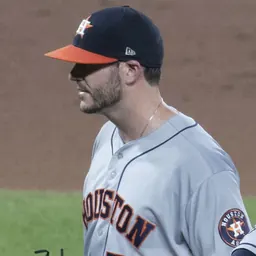

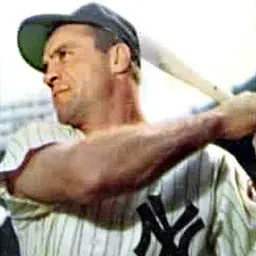

Related people
Same field, nearest in time
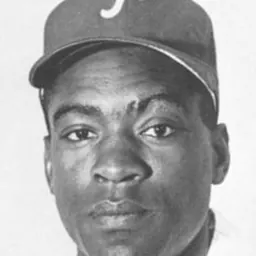
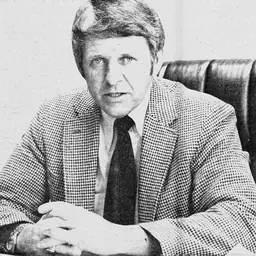
Contemporaries
People whose lives overlapped Hoyt Wilhelm's


Frequently asked questions
Who was Hoyt Wilhelm?
American baseball player
When was Hoyt Wilhelm born?
Hoyt Wilhelm was born on 26 July 1922 in Huntersville.
When did Hoyt Wilhelm die?
Hoyt Wilhelm died on 23 August 2002 in Sarasota.
What was Hoyt Wilhelm's occupation?
Hoyt Wilhelm was a baseball player.
What nationality was Hoyt Wilhelm?
Hoyt Wilhelm was American.
Sources & further reading
Cite this page
APA: Biography.guide. (2026). Hoyt Wilhelm. https://biography.guide/hoyt-wilhelm/
MLA: "Hoyt Wilhelm." Biography.guide, https://biography.guide/hoyt-wilhelm/.
Chicago: "Hoyt Wilhelm." Biography.guide. https://biography.guide/hoyt-wilhelm/.
Data last updated: 2026-09-20 · Spot an error? Report a correction.
Page generated 2026-09-27 05:22 UTC