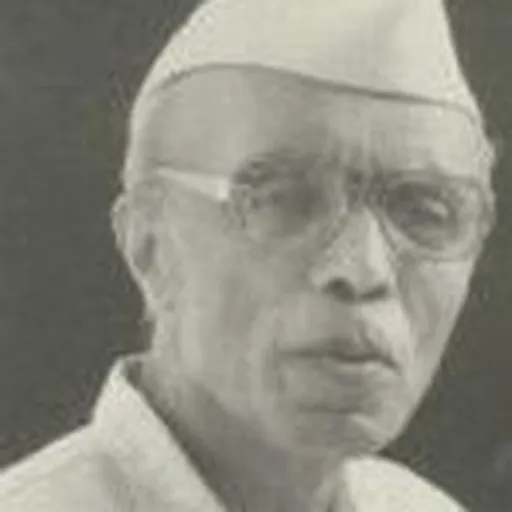
About Hosur Narasimhaiah
Lived 1921 – 2005 (aged 83). Hosur Narasimhaiah was an Indian physicist and nuclear physicist, known for Scepticism.
H. (Hanumanthappa) Narasimhaiah (more popularly Hosur Narasimhaiah); 6 June 1920 – 31 January 2005) was an Indian physicist, educator, writer, freedom fighter and rationalist from Karnataka. Publicly known as "HN", he was the Vice-Chancellor of Bangalore University and the president of the National Education Society. He was conferred the Padma Bhushan award by the Government of India in 1984.
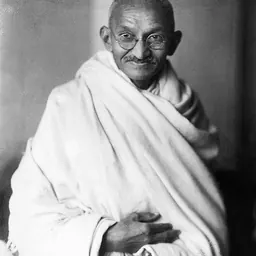
As there was no formal school in Hale Upparahalli, where he was born, he attended the Government School in Gauribidanur, and continued high school at the National High School, Basavanagudi in Bangalore. He walked 85 km for two days to reach the city. A meeting with Mahatma Gandhi in 1936, in which he served as an interpreter to Gandhi, inspired him to follow Gandhism the rest of his life. While in his final year of BSc at the Central College of Bangalore, he gave up his education to join Gandhi's Quit India movement in 1942. He was arrested and imprisoned for about nine months.
He finished his bachelor's degree with physics honours in 1944, and master's degree in 1946. He was immediately recruited to the faculty of physics at the National College, Bangalore, where he taught until 1957. He went for doctoral research in the United States and earned a PhD in 1960 in nuclear physics from Ohio State University. From 1961 he was Principal of the National College, Basavanagudi. He became the Vice-Chancellor of the Bangalore University in 1972, the post he held until his resignation in 1977. He went on to serve in the Karnataka Legislative Council.
A self-proclaimed rationalist, He had a younger sister. Having no formal school in his village, he attended the Government School in Gauribidanur, the nearest town. He completed his elementary education in the primary school, which had no further studies beyond eighth standard. He stopped school for a year. He stayed with his headmaster for six months, until he could get allotment in the school hostel, the Poor Boys' Home, as he called it. He met with Mahatma Gandhi when the latter visited the National High School in 1936. His teacher selected him to be the interpreter of Gandhi's Hindi speech into Kannada. From this moment on, his life was entirely influenced by Gandhi's views and lifestyle, including wearing khadi throughout his life. He went on to Central College of Bangalore studying for his B.Sc. During his final year in 1942, Gandhi launched the Quit India movement to end British rule. He gave up his degree to join the movement, the event which he described as "the most momentous decision in my life." The consequence of his decision was his imprisonment for nearly nine months, in different jails, in Yerwada Central Jail, in Mysore jail and in the Central Jail in Bangalore. Comparing his Central College hostel and the Central Jail, he remarked that he found "no difference" between the two as both provided him "free boarding and lodging." From 1961 to 1972 he was Principal of the National College, Basavanagudi, in Bangalore. But he described himself as rationalist, and added,
I'm not an atheist: I don't go to a temple because God is everywhere. A temple is like a jail for God. I don't believe in religious practices or commercial Gods either. His body was kept in the National High School for public viewing. He was cremated, as he had willed (he had reserved INR 2,000 for it), at Hossur with a state official funeral the same day evening.
Contributions
Narasimhaiah wrote a collection of essays titled Tereda Mana ('ತೆರೆದ ಮನ', Open Mind) and an autobiography named Horaatada Haadi ('ಹೋರಾಟದ ಹಾದಿ', The Path of Struggle).
In 1962, he founded the Bangalore Science Forum, which conducts a weekly series of public lectures on science topics. This non-profit organisation has conducted almost 2,000 popular science lectures by eminent scientists and over 500 popular science films.
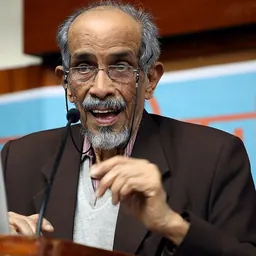
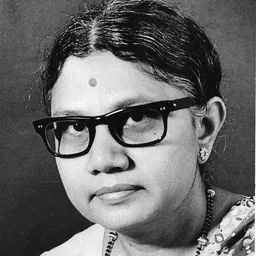
As a Vice-Chancellor, he constituted and chaired the "Committee to Investigate Miracles and Other Verifiable Superstitions" in 1976. Members of the committee included scientists, academics and rationalists such as A.R. Vasudeva Murthy, Roddam Narasimha, Vinodha Murthy, Anupama Niranjana and A.M. Dharmalingam. The committee aimed to debunk claims of miracles and paranormal phenomena, specifically by Hindu godmen. When the committee requested to visit Sai Baba, he locked himself in. The committee was also involved in exposing a 7-year old Sai Krishna of Pandavapura (a tiny village near Mysore), a mini-Avatar and an alleged protégé of Sathya Sai Baba. This exposition compelled many godmen to admit that they did not have special abilities. The committee was dissolved in 1977, as he was forced to resign from the office of Vice Chancellor.
Although a Hindu by birth, Narasimhaiah refused to practice religious rituals. He did not perform tonsure (cutting the hair off the head) upon the death of his father. He would eat food during a solar eclipse to demonstrate that it does not cause indigestion, as Hindus believed to be so and would fast.
Awards and honours
Narasimhaiah was conferred the Padma Bhushan in 1984, the third highest civilian awards instituted by the Government of India, for his services in literature and education. He was awarded the Goruru Award in 2001. In 2003, he received the Jawaharlal Nehru National Prize for popularising science, on behalf of the Karnataka Science Forum. He was awarded by the then Prime Minister of India, Atal Behari Vajpayee. In April 2011 the executive council of the Committee for Skeptical Inquiry (CSI, formerly Committee for the Scientific Investigation of Claims of the Paranormal) selected Narasimhaiah for inclusion in CSI's Pantheon of Skeptics. The Pantheon of Skeptics was created by CSI to remember the legacy of deceased fellows of CSI and their contributions to the cause of scientific skepticism.
There is a school named in his honour, H. Narasimhaiah Memorial High School in Hossur, established in 1991.
Don’t just read it —
keep it.
Full-length biographies made to live with: read them, listen on the way to work, watch them tonight.
- E-book
- Audio
- Video
Instant download · yours to keep · every purchase keeps this site free
Important facts
People in Hosur Narasimhaiah's life
Named in this biography and alive at the same time

Related people
Same field, nearest in time




Contemporaries
People whose lives overlapped Hosur Narasimhaiah's




Frequently asked questions
Who was Hosur Narasimhaiah?
Indian activist
When was Hosur Narasimhaiah born?
Hosur Narasimhaiah was born on 6 June 1921 in Hossur.
When did Hosur Narasimhaiah die?
Hosur Narasimhaiah died on 31 January 2005 in Bengaluru.
What was Hosur Narasimhaiah's occupation?
Hosur Narasimhaiah was a physicist and nuclear physicist.
What was Hosur Narasimhaiah known for?
Hosur Narasimhaiah was known for Scepticism.
What nationality was Hosur Narasimhaiah?
Hosur Narasimhaiah was Indian.
Sources & further reading
· Wikipedia: Hosur Narasimhaiah
Cite this page
APA: Biography.guide. (2026). Hosur Narasimhaiah. https://biography.guide/hosur-narasimhaiah/
MLA: "Hosur Narasimhaiah." Biography.guide, https://biography.guide/hosur-narasimhaiah/.
Chicago: "Hosur Narasimhaiah." Biography.guide. https://biography.guide/hosur-narasimhaiah/.
Data last updated: 2026-09-23 · Spot an error? Report a correction.
Portrait: Wikimedia Commons · author & licence
Page generated 2026-09-27 05:06 UTC