
About Hosoi Heishū
Lived 1728 – 1801 (aged 73). Hosoi Heishū was a Japanese confucian scholar and philosopher.
was a Japanese teacher of Confucian thought during the Edo period. He belonged to the eclectic school of Confucian philosophy, and his thought can be considered as the starting point of the eclectic brand of Confucianism.
Life Born in Hirashima Village, Owari Province, to a wealthy scholar family who later gave up their status to become farmers, Hosoi spent the first nine years of his life there as a student in a local temple. On becoming the top student, he was sent to Kyoto and Nagoya at age 17 where he studied under Nakanishi Tanen. It was during this time that Hosoi gained an education in the Chinese classics and when he was a young adult, he began giving lectures to daimyōs and commoners. After being taught in Nagoya, Hosoi moved to Nagasaki, where he would remain for three years until he was forced to return home to take care of his ailing mother. After doing so, Hosoi moved back to Nagoya, where he opened up a school, but after a short time he decided to close the school down so that he could relocate to Edo in an effort to reestablish relations with his former teacher. In 1780, Hosoi was able to secure a position as a teacher in Owari, where he occupied areas of land to be used as places where he could give his lectures and educate the local people.
Philosophy and thought Hosoi's thought was a mixture of lessons from all the schools of Confucianism existent at the time. His philosophy emphasized practicality, independence of thought, and bringing the teachings of Confucius to the general population. He believed that the scholars of the other schools made the teachings too complicated and disliked any kind of speculative thought. The practical emphasis of his teachings, along his focus on the economic conditions of the common person won him many disciples, who gave him the name of Living Buddha. One of these disciples, Uesugi Yozan, would become famous as a model daimyō, using Hosoi as an advisor during his reform programs. The concept of makoto originated within the Shinto tradition, and throughout his philosophical writings and lectures, Hosoi draws extensively from Shinto beliefs.
Views on women Hosoi's view of women is similar to most Confucianist of the era, and his views can be said to closely resemble the perspective found in a work entitled Greater Learning For Women, which was written by Kaibara Ekken, a famous Confucianist of the Zhu Xi school. According to Hosoi's view, when a woman is in her childhood, the parents should refrain from spoiling her in order to keep her from developing a love of luxury, as well as being unable to adjust to the hardships of the married life.
Political Work The politics of the Yonezawa Domain were greatly influenced by Hosoi's teachings, particularly during the reign of Uesugi Yōzan, a daimyō who had been tutored by Hosoi since his youth. Hosoi lectured Yozan & other students on his conception of Confucian politics, and what proper statescraft was. For Hosoi, the daimyō was seen as a servant of Heaven, and that a faithful servant:
The success of the Yonezawa Domain in administration and economic reform was largely seen as a result of Hosoi's influence and Uesugi's dedication and diligence in following plans and ruling by the maxims of "To have no waste places in his domain" and "To have no idlers among his people".
Don’t just read it —
keep it.
Full-length biographies made to live with: read them, listen on the way to work, watch them tonight.
- E-book
- Audio
- Video
Instant download · yours to keep · every purchase keeps this site free
Important facts
Related people
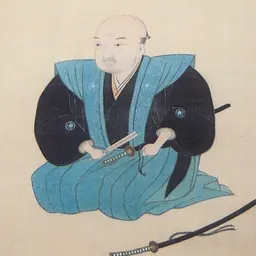
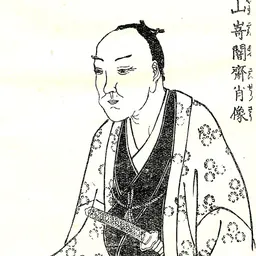
Same field, nearest in time




Contemporaries
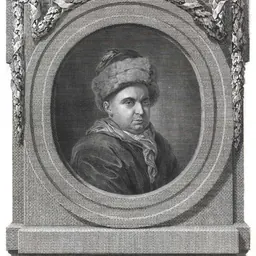
People whose lives overlapped Hosoi Heishū's





Frequently asked questions
Who was Hosoi Heishū?
Japanese philosopher
When was Hosoi Heishū born?
Hosoi Heishū was born on 3 August 1728.
When did Hosoi Heishū die?
Hosoi Heishū died on 8 August 1801 in Edo.
What was Hosoi Heishū's occupation?
Hosoi Heishū was a confucian scholar and philosopher.
What nationality was Hosoi Heishū?
Hosoi Heishū was Japanese.
Sources & further reading
Cite this page
APA: Biography.guide. (2026). Hosoi Heishū. https://biography.guide/hosoi-heishu/
MLA: "Hosoi Heishū." Biography.guide, https://biography.guide/hosoi-heishu/.
Chicago: "Hosoi Heishū." Biography.guide. https://biography.guide/hosoi-heishu/.
Data last updated: 2026-09-20 · Spot an error? Report a correction.
Page generated 2026-09-27 05:12 UTC