
About Hori Teikichi
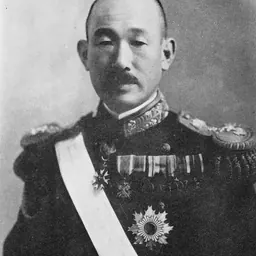
Lived 1883 – 1959 (aged 75). Hori Teikichi was a Japanese military personnel.
was an admiral in the Imperial Japanese Navy during the early twentieth century. During the interwar period, Hori was a prominent member of the Treaty Faction of the Navy, and opposed war against the United States and the United Kingdom. Hori and Admiral Isoroku Yamamoto were close lifelong friends.
Biography
Teikichi Hori was born as the second son of Yasaburo Yano, who came from a samurai family from Ōita. At the age of 10, he was adopted into the Hori samurai family from Kitsuki by Masaharu Hori.
Early career
Hori entered the Imperial Japanese Naval Academy in the 32nd class, and graduated in 1904 ranked #1 in his class. There he became close friends with his classmate Isoroku Yamamoto, who would become a prominent admiral of the Imperial Japanese Navy during World War II. The Treaty Faction was opposed by the more militaristic Fleet Faction of the Navy, which advocated for unlimited naval growth to challenge the United Kingdom and the United States.
In 1925 Hori served in the Imperial Japanese Navy General Staff. He attended the Geneva Naval Conference in 1927 and commanded the battleship Mutsu. In 1928 he was promoted to Rear Admiral and served as chief of staff of the 2nd Fleet. He was promoted to Vice Admiral in 1933 and once again served in the Navy General Staff. In 1934, militarists of the Fleet Faction headed by Prince Fushimi Hiroyasu and Sankichi Takahashi, gained supremacy over Navy Minister Mineo Ōsumi. That same year Hori and other Treaty Faction opposition leaders were silenced or forced to retire in the Ōsumi purge. Hori was transferred into the reserve, which effectively ended his Naval career. Upon hearing the news of Hori's purge Yamamoto was indignant, and said, "A squadron of cruisers or Teikichi Hori, which do you think is more important? The Navy is foolish for this affair." (Japan's heavy cruiser tonnage allowed by the London Naval Treaty was, when compared to the hoped tonnage, less by that of around one cruiser squadron.) As the right-wing and militaristic hardliners cemented their influence in the Navy, Yamamoto considered retiring, however, Hori convinced him to stay. In January 1936, the government announced it would withdraw from the London Naval Treaty, and Japan would enter into a naval arms race with the western powers that would lead to the Pacific War. Shigetarō Shimada, the wartime Minister of the Navy in Hideki Tojo's cabinet and one of Hori's naval academy classmates, would later claim that, "If Hori was the Navy Minister before the start of the war, he could have dealt with the situation more appropriately."
Civilian life Hori returned to his birthplace in Ōita, where he authored a book on the Yano clan. After Hori's departure from the Navy, Yamamoto and Hori maintained their friendship. An extensive and revealing collection of letters written by Yamamoto to Hori, before and throughout World War II, is stored in the Oita Prefecture Ancient Sages Historical Archives. In 1936, he became the president of Nippi Corp., an aviation company, also known as Japan Aircraft Company. To improve their technology, he arranged for Frederick Rutland to open an office for Nippi in Santa Monica. In 1941, he became the president of Uraga Dock Company. After Yamamoto's death, those who idolized Yamamoto wanted to construct a shrine in Yamamoto's honor. Hori was opposed to the idea, believing that Yamamoto would not have liked to be worshipped as a god.
After the war, Hori avoided prosecution by SCAP authorities. He later served as an officer and advisor for several companies. In 1951, Hori was part of an advisory committee composed of former Imperial Japanese Navy officers to oversee the formation of the Japan Maritime Self-Defence Force.
Hori died in 1959 aged 75 in Setagaya, Tokyo.
In popular culture In the 2011 film Isoroku, Hori was portrayed by kabuki actor Bandō Mitsugorō X.
Letters from Yamamoto to Hori were the subject of the NHK documentary The Truth of Yamamoto.
Don’t just read it —
keep it.
Full-length biographies made to live with: read them, listen on the way to work, watch them tonight.
- E-book
- Audio
- Video
Instant download · yours to keep · every purchase keeps this site free
Important facts
People in Hori Teikichi's life
Named in this biography and alive at the same time






Related people
Same field, nearest in time



Contemporaries
People whose lives overlapped Hori Teikichi's



Frequently asked questions
Who was Hori Teikichi?
admiral in the Imperial Japanese Navy
When was Hori Teikichi born?
Hori Teikichi was born on 16 August 1883 in Kitsuki.
When did Hori Teikichi die?
Hori Teikichi died on 12 May 1959.
What was Hori Teikichi's occupation?
Hori Teikichi was a military personnel.
What nationality was Hori Teikichi?
Hori Teikichi was Japanese.
Sources & further reading
Cite this page
APA: Biography.guide. (2026). Hori Teikichi. https://biography.guide/hori-teikichi/
MLA: "Hori Teikichi." Biography.guide, https://biography.guide/hori-teikichi/.
Chicago: "Hori Teikichi." Biography.guide. https://biography.guide/hori-teikichi/.
Data last updated: 2026-09-20 · Spot an error? Report a correction.
Page generated 2026-09-27 05:18 UTC